198 Indian fishermen in Pakistan: Families demand Aug 15 release
Synopsis
With 198 Indian fishermen still behind bars in Pakistan — many having completed their sentences years ago — families and civil society groups are invoking Independence Day as a last-resort deadline. The 2008 bilateral agreement already mandates release within a month of sentence completion; the question is whether diplomatic will exists to enforce it.
Key Takeaways
198 Indian fisherpeople remain imprisoned in Pakistan; 53 Pakistani fisherpeople are held in Indian jails.
A joint letter dated 8 August by PIPFPD , NFF , PFF and families urges release by 15 August , citing completed sentences and confirmed nationalities.
Sentence completions span from July 2021 to July 2024 — covering 178 of the 198 detainees, with nationality verification already done.
The 2008 Consular Access Agreement requires release within one month of sentence completion and nationality confirmation — a provision that has not been enforced.
An estimated 4–5 Indian fishermen die in Pakistani custody every year; one died by suicide in March last year .
Journalist Jatin Desai has met External Affairs Minister S Jaishankar and continues to engage with Ministry of External Affairs officials on the matter.
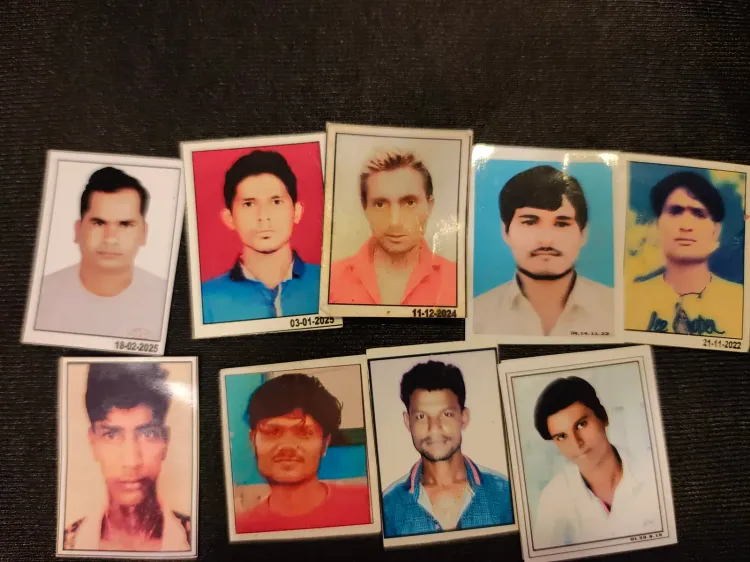
Families of 198 Indian fishermen held in Pakistani prisons, backed by fishermen's organisations across both countries, have jointly appealed to the governments of India and Pakistan to release and repatriate all those who have completed their sentences and whose nationality has been confirmed — with a specific deadline of 15 August. The appeal was submitted on 8 August from Ahmedabad.
The Joint Appeal and Who Signed It
The appeal was made through a joint letter addressed to the prime ministers of both countries by the Pakistan-India Peoples' Forum for Peace and Democracy (PIPFPD), the National Fishworkers Forum (NFF), the Pakistan Fisherfolk Forum (PFF), and families of the imprisoned fisherpeople. The organisations argued that the occasion of the two nations' Independence Days — India's on 15 August and Pakistan's on 14 August — presents a natural opportunity for a humanitarian gesture.
According to figures cited in the letter, 198 Indian fisherpeople are currently held in Pakistani prisons, while 53 Pakistani fisherpeople remain in Indian jails.
Who Has Already Served Their Sentence
The letter lays out a staggered timeline of sentence completions among the Indian detainees: 10 completed their terms on 16 July 2021; 115 on 16 March 2022; 21 on 17 November 2022; 10 on 31 January 2023; and 22 on 18 July 2024. The organisations stated that nationality verification in all these cases has already been completed, leaving no procedural barrier to repatriation.
Journalist Jatin Desai, who has worked on the issue of fishermen imprisoned in Pakistan for nearly two decades, said there was no technical obstacle remaining. 'There is some tradition, right? On 15th August, on releasing each other, sometimes on Eid,' he said, calling the Independence Day occasion appropriate for a release. 'We have appealed, and everything is ready. So, if the Government of Pakistan today decides that we will release these people, there will not be any technical issue,' he added.
The 2008 Agreement and Where It Falls Short
The 2008 Agreement on Consular Access between India and Pakistan requires consular access within three months of arrest. According to Desai, this deadline is rarely met in practice. Section 5 of the agreement states: 'Both Governments agree to release and repatriate persons within one month of confirmation of their national status and completion of sentences.' Section 7 additionally permits early release on humanitarian grounds.
Desai argued that no specific time limit exists for completing nationality verification after consular access is granted — a gap he said should be addressed. He suggested a maximum of three months for the process, noting that with tools like Aadhaar, verification could realistically be completed within weeks. Fishermen are typically charged under passport violation and illegal entry laws, which carry a maximum sentence of six months, though trials often drag on longer.
Families Left Behind: The Human Cost
The families of detained fishermen have travelled to Gujarat from coastal areas to press their case. Dhanjikantji Bamaniya said her son Kapilkantji Bamaniya, 22, and Ramji Soma Savra, 50, have been held in Pakistan for around five years. 'We appeal to the Government of India to try to get our people in Pakistan released. Bring our people back to us. We would be grateful,' she said, adding that the family had approached officials in Gandhinagar and Surat without result.
Bhavna Solanki of Lerka village in Una taluka, Gir Somnath district, said her husband Mahesh Solanki, 24, has been in a Pakistani prison since 2021. She now works as a daily-wage labourer earning ₹350 a day to support two children and a bedridden father-in-law. Her younger son was just four months old when her husband was arrested. 'We do not even know where he is in the world. We do not know whether he is alive or not,' she said. She said she had not received any communication from him in around six years.
Solanki said her family had previously met Gujarat leaders including Jitu Vaghani and Parshotam Solanki, and also met Deputy Chief Minister Harsh Sanghavi, who reportedly assured them that efforts would be made through the relevant authorities and the High Commission.
Diplomatic Constraints and the Path Forward
The diplomatic environment has complicated matters further. Desai noted that neither India nor Pakistan currently has a High Commissioner in the other country, and that diplomatic staff on both sides has been significantly reduced. He said he had met External Affairs Minister S Jaishankar last year and continued to engage with Ministry of External Affairs officials.
The joint letter also flagged a grim pattern: an estimated four to five Indian fishermen die in Pakistani custody every year, and one Indian fisherperson reportedly died by suicide in prison in March last year. The organisations cited the International Covenant on Civil and Political Rights, to which both countries are parties, arguing that continued detention after sentence completion and nationality verification amounts to arbitrary deprivation of liberty.
The organisations also called for a 'No Arrest Policy' for fishermen who inadvertently cross the maritime boundary, noting that arrests of Indian fishermen by Pakistan had declined significantly over the past two years as fishermen increasingly avoided the International Maritime Boundary Line. With Independence Day approaching, the families and organisations are watching to see whether this year's occasion will finally bring their loved ones home.
Point of View
The institutional machinery to resolve even straightforward humanitarian cases is severely compromised. The Independence Day appeal is emotionally resonant, but without a binding bilateral mechanism with enforceable timelines, it risks being another symbolic gesture that delivers nothing for the families of Gir Somnath or Kotra.
NationPress
23 Sept 2026
Frequently Asked Questions
How many Indian fishermen are currently imprisoned in Pakistan?
According to figures cited in the joint appeal dated 8 August, 198 Indian fisherpeople are currently held in Pakistani prisons. Of these, a significant number have already completed their sentences, with nationality verification confirmed, but have not been repatriated.
Why have the fishermen not been released despite completing their sentences?
The 2008 Consular Access Agreement between India and Pakistan requires release within one month of sentence completion and nationality confirmation, but the provision has not been enforced. Journalist Jatin Desai has cited delays at multiple stages — including late consular access and the absence of a prescribed deadline for nationality verification — as key bottlenecks.
What does the 2008 India-Pakistan Consular Access Agreement say about fishermen?
Section 5 of the agreement states that both governments agree to release and repatriate persons within one month of confirmation of national status and completion of sentences. Section 7 also allows for early release on humanitarian grounds. The organisations argue that both provisions have been consistently violated.
Who signed the joint appeal for the release of the fishermen?
The joint letter was signed by the Pakistan-India Peoples' Forum for Peace and Democracy (PIPFPD), the National Fishworkers Forum (NFF), the Pakistan Fisherfolk Forum (PFF), and families of the imprisoned fisherpeople. It was addressed to the prime ministers of both India and Pakistan.
What is the 'No Arrest Policy' that the organisations are calling for?
The organisations have urged both governments to adopt a policy of not arresting fishermen who inadvertently cross the International Maritime Boundary Line while fishing. They noted that arrests have already declined over the past two years as fishermen have become more cautious, but argue that a formal policy would provide legal protection.