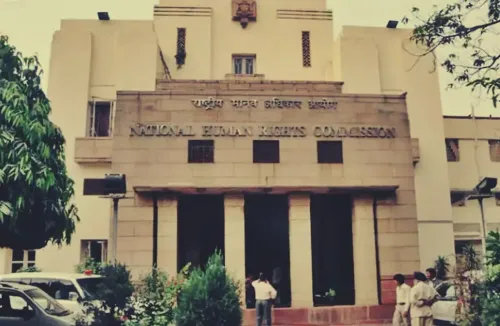
Bangladesh to Strengthen Human Rights with NHRC Overhaul
Synopsis
Bangladesh is on the verge of establishing a National Human Rights Commission that aligns with global standards. This significant reform aims to enhance citizen engagement, restore public trust, and solidify the country's commitment to human rights.
Key Takeaways
Opportunity to establish a compliant NHRC with Paris Principles.
Inclusivity in drafting process with over 600 stakeholders involved.
The NHRC’s role is crucial for democratic governance and public trust.
Enhanced authority and independence proposed for the NHRC.
Legislative deliberation is essential for the NHRC’s effectiveness .
Dhaka, March 12 (NationPress) Bangladesh stands at a pivotal moment to create a National Human Rights Commission that fully adheres to the Paris Principles. This would involve forming an independent and pluralistic body with a comprehensive mandate, transparent selection processes, and significant engagement with civil society.
This commission aims to fulfill the long-desired expectations of the Bangladeshi populace, thereby strengthening the nation's dedication to human rights, enhancing public trust, and fostering democratic governance and justice, according to a report released on Thursday.
As detailed in a leading Bangladeshi newspaper, The Daily Star, the newly elected parliament of Bangladesh, which commenced its first session on Thursday, will witness the government led by Tarique Rahman of the Bangladesh Nationalist Party presenting critical ordinances that were enacted during the tenure of the previous interim government led by Mohammad Yunus. This includes the upcoming National Human Rights Commission (NHRC) Ordinance, 2025.
“With participation from over 600 stakeholders, including national experts, international entities such as the United Nations, and a diverse range of civil society groups, the drafting of this ordinance has been marked by unprecedented inclusivity. This extensive engagement underscores the need to rectify the shortcomings of the 2009 law and highlights that a responsive NHRC must possess the requisite authority and independence to effectively safeguard rights in Bangladesh,” the report elaborated.
“The consideration of the NHRC ordinance emerges at a crucial juncture in the nation’s democratic evolution and institutional revitalization. The National Human Rights Commission plays a vital role in that renewal. The current government and parliament have the chance to empower the commission by ratifying the ordinance and addressing essential proposals raised by various stakeholders to ensure its independence, credibility, and service to all Bangladeshis,” it indicated.
The report emphasizes that a robust NHRC, accountable primarily to the citizens, is not merely a peripheral entity; it is fundamental to democratic governance, the rule of law, and public trust. It can serve as a vital link between the citizens and the state by monitoring and investigating human rights conditions, advising on legislation, supporting victims, and promoting accountability.
“The current iteration of the ordinance empowers the commission with clearer capabilities to advance and protect human rights, manage complaints, conduct investigations, inspect detention facilities, and pursue remedies. Additionally, it designates the NHRC as the national preventive mechanism under the Optional Protocol to the Convention against Torture (OPCAT), a significant responsibility that necessitates the assurance of adequate independence and resources,” it stated.
The report further notes, “National human rights institutions, such as the NHRC, should be established through either constitutional or legislative frameworks. This necessitates thorough parliamentary deliberation to guarantee that the institution’s mandate, independence, and credibility are entirely secured.”
Point of View
It's evident that the upcoming NHRC ordinance signifies a vital step towards enhancing human rights protection in Bangladesh. The government's commitment to inclusivity and accountability, as reflected in this initiative, showcases a promising shift towards fostering a more democratic society.
NationPress
30 Sept 2026
Frequently Asked Questions
What is the National Human Rights Commission (NHRC)?
The NHRC is an independent body responsible for promoting and protecting human rights in Bangladesh, ensuring accountability and transparency in governance.
Why is the NHRC important?
The NHRC plays a crucial role in upholding citizens' rights, monitoring human rights conditions, and providing a platform for victims to seek justice.
What changes are proposed in the NHRC Ordinance, 2025?
The proposed ordinance aims to enhance the NHRC's authority, independence, and resources to effectively address human rights issues in Bangladesh.
How will the NHRC engage with civil society?
The NHRC plans to actively engage with civil society organizations, stakeholders, and international entities to ensure a comprehensive approach to human rights protection.
What are the Paris Principles?
The Paris Principles are a set of international standards guiding the establishment and functioning of national human rights institutions to ensure their independence and effectiveness.