West Bengal: BJP's new govt probes TMC leaders' hidden wealth legally

Synopsis
Days after ending TMC's 15-year rule, West Bengal's new BJP government has uncovered two alleged TMC-linked luxury properties — a trap-door mansion in Howrah and a farmhouse with a swimming pool in South 24 Parganas. The legal pursuit of political opulence marks a sharp break from the Maoist mob justice that razed a CPI(M) leader's house in 2009. Whether the raids translate into convictions will be the new administration's first credibility test.
Key Takeaways
West Bengal's new BJP government , less than a week old, has launched legal raids on properties allegedly linked to Trinamool Congress leaders.
Police in Howrah found a concealed luxury residence with secret tunnels behind a trap door in the home of TMC leader Shamim Ahmed .
A separate raid in Pailan, South 24 Parganas , uncovered a sprawling 'farmhouse' with a swimming pool allegedly belonging to TMC MLA Dilip Mondal , a four-time legislator from Bishnupur .
The legal approach contrasts sharply with 2009 , when Maoist cadres demolished a CPI(M) leader's home in Dharampur, West Midnapore through extrajudicial mob action.
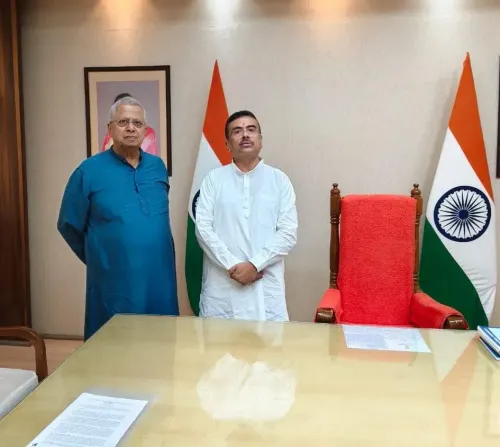
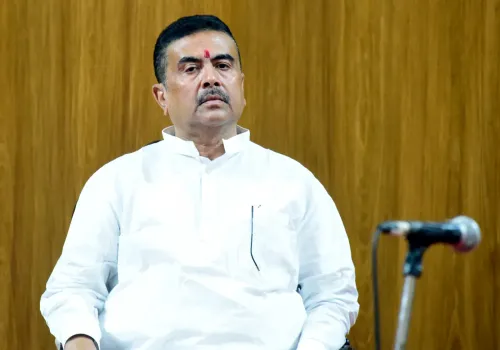
Chief Minister Suvendu Adhikari has made anti-corruption enforcement a central plank of the new administration's early agenda.
No significant public reprisal has been reported despite the scale of the revelations, suggesting a tentative shift toward institutional accountability.
In West Bengal, a state with a long history of political violence and extrajudicial retribution, the alleged display of unaccounted wealth by political figures is now being handled through formal legal channels — a marked departure from the mob justice that once defined the region's political culture. The shift comes as the Bharatiya Janata Party (BJP), which ended Trinamool Congress (TMC)'s 15-year rule, forms its first-ever government in the state, less than a week after assuming power.
A History of Mob Justice in Bengal
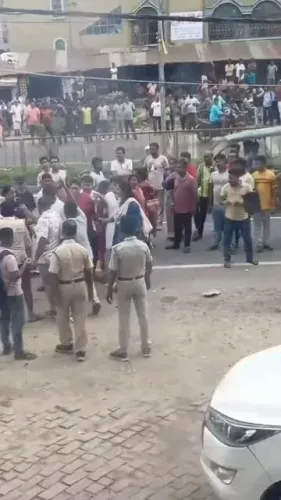
The contrast with the past is stark. In mid-2009, a video from Dharampur in the Lalgarh area of West Midnapore district captured an infuriated mob demolishing and torching a double-storey house with a whitewashed façade — conspicuously out of place amid thatched, mud-walled huts in an underdeveloped rural neighbourhood.
The house was reportedly owned by the family of Communist Party of India (Marxist) [CPI(M)] zonal committee secretary Anuj Pandey. The CPI(M) was then the principal constituent of the ruling Left Front government. What made the incident more than a spontaneous outburst was the presence of masked men carrying automatic weapons — Maoist cadres who had declared the area 'liberated' and operated kangaroo courts as judge, jury, and executioner.
'Opulent lifestyle of a leader of the masses had to be punished,' they reportedly declared before razing the structure to rubble. The state police dared not enter these zones, despite an official curfew. It was the era when radical insurgents controlled the forested western districts that formed part of the so-called Red Corridor running from southern to northern India.
What the Raids Uncovered This Week
Times have changed. Maoist influence has been largely dismantled, and their kangaroo courts are a chapter of history. Yet, according to reports, political oppression and the accumulation of illegal wealth persisted through subsequent administrations. Now, at least two high-profile cases of alleged political opulence have surfaced within the same week — and both are being pursued through law enforcement, not mob action.
In Howrah, police conducted a raid in connection with post-poll violence and discovered a concealed luxury residence hidden behind a trap door in the home of Trinamool Congress ward-level leader Shamim Ahmed, reportedly the husband of former councillor Samima Bano. The hidden chambers were fitted with expensive furniture and air-conditioned rooms, bearing more resemblance to a boutique hotel than a political worker's home, according to reports. The alleged existence of secret tunnels connecting underground floors sparked widespread public curiosity.
In a separate operation, police in Pailan, a rural locality in Bishnupur, South 24 Parganas district, raided a sprawling property allegedly belonging to TMC MLA Dilip Mondal, who has represented the Bishnupur Assembly seat four consecutive times since the constituency was created following the 2011 delimitation exercise. The so-called 'farmhouse' reportedly features a large swimming pool, an expansive lawn with replicas of wild animals, and other luxury amenities. The raid was triggered by a video allegedly showing the MLA issuing threats.
The New Government's Stance
The BJP, which defeated the Mamata Banerjee-led TMC after the party's 15 years in power, had campaigned on an explicit anti-corruption platform. Chief Minister Suvendu Adhikari has been described as zealously pursuing that agenda since assuming office. The legal proceedings against TMC-linked figures represent an early and visible signal of the new administration's priorities.
Notably, despite the intensity of opposition to the TMC's alleged misgovernance and the scale of revelations this week, there has been no significant public reprisal or mob action reported as of the time of writing — a contrast that underscores how the state's political culture may be, at least tentatively, shifting toward institutional accountability.
What Comes Next
The investigations into both properties are ongoing. Whether the legal process delivers outcomes that match the scale of public expectation will be a defining early test for the new BJP government in West Bengal. Observers note that converting high-profile raids into prosecutions with durable convictions has historically been a challenge in Indian state politics, regardless of which party is in power.
Point of View
TMC, and now BJP rule — each transition accompanied by promises to end the previous regime's excesses, yet the structural incentives for political wealth accumulation have persisted across all three. Converting dramatic raids into completed prosecutions and convictions is where such promises have historically collapsed. The Adhikari government's anti-corruption credibility will be measured not by the spectacle of trap doors and swimming pools, but by whether these cases reach a court verdict — and how the BJP handles its own members if similar allegations surface within its ranks.
NationPress
5 Oct 2026
Frequently Asked Questions
What did West Bengal police find in the Howrah raid?
Police in Howrah discovered a concealed luxury residence hidden behind a trap door in the home of TMC ward-level leader Shamim Ahmed, reportedly the husband of former councillor Samima Bano. The hidden space contained expensive furniture, air-conditioned chambers, and was reportedly connected to underground floors through secret tunnels.
Who is Dilip Mondal and what was found at his property?
Dilip Mondal is a Trinamool Congress MLA who has represented the Bishnupur Assembly seat in South 24 Parganas four consecutive times since 2011. Police raided a sprawling farmhouse allegedly belonging to him, finding a large swimming pool, an expansive lawn with animal replicas, and other luxury amenities. The raid followed a video allegedly showing him issuing threats.
Why is this shift from mob justice to legal process significant?
In 2009, Maoist cadres demolished the home of a CPI(M) leader in Dharampur, West Midnapore, through extrajudicial mob action, with state police unable to intervene in areas declared 'liberated.' The current BJP government's use of formal law enforcement to probe similar allegations of political opulence marks a departure from that era of extrajudicial retribution.
How long has the BJP been in power in West Bengal at the time of these raids?
The BJP government was less than a week old at the time the raids were conducted, having ended Trinamool Congress's 15-year rule. Chief Minister Suvendu Adhikari has identified anti-corruption enforcement as a central early priority.
Has there been any public violence following these revelations?
According to reports, despite widespread opposition to TMC's alleged misgovernance and the scale of the property discoveries, no significant public reprisal or mob action had been reported as of the time of writing — a notable contrast to West Bengal's history of post-poll violence.