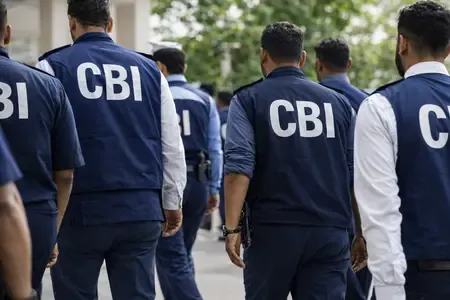
CBI arrests three in ₹2.07 crore digital arrest scam, raids Odisha and Rajasthan

Synopsis
A retired public servant lost ₹2.07 crore to fraudsters who posed as law enforcement and placed him under a fake 'digital arrest.' The CBI, acting on High Court directions, has now arrested three men from Odisha and Rajasthan — and the trail leads to a trust account used to launder the proceeds.
Key Takeaways
The CBI arrested three accused and searched seven locations in Odisha and Rajasthan on 30 June 2025 .
The case involves a ₹2.07 crore digital arrest scam targeting a retired government employee.
Arrested accused: Bibekananda Dixit and Jayant Kumar Acharya (Balasore, Odisha) and Kanhaiya Lal (Nagaur, Rajasthan).
Funds were allegedly routed through a trust account via layered transactions to evade detection.
The probe was initiated on 25 March following directions from the Punjab and Haryana High Court .
The CBI has cautioned citizens against impersonation calls and fake 'digital arrest' threats.
The Central Bureau of Investigation (CBI) arrested three accused and conducted searches at seven locations across Odisha and Rajasthan on 30 June 2025, as part of its probe into a ₹2.07 crore digital arrest scam in which a retired public servant was allegedly coerced into transferring funds under the threat of fabricated legal proceedings. The agency confirmed the development in an official statement on Friday, 3 July.
The Scam: What Happened
According to investigators, cyber fraudsters posing as law enforcement and regulatory officials intimidated a retired government employee into making a series of fund transfers totalling ₹2.07 crore. The CBI registered the case on 25 March following directions from the Punjab and Haryana High Court. The fraud is a textbook example of the 'digital arrest' method — a scheme in which victims are told they are under virtual custody and must comply with financial demands to avoid prosecution.
Who Was Arrested
The three arrested accused have been identified as Bibekananda Dixit and Jayant Kumar Acharya, both residents of Balasore, Odisha, and Kanhaiya Lal of Nagaur, Rajasthan. Investigators allege that the trio was actively involved in layering and transferring the proceeds of crime through multiple bank accounts to conceal the origin of the funds and integrate them into the wider cyber fraud network.
How the Money Was Moved
The probe revealed that the defrauded amount was ultimately routed into a bank account opened in the name of a trust. The accused allegedly managed and dispersed the funds through a complex chain of transactions designed to evade detection. This layering technique — routing illicit funds through trusts and multiple accounts — is increasingly common in organised cyber fraud operations in India, according to investigators.
What the Searches Yielded
During the raids at premises linked to the accused, the CBI seized incriminating documents, digital devices, and electronic evidence. Officials said the material is expected to provide further leads regarding the broader network behind the scam. The investigation is ongoing, and efforts are underway to identify other beneficiaries and facilitators connected to the fraud.
CBI's Warning to Citizens
The agency used the occasion to caution citizens against falling prey to cyber frauds involving fake investment schemes, impersonation calls from purported law enforcement or regulatory agencies, and threats of so-called 'digital arrests'. No legitimate government agency, the CBI noted, conducts arrests or legal proceedings through video or phone calls.
Point of View
Less digitally-fluent citizens who are least equipped to recognise impersonation tactics. What stands out here is that the CBI's involvement came only after High Court intervention, raising questions about whether routine law enforcement channels are adequately equipped to handle such cases at scale. The use of a trust account to launder proceeds adds a layer of institutional complexity that suggests organised, not opportunistic, crime. As long as fund recovery mechanisms remain slow and conviction rates in cyber fraud cases remain low, the deterrence gap will keep these networks operational.
NationPress
2 Oct 2026
Frequently Asked Questions
What is a digital arrest scam?
A digital arrest scam is a cyber fraud in which criminals impersonate law enforcement or regulatory officials and falsely inform victims that they are under 'digital arrest' — threatening prosecution unless the victim transfers money. No legitimate agency in India conducts arrests or legal proceedings via phone or video calls.
Who are the three accused arrested by the CBI?
The three arrested accused are Bibekananda Dixit and Jayant Kumar Acharya, both from Balasore in Odisha, and Kanhaiya Lal from Nagaur in Rajasthan. They are alleged to have laundered and layered the fraud proceeds through multiple bank accounts.
Why is the CBI investigating this case?
The CBI registered the case on 25 March following directions from the Punjab and Haryana High Court, after allegations emerged that a retired government employee had been defrauded of ₹2.07 crore through a fabricated legal threat scheme.
How was the defrauded money concealed?
According to investigators, the ₹2.07 crore was routed through multiple bank accounts and ultimately deposited into an account opened in the name of a trust. This layering was allegedly designed to obscure the origin of the funds and evade law enforcement scrutiny.
Is the investigation complete?
No. The CBI has confirmed that the investigation is ongoing. Authorities are actively working to identify other beneficiaries and facilitators connected to the wider cyber fraud network.