Is Satyendar Jain and 13 Others Facing Charges in the Delhi Jal Board Case?
Synopsis
The Enforcement Directorate has taken significant action against former Delhi Water Minister Satyendar Jain and 13 others, exposing a major corruption scandal involving sewage treatment tenders. This case sheds light on the intersection of politics and fraud, raising questions about accountability in public service. Stay tuned for the unfolding details of this high-profile investigation!
Key Takeaways
The ED has filed a chargesheet against Satyendar Jain and 13 others.
Allegations involve a ₹6.73 crore bribe related to sewage treatment plant tenders.
Provisional attachment of ₹15.36 crore in assets linked to the case.
Investigation initiated from an FIR by the Anti-Corruption Branch.
Corruption and money laundering are serious offenses under Indian law.
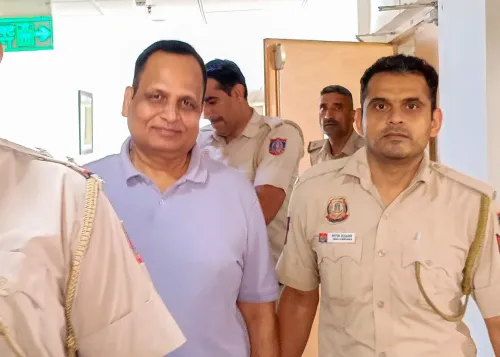
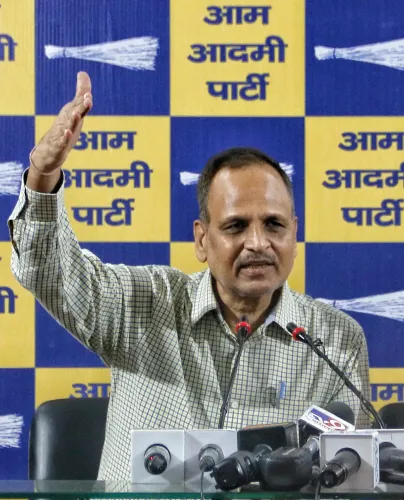
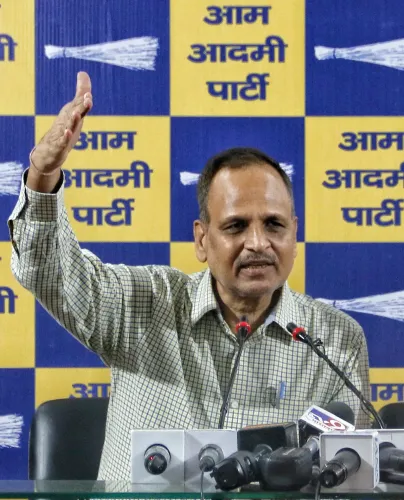
New Delhi, Dec 8 (NationPress) The Enforcement Directorate (ED) has submitted a chargesheet against former Delhi Water Minister and Aam Aadmi Party member Satyendar Kumar Jain along with 13 other individuals in a case concerning the awarding of four tenders linked to Sewage Treatment Plants (STPs) in exchange for a bribe of ₹6.73 crore, an official disclosed on Monday.
Additionally, the ED has provisionally attached movable and immovable assets valued at ₹15.36 crore belonging to various individuals involved in this money laundering case, which includes Proceeds of Crime (PoC) amounting to ₹17.70 crore.
The federal agency initiated its investigation based on an FIR lodged by the Anti-Corruption Branch (ACB), Delhi, against Euroteck Environmental Pvt Ltd (EEPL) and others under several sections of the Indian Penal Code, 1860, and the Prevention of Corruption Act, 1988, alleging a scam associated with the augmentation and upgradation of 10 existing STPs at various locations including Pappankalan, Nilothi, Najafgarh, Keshopur, Narela, Rohini, and Kondli.
The ED's Delhi Zonal Office filed a Prosecution Complaint against Jain, Udit Prakash Rai (then CEO of DJB), Ajay Gupta (then Member of DJB), Satish Chandra Vashishth (then Chief Engineer of DJB), and other private individuals/entities under the provisions of the Prevention of Money Laundering Act (PMLA), 2002.
According to the investigation, Rajakumar Kurra, Managing Director of EEPL, allegedly manipulated the tender terms through DJB officials and private individuals, including Nagendra Yadav.
He restricted the tender to only allow the use of IFAS technology with fixed media, thus designating EEPL as the exclusive technology supplier.
The Integrated Fixed-Film Activated Sludge (IFAS) technology merges traditional suspended-growth activated sludge with attached-growth biofilm media within a single reactor, enhancing biomass without increasing sludge volume, allowing treatment plants to expand their capacity.
Findings indicate that Kurra and his associates engaged in illegal commission payments amounting to ₹6.73 crore, classified as Proceeds of Crime under PMLA, 2002.
The ED reported that these illicit payments were funneled through banking channels using false invoices and cash via hawala networks.
This scheme resulted in undue profits totaling ₹9.96 crore accruing to EEPL, also classified as proceeds of crime under PMLA, according to the ED's statement.
The investigation concluded that Jain (then Minister, GNCTD), Rai (then CEO, DJB), Gupta (then Member, DJB), Vashishth (then Chief Engineer, DJB), and entities such as EEPL, Kurra, Vinod Chauhan, Nagendra Yadav, and other accused parties are implicated in the generation, acquisition, concealment, possession, and use of total Proceeds of Crime amounting to ₹17.70 crore, thus committing the offense of money laundering.
Point of View
We observe that the ED's actions highlight the ongoing battle against corruption within government institutions. This case serves as a crucial reminder of the importance of transparency and accountability, urging vigilance in public service to prevent misuse of authority.
NationPress
18 Sept 2026
Frequently Asked Questions
What is the significance of the ED's chargesheet against Satyendar Jain?
The chargesheet signifies a formal step in prosecuting alleged corruption and misuse of power by a public official, highlighting the seriousness of the allegations and the need for accountability in governance.
What are Sewage Treatment Plants (STPs) and their role?
Sewage Treatment Plants are facilities designed to treat wastewater and sewage before it is released into the environment, playing a crucial role in maintaining public health and environmental safety.
What does PMLA stand for?
PMLA stands for the Prevention of Money Laundering Act, which aims to combat money laundering and ensure that proceeds of crime are identified and penalized.
How does the ED investigate corruption cases?
The ED conducts investigations based on complaints or FIRs, examining financial transactions and assets to uncover evidence of money laundering and corruption.
What are the potential consequences for those involved in this case?
Individuals found guilty of corruption and money laundering face severe legal consequences, including fines and imprisonment, which serve to deter similar offenses in the future.