Is TN's Assured Pension Scheme Viable with Fiscal Discipline?
Synopsis
Chidambaram highlights the potential strain of TN's new pension scheme but insists it can thrive with strong financial governance. This pivotal welfare initiative could reshape the future of public servants. Will fiscal prudence and better revenue management be enough to sustain it?
Key Takeaways
TAPS aims to provide significant pension benefits to government employees.
Pension is set at 50% of the last drawn salary.
Government will cover the majority of financial obligations.
Chidambaram emphasizes fiscal discipline for successful implementation.
Potential concerns about fiscal sustainability have been raised.
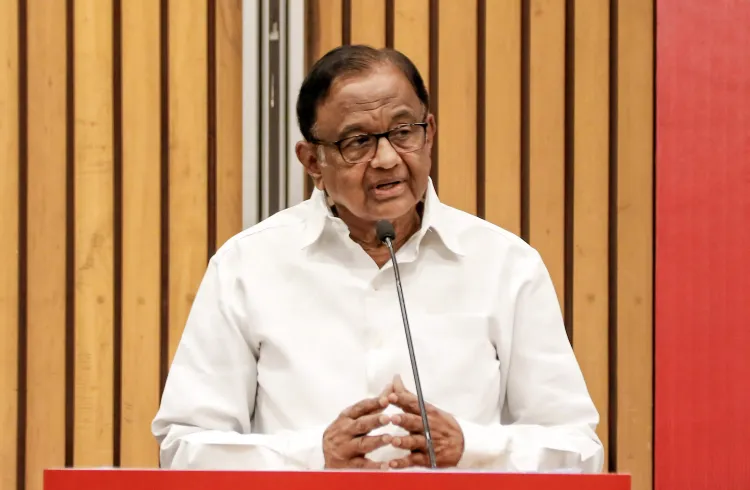
Chennai, Jan 4 (NationPress) Former Union Finance Minister and Congress leader P. Chidambaram expressed that the recently launched Tamil Nadu Assured Pension Scheme (TAPS) may exert extra strain on the State's financial landscape, yet it can be executed effectively with robust and disciplined fiscal governance.
In response to the backlash regarding the scheme, Chidambaram articulated his insights in a post on X, emphasizing that maintaining fiscal prudence and enhancing revenue generation will be essential for the longevity of this ambitious pension initiative. He acknowledged that the complete details of the Tamil Nadu Assured Pension Scheme have been disclosed and recognized that this effort will undoubtedly elevate the government's long-term financial obligations.
Nonetheless, he contended that this burden can be manageable if the State prioritizes efficient expenditure oversight, practical budgeting, and superior economic planning. He highlighted the necessity for the government to prevent cost overruns in developmental ventures and to adhere strictly to budget estimates.
The Tamil Nadu government recently introduced TAPS as a significant welfare initiative aimed at meeting the enduring demand of government employees and teachers for pension benefits akin to the Old Pension Scheme (OPS). Chief Minister M. K. Stalin unveiled the scheme, asserting it as a pledge to social security and dignity for public servants post-retirement.
Under TAPS, government employees are set to receive a pension amounting to 50 percent of their last monthly salary upon retirement. Employees will contribute 10 percent of their basic pay during their tenure, while the State will entirely cover the remaining financial obligations. In the event of a pensioner's demise, 60 percent of the last drawn pension will be disbursed as a family pension to qualifying dependents.
While employee unions have largely embraced the announcement, various economists and political adversaries have voiced apprehensions regarding the scheme's fiscal viability.
Chidambaram pointed out that Tamil Nadu currently allocates approximately 21-22 percent of its own tax revenue towards pensions, signaling the imperative for caution. He urged the government to focus on augmenting its own tax revenues and to adopt austerity as a guiding principle across all sectors.
As the State gears up to release comprehensive guidelines and governmental orders to operationalize TAPS, the scheme is anticipated to remain a focal point of public and political discourse, illustrating the broader challenge of reconciling welfare commitments with enduring fiscal accountability.
Point of View
We recognize the profound implications of the Tamil Nadu Assured Pension Scheme. While it addresses a long-standing demand for pension benefits among public servants, we must remain vigilant about the fiscal sustainability of such ambitious welfare initiatives. Balancing social commitments with fiscal prudence is crucial for the state's economic health.
NationPress
30 Sept 2026
Frequently Asked Questions
What is the Tamil Nadu Assured Pension Scheme?
The Tamil Nadu Assured Pension Scheme (TAPS) is a new initiative aimed at providing pension benefits to government employees and teachers, ensuring they receive pensions similar to the Old Pension Scheme.
Who announced the TAPS?
The scheme was announced by Chief Minister M. K. Stalin as part of the state's commitment to social security for public servants.
How much pension will employees receive under TAPS?
Under TAPS, employees will receive a pension equivalent to 50% of their last drawn monthly salary upon retirement.
What are the concerns raised about TAPS?
Concerns have been raised regarding the fiscal sustainability of the scheme, with critics highlighting the potential strain it may place on the state's finances.
What is Chidambaram's stance on TAPS?
Chidambaram believes that TAPS can be implemented successfully if supported by strong fiscal management and improved revenue mobilization.