Allahabad HC hijab verdict: Muslim clerics demand review, cite Quran

Synopsis
The Allahabad High Court's ruling that students cannot alter school dress codes on religious grounds has drawn swift pushback from leading Muslim clerics, who argue the hijab is Quranic obligation — not personal preference. With calls for a Supreme Court appeal already sounding, this case could reopen the unresolved national legal debate that split the apex court in 2022.
Key Takeaways
The Allahabad High Court dismissed a petition by a minor girl in Prayagraj seeking the right to wear a hijab with her school uniform.
The court held that students cannot alter a school's prescribed dress code based on personal or religious preference.
Multiple clerics — including leaders of the All India Muslim Jamaat , Islamic Centre of India , and All India Shia Personal Law Board — have called the verdict inconsistent with the Quran and Hadith.
Maulana Saif Abbas Naqvi has urged that the ruling be appealed before the Supreme Court .
The dispute echoes a 2022 Karnataka HC ruling on the same issue, which produced a split verdict at the Supreme Court level, leaving no binding national precedent.
Several prominent Muslim clerics on Tuesday, 25 August called on the Allahabad High Court to reconsider its ruling that students do not have the right to alter a school's prescribed dress code based on personal or religious preferences, asserting that wearing the hijab is 'compulsory' under Islamic scripture.
The Allahabad HC Ruling
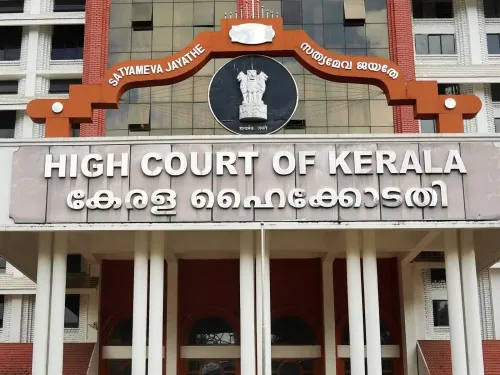
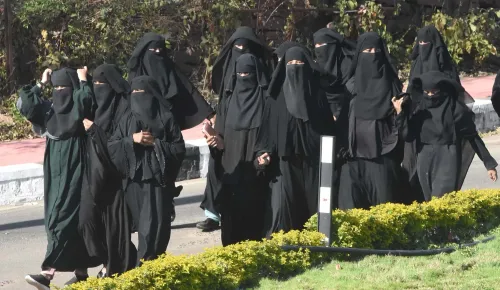
The Allahabad High Court delivered a significant judgment dismissing a petition filed by a minor girl enrolled at a private school in Prayagraj, Uttar Pradesh. The student had sought directions permitting her to wear a headscarf alongside the institution's prescribed uniform. The court clarified that no student holds an inherent right to modify a school's dress code on the basis of personal preference.
What the Clerics Said
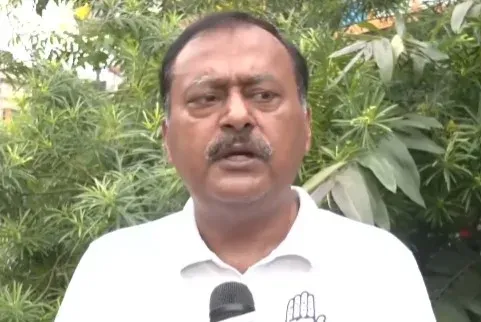
All India Muslim Jamaat President Maulana Mufti Shahabuddin Razvi Bareilvi argued that school uniform codes and the hijab are distinct matters and should not be conflated. 'Within the boundary of a school, the rules and regulations of the institution should be followed. As far as wearing hijab is concerned...its use has been clearly mentioned in Quran,' he said. He further urged legal practitioners and judges to consult the Quran and Hadith for clarity on Islamic practice.
Islamic Centre of India Chairman Maulana Khalid Rasheed Farangi Mahli stated: 'We believe that the court's decision regarding hijab needs to be reviewed and reconsidered.' He maintained that the hijab is an integral part of Islam per the Quran and Hadith, adding that girls who wish to attend school wearing a scarf or hijab should not be barred from doing so, and that followers of other faiths are similarly permitted to wear faith-specific items without objection.
Shia Markazi Chand Committee President Maulana Saif Abbas Naqvi said he did not object to school dress codes in principle but believed permission for the hijab should be granted when sought. He also pushed back against the court's observation that the hijab is not an essential part of Islam, saying: 'According to Quran, the hijab is compulsory in Islam. Yet, if 10–25 per cent of women do not wear the hijab, we cannot cast them out of the fold of Islam.' He called for the ruling to be appealed before the Supreme Court.
All India Shia Personal Law Board General Secretary Maulana Yasoob Abbas echoed this position, calling a blanket prohibition on a girl attending school with a scarf 'absolutely wrong' and invoking the Constitution's guarantee of equal rights to all religions. Maulana Sajid Rashidi described the judgment as 'an attack on freedom of an individual's choice,' and suggested the court prioritise pending matters such as women's divorce cases over religious commentary.
The Broader Context
The debate over hijab in educational institutions is not new to India. A Karnataka High Court ruling in 2022 had similarly held that the hijab does not form an essential religious practice under Islam, a verdict that subsequently reached the Supreme Court, which delivered a split verdict in October that year — leaving the legal position unresolved at the national level. The Allahabad HC ruling now adds a fresh chapter to this ongoing constitutional and religious debate, with clerics arguing the judiciary is overstepping into matters of scripture.
What Happens Next
With multiple clerics urging a Supreme Court appeal, the case is likely to attract fresh legal attention. The outcome could have implications for students at private and government institutions across Uttar Pradesh and potentially set a precedent for similar disputes in other states.
Point of View
But the clerics' response reveals a deeper friction: courts have now twice entered the contested terrain of what constitutes an 'essential religious practice' in Islam, and twice produced rulings that a significant section of the community rejects as judicially overreaching into theology. The Supreme Court's 2022 split on the Karnataka hijab case left a vacuum that lower courts are now filling inconsistently. Without a binding apex court ruling, this will keep recurring — school by school, state by state — with students caught in the middle. The real question is not whether the hijab is compulsory in Islam, but whether the judiciary is the right institution to answer that question at all.
NationPress
9 Oct 2026
Frequently Asked Questions
What did the Allahabad High Court rule on the hijab case?
The Allahabad High Court dismissed a petition filed by a minor girl studying at a private school in Prayagraj, Uttar Pradesh, who sought permission to wear a headscarf alongside her school uniform. The court ruled that students do not have the right to alter a school's prescribed dress code based on personal or religious preferences.
Why are Muslim clerics calling for a review of the verdict?
Clerics argue that wearing the hijab is explicitly mandated in the Quran and Hadith, making it a religious obligation rather than a matter of personal preference. They contend that the court's characterisation of the hijab as non-essential to Islam contradicts Islamic scripture.
Is there a precedent for this kind of case in India?
Yes. In 2022, the Karnataka High Court similarly ruled that the hijab does not constitute an essential religious practice. The matter reached the Supreme Court, which delivered a split verdict in October 2022, leaving the legal question unresolved at the national level.
Could this case reach the Supreme Court?
Several clerics, including Shia Markazi Chand Committee President Maulana Saif Abbas Naqvi, have explicitly called for the Allahabad HC ruling to be appealed before the Supreme Court. A formal appeal has not yet been filed, according to available reports.
Who is affected by the Allahabad HC's ruling?
The immediate impact is on the minor petitioner and students at the specific Prayagraj school. However, if upheld or appealed, the ruling could set a precedent affecting Muslim girl students at private educational institutions across Uttar Pradesh and potentially other states.