How Did Delhi's AQI Plummet into the 'Severe' Zone?
Synopsis
On December 31, Delhi's air quality hit alarming levels, as the AQI soared to 408, plunging into the 'severe' category. The combination of thick fog and heavy pollution has aggravated visibility issues, prompting advisories from airlines and health officials. This article dives into the current air quality crisis and its implications for public health and travel.
Key Takeaways
Delhi's AQI has reached 408, categorized as 'severe'.
Thick fog is exacerbating air quality issues.
Health risks are heightened for vulnerable populations.
Airlines are issuing advisories for potential travel disruptions.
Public health measures are essential during this environmental crisis.
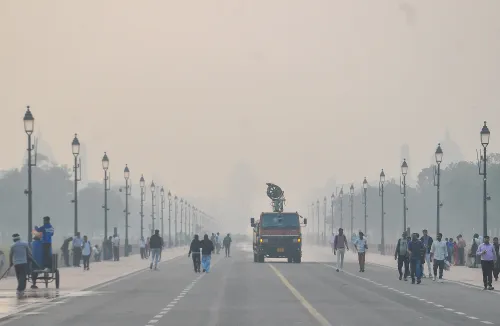
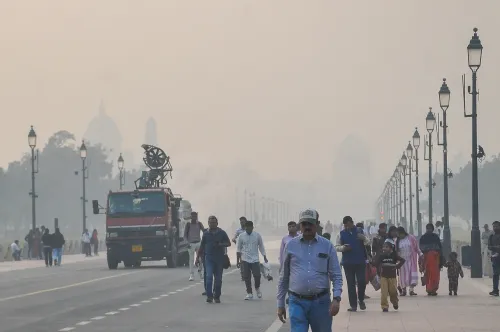
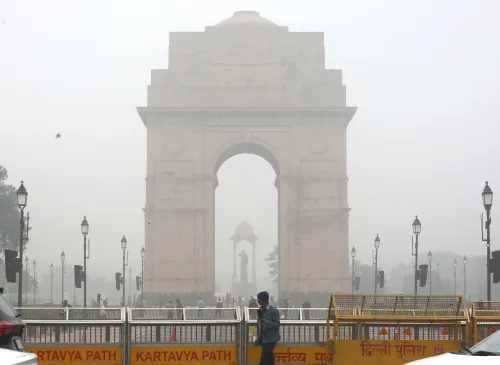
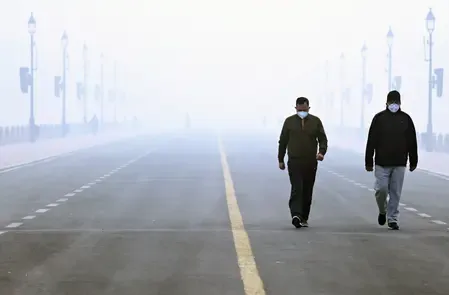
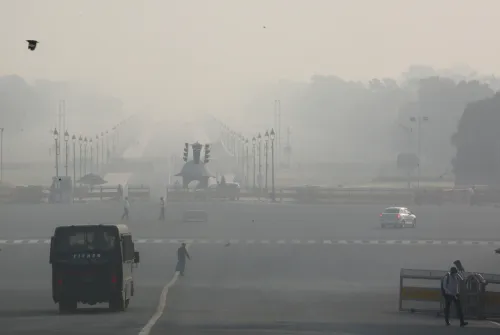
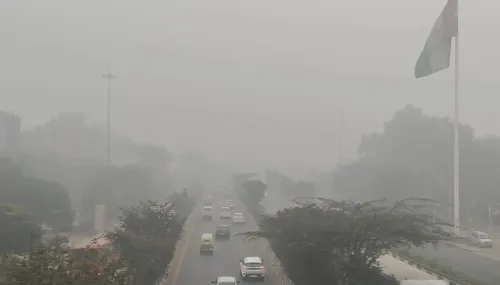
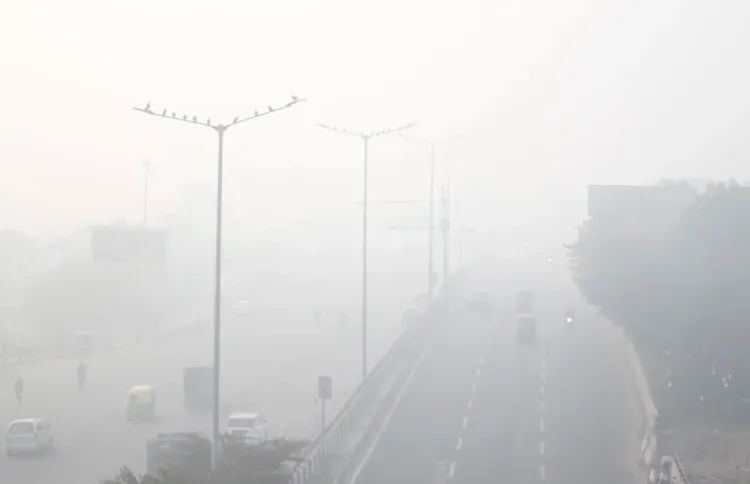
New Delhi, Dec 31 (NationPress) The air quality in Delhi has worsened dramatically as it has fallen into the 'severe' category, with the Air Quality Index (AQI) hitting 408. The combination of thick fog and severe pollution has drastically lowered visibility throughout the capital.
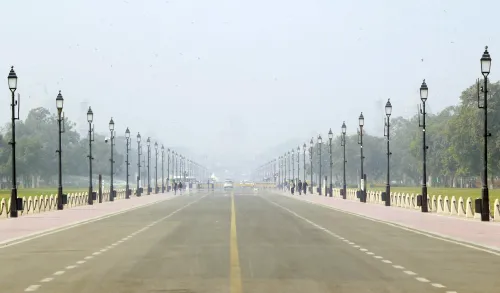
Monitoring stations in central and southern Delhi reported 'very poor' air quality levels, with readings showing 370 at Mandi House and India Gate, 340 at Mathura Road and Sarojini Nagar, and both Rashtrapati Bhawan and ITO recording an AQI of 357.
In more affected areas, the air quality plunged into the 'severe' zone, with Noida clocking in at 418, Karol Bagh 408, Rajouri Garden 406, Mundka 472, Patel Nagar 410, Chanakyapuri 405, Vasant Kunj 402, Saket 430, and Vikaspuri 472.
Lajpat Nagar peaked with an AQI of 500, while IGI Airport alarmingly recorded an AQI of 512. Patel Nagar's readings also confirmed an AQI of 406.
These foggy conditions coincide with troubling predictions from air quality experts, who warn that pollution levels in the national capital region are expected to significantly escalate as the year ends.
According to the Air Quality Index classification, air quality is categorized as good (0–50), satisfactory (51–100), moderate (101–200), poor (201–300), very poor (301–400), and severe (401–500).
The India Meteorological Department (IMD) has predicted that dense fog will persist through Wednesday and has called on commuters and travelers to exercise caution while navigating the roads.
Low visibility has also impacted air travel, leading to advisories from airlines and airport authorities.
IndiGo has alerted passengers about potential delays and cancellations at Delhi and other northern Indian airports, assuring that they are monitoring weather conditions closely to minimize disruptions.
Similarly, Air India issued a travel advisory, announcing early cancellations of specific morning flights likely to be affected by fog-related visibility issues.
Weather patterns across northern India continue to be shaped by an active Western Disturbance.
The Meteorological Department has also issued a yellow alert for dense fog and light rain in parts of Punjab and Chandigarh, with rain forecasted to continue until January 1.
Many locations in the region are experiencing near-zero visibility amidst cold, damp, and hazardous conditions, exacerbating travel difficulties and raising public health concerns.
Point of View
I urge our readers to understand the gravity of the air quality situation in Delhi. With the AQI reaching alarming levels, it is critical for officials to take decisive action. Citizens should remain informed and cautious as we navigate through these hazardous conditions together.
NationPress
22 Sept 2026
Frequently Asked Questions
What is the current AQI in Delhi?
The current AQI in Delhi is recorded at 408, which falls into the 'severe' category.
What are the health implications of a severe AQI?
A severe AQI can lead to serious health issues, including respiratory problems and cardiovascular diseases, particularly for vulnerable populations.
How does fog affect air quality?
Fog can trap pollutants near the ground, leading to higher concentrations of harmful particles in the air.
What precautions should people take during severe air quality conditions?
People should limit outdoor activities, wear masks, and use air purifiers indoors to protect themselves from harmful pollutants.
Are there any travel advisories due to the current air quality?
Yes, airlines have issued travel advisories concerning potential delays and cancellations due to low visibility conditions.