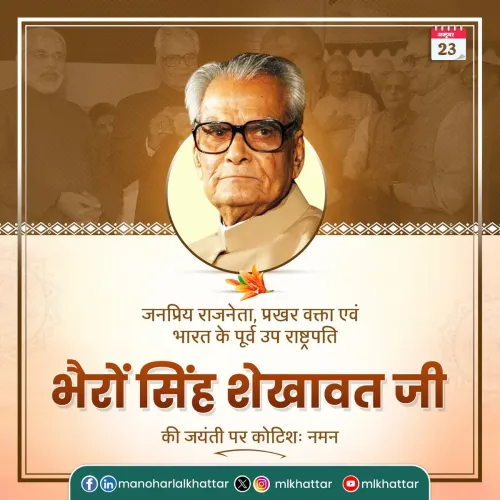
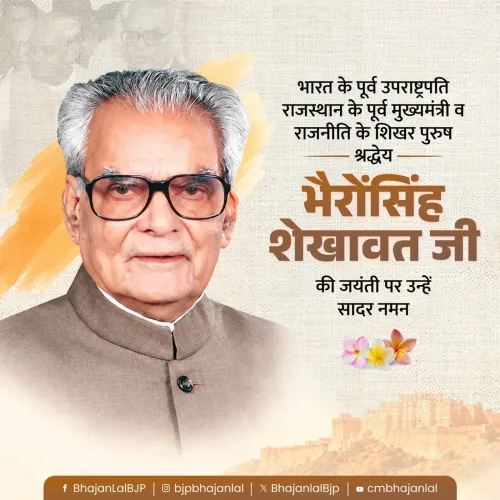
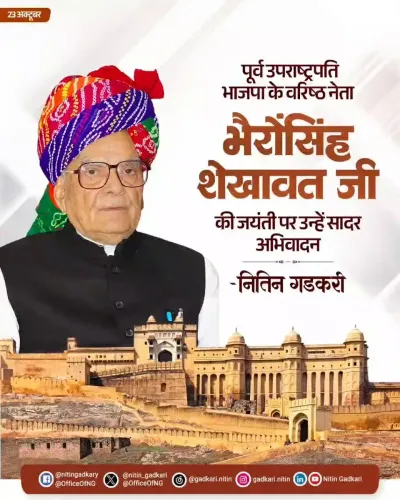
Bhairon Singh Shekhawat birth anniversary: Gajendra Singh hails him as 'Ajatshatru' of Indian politics
Synopsis
On Bhairon Singh Shekhawat's birth anniversary, Union Minister Gajendra Singh Shekhawat invoked the former Vice President's legacy as an 'Ajatshatru' — a man without enemies — and a grassroots stalwart who shaped Rajasthan's welfare and panchayat politics. The tribute doubled as a BJP confidence boost ahead of ongoing Panchayati Raj elections.
Key Takeaways
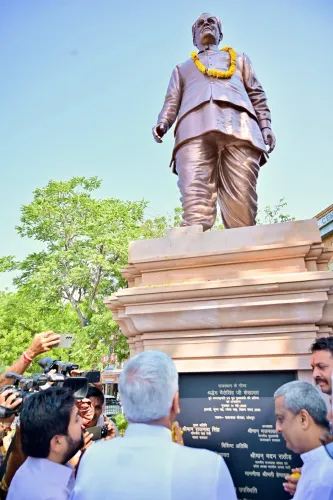
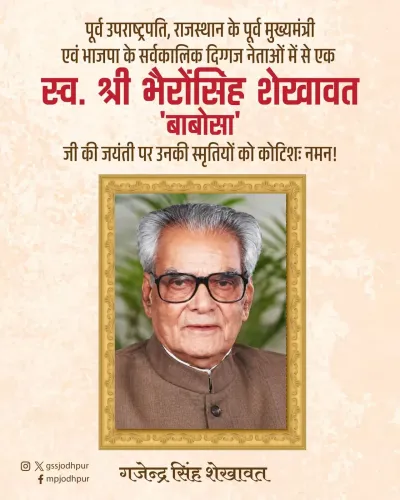
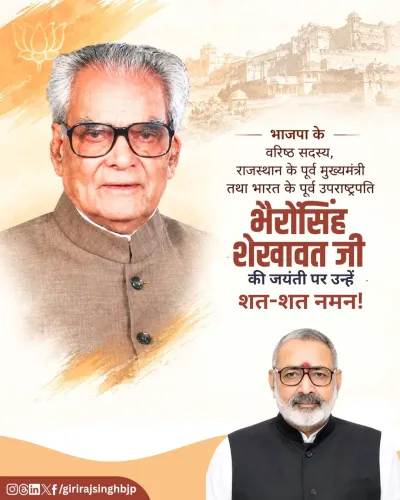
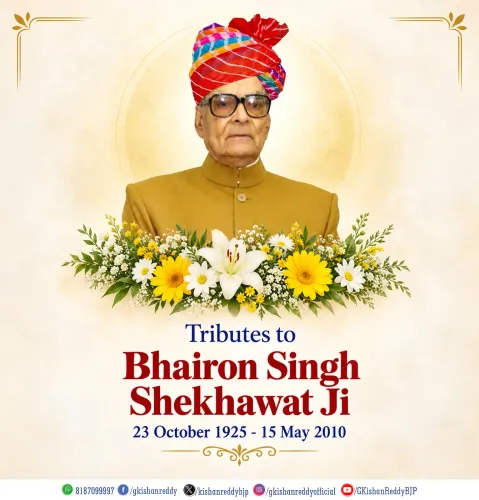
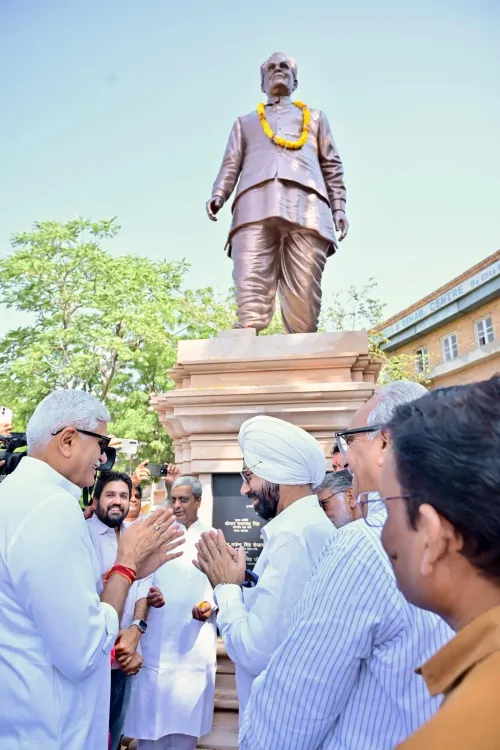
Union Minister Gajendra Singh Shekhawat paid tribute to former Vice President Bhairon Singh Shekhawat on his birth anniversary on 23 October in Jaipur .
He described Bhairon Singh Shekhawat as an 'Ajatshatru' — a leader with no enemies — and a towering figure in modern Indian politics.
Bhairon Singh Shekhawat's first tenure as Rajasthan Chief Minister began in 1977 , during which food grain distribution and food-for-work programmes were launched.
The minister credited Shekhawat with expanding Panchayati Raj and helping the BJP build grassroots presence across Rajasthan's villages and tribal areas.
The BJP claims it has secured support in more than 70% of urban local bodies in Rajasthan, including 36 of 41 local bodies in western Rajasthan.
Union Minister for Culture and Tourism Gajendra Singh Shekhawat on 23 October paid tribute to former Vice President Bhairon Singh Shekhawat on his birth anniversary, describing him as an 'Ajatshatru' — a leader with no enemies — of modern Indian politics and an ideal public servant who remained deeply connected to ordinary citizens throughout his life.
A Leader Forged Through Perseverance
Speaking to reporters in Jaipur, the Union Minister recalled how Bhairon Singh Shekhawat rose from a modest family background to occupy the country's second-highest constitutional office. Gajendra Singh Shekhawat said the journey was defined by hard work, political acumen, resilience, and an instinctive understanding of public concerns.
He described the former Vice President as a 'towering banyan tree' of Indian politics — one whose career of challenges and setbacks served as a guiding example for politicians across generations, particularly in Rajasthan and across North India.
Roots in Rajasthan, Reach Across the Nation
The minister noted that even after assuming the country's highest offices, Bhairon Singh Shekhawat maintained close ties with the grassroots. He reportedly continued to nurture relationships with villages, dhanis (remote hamlets), and panchayats across Rajasthan — a quality, the minister said, that distinguished him from many of his contemporaries.
Gajendra Singh Shekhawat also highlighted the former leader's role in institutionalising welfare through the Antyodaya scheme, which aimed at uplifting the poorest sections of society. During Shekhawat's first tenure as Rajasthan Chief Minister, beginning in 1977, the government undertook food grain distribution and food-for-work programmes to support vulnerable communities — an approach the minister cited as a model of inclusive governance.
Panchayati Raj and Grassroots Democracy
Gajendra Singh Shekhawat drew attention to Bhairon Singh Shekhawat's contribution to expanding grassroots political participation through Panchayati Raj institutions. According to the minister, the decision to contest panchayat elections on party symbols helped the Bharatiya Janata Party (BJP) strengthen its organisational presence in villages, remote settlements, and tribal areas across Rajasthan.
BJP's Confidence Ahead of Panchayati Raj Polls
Referring to ongoing Panchayati Raj elections in Rajasthan, the minister expressed confidence that the BJP would replicate the momentum seen in recent local body elections. He claimed the party had secured support in more than 70 per cent of urban local bodies across the state, and in western Rajasthan specifically, the BJP had formed governing boards in 36 of 41 local bodies.
Gajendra Singh Shekhawat said he expects this electoral foothold to translate into a strong performance in the ongoing panchayat-level polls. The tribute to Bhairon Singh Shekhawat, held on his birth anniversary, thus served as both a moment of remembrance and a political affirmation of the legacy he built at the grassroots.
Point of View
Gajendra Singh Shekhawat is doing double duty — statesman and campaigner. What is worth noting is the Antyodaya lineage: Bhairon Singh Shekhawat helped shape that welfare architecture before it became a national programme, a fact often eclipsed by his Vice Presidential tenure. Whether that legacy translates into votes in 2026's panchayat polls is the real test of its continued resonance.
NationPress
23 Oct 2026
Frequently Asked Questions
Who was Bhairon Singh Shekhawat?
Bhairon Singh Shekhawat was a senior BJP leader from Rajasthan who served as the state's Chief Minister multiple times, beginning in 1977, and later as Vice President of India. He was widely regarded as a grassroots-connected leader and a key architect of the Antyodaya welfare scheme in Rajasthan.
What does 'Ajatshatru' mean and why was it used to describe Bhairon Singh Shekhawat?
'Ajatshatru' is a Sanskrit term meaning 'one who has no enemies.' Union Minister Gajendra Singh Shekhawat used the term to describe Bhairon Singh Shekhawat's reputation as a leader who commanded cross-party respect and maintained bonds across political lines throughout his career.
What was the Antyodaya scheme associated with Bhairon Singh Shekhawat?
The Antyodaya scheme was a welfare initiative associated with Bhairon Singh Shekhawat, aimed at uplifting the poorest and most disadvantaged communities. During his tenure as Rajasthan Chief Minister from 1977, programmes involving food grain distribution and food-for-work were also undertaken for vulnerable sections of society.
What did Gajendra Singh Shekhawat say about the BJP's performance in Rajasthan local body elections?
The minister claimed the BJP had secured support in more than 70 per cent of urban local bodies across Rajasthan, and had formed governing boards in 36 of the 41 local bodies in western Rajasthan. He expressed confidence this momentum would carry into the ongoing Panchayati Raj elections.
Why is Bhairon Singh Shekhawat significant for Panchayati Raj in Rajasthan?
Bhairon Singh Shekhawat is credited with strengthening grassroots democracy in Rajasthan by expanding Panchayati Raj institutions and introducing party-symbol-based elections at the panchayat level. According to Gajendra Singh Shekhawat, this helped the BJP build its organisational presence in villages, remote settlements, and tribal areas across the state.