Gujarat allocates 39% of budget to capex; CM Patel highlights GIFT City growth
Synopsis
Gujarat is directing nearly two-fifths of its entire budget to capital expenditure — and GIFT City is the centrepiece. With a newly doubled 20-year tax holiday from the Union Budget and an AI Centre of Excellence already operational, the state is making a high-stakes bet that Gandhinagar's financial district can genuinely rival global IFSCs, not just on paper but in active institutional depth.
Key Takeaways
Gujarat has allocated 39% of its total budget to capital expenditure, Chief Minister Bhupendra Patel announced on 11 August .
GIFT City is now active across banking, insurance, asset management, fintech, aircraft leasing and ship leasing , among other sectors.
The Union Budget extended the tax holiday for GIFT City businesses from 10 years to a continuous 20 years .
The AI Centre of Excellence at GIFT City is operational, focusing on banking, risk management, and wealth management solutions.
Metro connectivity and the Sabarmati Riverfront extension to GIFT City are progressing to improve infrastructure.
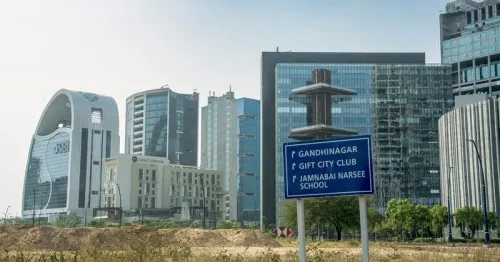
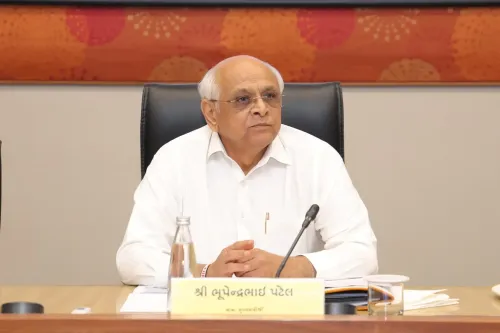
Gujarat has set aside 39 per cent of its total annual budget for capital expenditure, Chief Minister Bhupendra Patel announced on Tuesday, 11 August, underscoring the state's strategic pivot toward infrastructure, advanced technology, and emerging financial sectors. The disclosure came as GIFT City — Gujarat International Finance Tec-City — continues to cement its position as India's primary international financial hub.
Key Developments at Global Connect GIFT City Edition
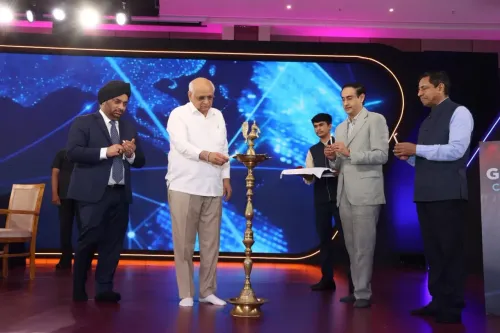
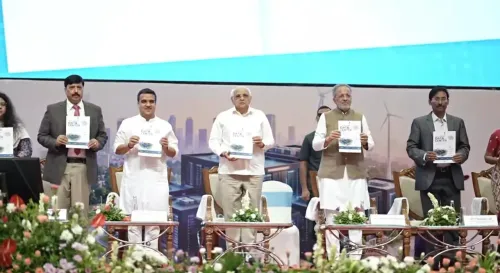
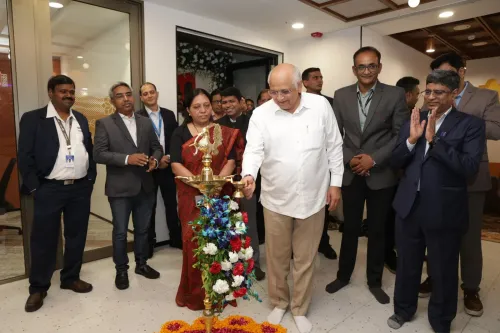
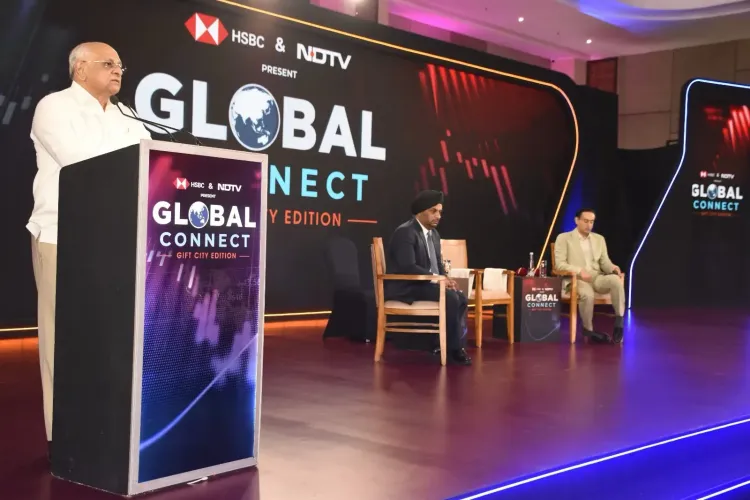
Patel made the announcement while addressing the inaugural session of the Global Connect GIFT City Edition, a joint event organised by HSBC and NDTV at GIFT City in Gandhinagar. He said the capital expenditure allocation reflects the state's focus on semiconductors, data centres, and artificial intelligence (AI), sectors that the government views as critical to long-term economic competitiveness.
GIFT City's Expanding Financial Footprint
The Chief Minister described GIFT City as a 'powerful instrument' for globalising India's financial sector. He noted that the city — the country's first Financial Tech City — is now active across banking, insurance, asset management, capital market services, fund management, fintech, aircraft leasing, and ship leasing.
Patel also highlighted the role of the International Financial Services Centre Authority (IFSCA) — India's only such regulatory body — and the bullion exchange operating within GIFT City as fresh catalysts for the financial sector's development. He added that the city's AI Centre of Excellence has emerged as a platform for connecting start-ups, experts, and businesses around new solutions in banking, risk management, and wealth management.
Union Budget Incentives and the 20-Year Tax Holiday
A significant policy boost has come from the Union Budget, which introduced a continuous 20-year tax holiday for businesses operating from GIFT City — doubling the earlier 10-year period. Patel said this extended window would give investors greater confidence and long-term flexibility, making GIFT City a more attractive destination for global capital.
He also pointed to GIFT City's growing role in green bonds, sustainable financing, climate finance, and renewable energy financing as part of a broader alignment with the Centre's 'green growth' agenda.
Infrastructure and Connectivity Push
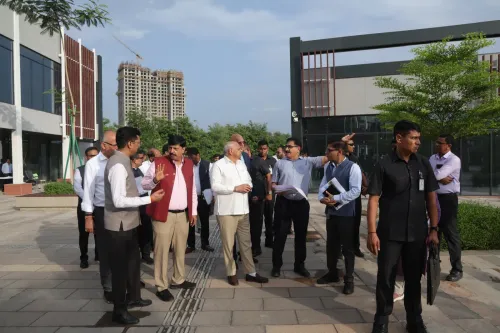
Beyond finance, Patel stressed improvements to physical infrastructure within and around GIFT City. Metro connectivity has been extended to ease commuting for residents and professionals. Work to extend Ahmedabad's Sabarmati Riverfront up to GIFT City is reportedly progressing at full pace, further integrating the financial district with the broader urban fabric.
Recalling the area's transformation, Patel noted that the location once consisted mainly of farmland and the ravines of the Sabarmati river and now hosts world-class financial institutions. He described GIFT City's development as an example of 'thinking ahead of the present and translating that vision into reality.'
With the 20-year tax holiday in place and infrastructure investment accelerating, GIFT City's next phase of growth will hinge on whether global financial institutions deepen their commitments beyond registrations to active operations.
Point of View
But the more consequential signal is the Centre's decision to double GIFT City's tax holiday to 20 years — that is a structural incentive, not an annual budget line. The real question is whether GIFT City is attracting genuine operational depth or merely registrations of convenience. India's IFSC ambition has existed since 2015; a decade on, the gap between registered entities and actively trading desks remains the metric that matters most. The AI Centre of Excellence and the bullion exchange add sectoral breadth, but breadth without liquidity is optics. Global financial centres are built on transaction volume, not tax breaks alone.
NationPress
26 Sept 2026
Frequently Asked Questions
What is Gujarat's capital expenditure allocation in its current budget?
Gujarat has allocated 39 per cent of its total annual budget to capital expenditure, as announced by Chief Minister Bhupendra Patel on 11 August. The allocation covers infrastructure, semiconductors, data centres, and artificial intelligence.
What is GIFT City and why is it significant?
GIFT City — Gujarat International Finance Tec-City — is India's first Financial Tech City and the country's only International Financial Services Centre, regulated by the IFSCA. It hosts banking, insurance, fintech, asset management, aircraft leasing, and a bullion exchange, positioning India as a global financial hub.
What is the 20-year tax holiday announced for GIFT City?
The Union Budget extended the tax holiday for businesses operating from GIFT City from the earlier 10-year period to a continuous 20-year period. Chief Minister Patel said this would give investors greater confidence and long-term flexibility to commit capital to the financial hub.
What is the AI Centre of Excellence at GIFT City?
The AI Centre of Excellence is a platform established at GIFT City to bring together start-ups, experts, and businesses focused on AI-driven solutions in banking, risk management, and wealth management. Chief Minister Patel described it as a key enabler of GIFT City's next phase of growth.
What infrastructure upgrades are planned for GIFT City?
Metro connectivity has already been extended to GIFT City to improve mobility for residents and professionals. Work to extend Ahmedabad's Sabarmati Riverfront up to GIFT City is also reportedly under way at full pace.