Haryana farmers to shut market offices on Oct 14 over below-MSP crop sales
Synopsis
Two major Haryana farmer bodies, backed by 23 affiliated groups, have called a three-hour mandi lockdown on 14 October to protest alleged below-MSP sales of paddy and millet, procurement quotas, and unauthorised deductions — with a warning that a larger agitation will follow if the government stays silent.
Key Takeaways
The Samyukt Kisan Morcha Haryana and Haryana Kisan Mazdoor Sangharsh Morcha , along with 23 affiliated bodies , resolved on 10 October to hold statewide protests.
Market committee offices across all Haryana districts will be locked down on 14 October from 11 am to 2 pm .
Farmers allege crops are being sold below the declared MSP — ₹2,461 per quintal for paddy and ₹2,900 per quintal for millet.
Key grievances include per-acre procurement limits, district-specific restrictions, online portal failures, and unauthorised deductions.
Leaders warned of a larger agitation if the government does not act by 14 October .
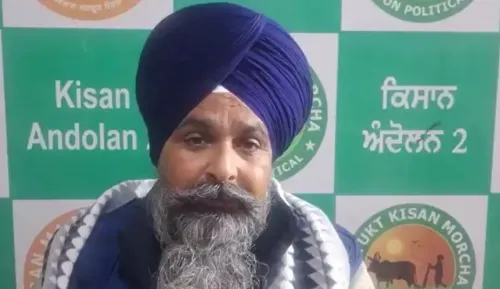
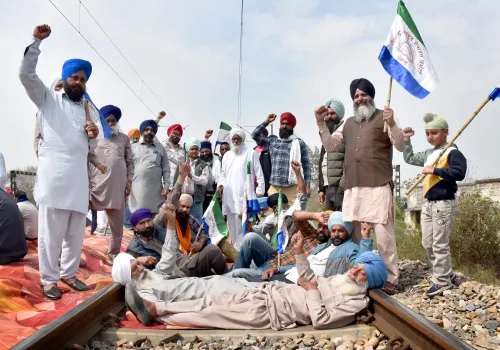
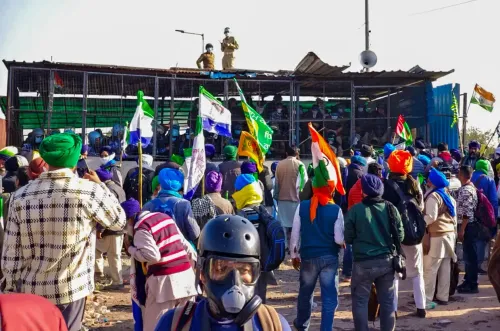
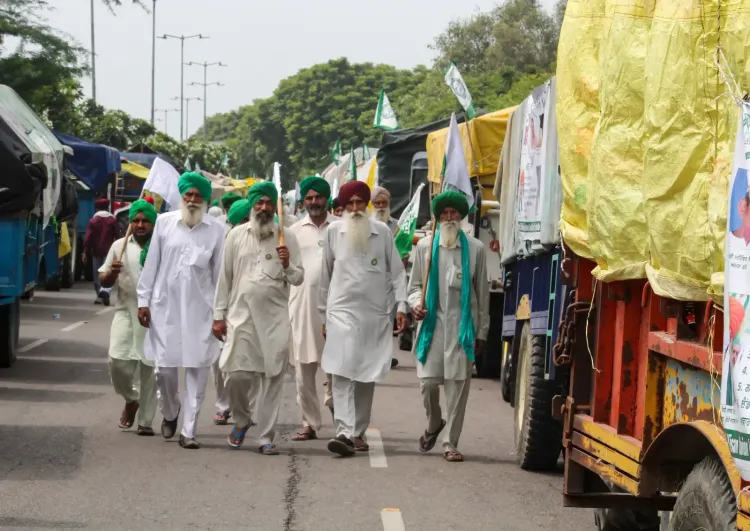
Farmer organisations in Haryana on Saturday, 10 October resolved to launch a united agitation against alleged irregularities in crop procurement, including sales below the minimum support price (MSP) and what they described as anti-farmer conditions imposed during the purchasing process. The joint decision was taken at a meeting held in Narwana town, marking a significant escalation of farmer discontent ahead of the peak paddy procurement season.
What Was Decided at Narwana
Two major farm bodies — the Samyukt Kisan Morcha Haryana and the Haryana Kisan Mazdoor Sangharsh Morcha — convened the joint meeting, which was chaired by Rattan Mann, Lakhwinder Aulakh, Balbir Singh, and Mandeep Nathwan. Representatives of 23 constituent organisations affiliated with the two fronts participated in the deliberations.
The organisations announced three-hour lockdown protests at market committee offices across all districts of Haryana on 14 October, from 11 am to 2 pm. The demonstrations will target alleged exploitation of farmers in mandis, crop sales at prices below the declared MSP, unauthorised deductions from payments, and what the groups called anti-farmer procurement conditions.
The Grievances: MSP, Portals, and Procurement Limits
Farmer leaders told reporters after the meeting that cultivators were facing acute difficulties during the ongoing paddy procurement season. Among the specific complaints: per-acre limits on paddy and millet procurement, district-specific purchase restrictions, repeated technical failures on the official online portal, and alleged unauthorised deductions from crop payments.
The organisations alleged that paddy and millet were being sold in Haryana's mandis at prices below the declared MSP. The MSP for paddy stands at ₹2,461 per quintal and for millet at ₹2,900 per quintal, according to the leaders, who argued that the government must be held accountable if farmers are receiving less than these prescribed rates.
Rattan Mann, state president of the Bharatiya Kisan Union, said farmers worked day and night to produce food for the country but faced unnecessary restrictions and low prices when it came time to sell. 'Declaring an MSP has meaning only when farmers actually receive the prescribed price for their produce,' Mann said, demanding that the government answer for below-MSP prices and procurement restrictions.
Warning of a Larger Agitation
The leaders warned that if the Haryana government failed to address their demands despite the 14 October protests, they would announce the next phase of a larger agitation on that same day. This comes amid a broader pattern of farmer unrest in Haryana, a state that has historically been at the centre of agrarian mobilisations, including the extended farm laws protests of 2020–21.
Notably, the simultaneous participation of 23 affiliated bodies signals a degree of organisational unity that could sustain momentum beyond a single-day demonstration. Whether the government responds before the deadline will likely determine the scale of what follows.
What Happens Next
The 14 October protests are positioned as a pressure tactic, with the two organisations reserving the right to escalate. Farmers, traders, and district administration officials in mandi towns across Haryana will be watching closely, as a prolonged agitation could disrupt the already-strained paddy procurement logistics during a critical harvest window.
Point of View
Giving farmers maximum leverage to disrupt mandi operations. Yet the deeper issue is structural: MSP exists on paper, but enforcement mechanisms in Haryana's mandis remain opaque, leaving farmers with no real-time recourse when prices dip below the floor. The government's silence ahead of a protest that has 23 organisations behind it is a political risk in a state where agrarian constituencies are electorally decisive. If the administration does not engage before 14 October, the escalation warning is credible — and a longer lockdown of mandis during harvest season could have supply-chain consequences well beyond Haryana.
NationPress
10 Oct 2026
Frequently Asked Questions
Why are Haryana farmers protesting on 14 October 2026?
Haryana farmer organisations are protesting on 14 October over alleged sales of paddy and millet below the declared MSP, per-acre procurement limits, district-specific restrictions, online portal failures, and unauthorised deductions from crop payments. The three-hour lockdown of market committee offices is intended to pressure the state government into action.
What is the MSP for paddy and millet in Haryana?
The declared MSP for paddy is ₹2,461 per quintal and for millet is ₹2,900 per quintal, according to the farmer organisations. They allege that crops are being purchased in Haryana's mandis at prices below these government-prescribed rates.
Which organisations are leading the Haryana farmer protests?
The protest is being led jointly by the Samyukt Kisan Morcha Haryana and the Haryana Kisan Mazdoor Sangharsh Morcha, with representatives of 23 constituent organisations participating. The joint meeting in Narwana was chaired by Rattan Mann, Lakhwinder Aulakh, Balbir Singh, and Mandeep Nathwan.
What will happen if the government does not respond by 14 October?
The farmer organisations have warned that if the Haryana government fails to address their demands by 14 October, they will announce the next phase of a larger agitation on the same day. No specific details of the escalation have been disclosed yet.
What is the significance of the Narwana meeting?
The Narwana meeting brought together 23 affiliated farm bodies under two major fronts, signalling a rare degree of organisational unity among Haryana farmers. This coordination, during the peak paddy procurement season, gives the planned protest significant disruptive potential and political weight.