What Are the New Rs 402 Crore Solar-Powered Micro Irrigation Projects in Haryana?
Synopsis
Haryana has initiated a transformative approach to water management by approving Rs 402 crore for solar-powered micro irrigation projects. This innovative strategy aims to empower farmers, enhance water efficiency, and promote sustainable practices across multiple districts.
Key Takeaways
Investment of Rs 402.41 crore in micro irrigation projects.
Benefiting 8,926 farmers across 94 villages.
Implementation in Bhiwani, Jhajjar, Kurukshetra, and Mahendragarh .
Completion timeline set for 2026–27 to 2028–29 .
Focus on solar-powered and sustainable irrigation practices.
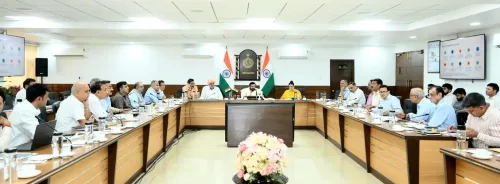
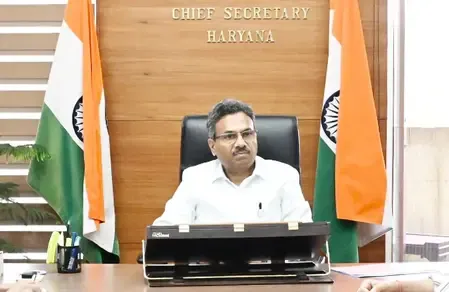
Chandigarh, Feb 18 (NationPress) In a significant stride toward sustainable agriculture and effective water management, the State-Level Sanctioning Committee (SLSC), chaired by Haryana Chief Secretary Anurag Rastogi, approved four community-focused solar-powered integrated micro irrigation projects under the Micro Irrigation and Command Area Development Authority (MICADA) on Wednesday.
With a cumulative investment of Rs 402.41 crore, these initiatives will be executed across 61 canal outlets, impacting 20 blocks in the districts of Bhiwani, Jhajjar, Kurukshetra, and Mahendragarh. The projects are slated for completion between 2026–27 and 2028–29, aiming to introduce advanced micro-irrigation systems to 11,040 hectares of arable land, benefitting 8,926 farmers in 94 villages.
The financial distribution for the districts is Rs 95.78 crore for Bhiwani, Rs 114.68 crore for Jhajjar, Rs 77.17 crore for Kurukshetra, and Rs 114.78 crore for Mahendragarh, reflecting a focused effort to bolster irrigation infrastructure in areas facing water scarcity.
The benefit-cost ratio for these projects ranges between 1.21:1 and 1.65:1, highlighting strong economic feasibility and the potential for enhanced returns for the agricultural community through better water management and increased crop yields.
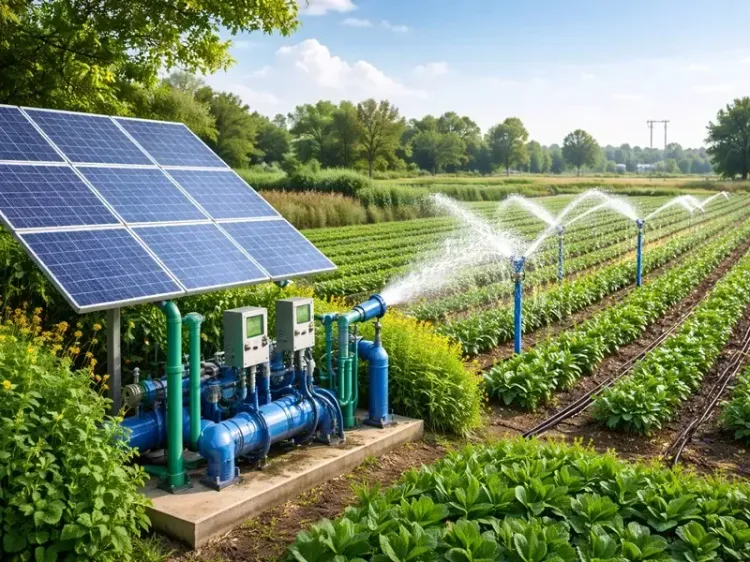
By implementing drip and sprinkler systems within canal command areas, these projects are designed to greatly improve water use efficiency, minimize losses in transmission and distribution, and elevate overall crop productivity while ensuring optimal use of available water.
During the meeting, the Chief Secretary underscored the necessity of an integrated approach to both supply and demand management of water resources to tackle climate variability, dwindling groundwater levels, and the rising demand for agricultural water. He instructed the relevant departments to guarantee prompt execution, rigorous monitoring, and effective collaboration across departments to ensure that the intended benefits reach farmers in a timely manner.
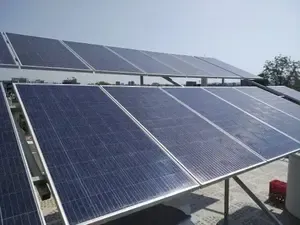
He further pointed out that the integration of solar-powered systems would lessen reliance on traditional energy sources, reduce operational expenses for farmers, and promote environmentally friendly irrigation practices aligned with clean energy objectives.
The Chief Secretary also directed officials to conduct regular field visits and share best practices with farmers to ensure effective implementation and maximization of the micro irrigation systems.
This program will operate under a beneficiary-driven Direct Benefit Transfer (DBT)/in-kind model, enabling farmers to choose suppliers while subsidies are disbursed within approved cost limits, ensuring flexibility and transparency.
To boost transparency and prevent discrepancies, the MICADA portal will be linked with the GST portal to facilitate digital invoice authentication, thereby averting fraudulent or inflated billing and ensuring proper verification of subsidy claims.
A component-wise bank guarantee mechanism has also been approved to ensure financial accountability of vendors and protect public funds, with GST included in the allowable subsidy as per government guidelines, providing additional financial assistance to farmers adopting micro irrigation systems.
Point of View
The approval of these solar-powered micro irrigation projects in Haryana represents a crucial step toward enhancing agricultural sustainability and addressing water scarcity. It reflects a proactive approach to integrating technology with farming practices, which is essential for the future of food security in India.
NationPress
19 Sept 2026
Frequently Asked Questions
What is the total investment for the micro irrigation projects?
The total investment for the micro irrigation projects in Haryana is Rs 402.41 crore.
Which districts will benefit from these projects?
The projects will be implemented in the districts of Bhiwani, Jhajjar, Kurukshetra, and Mahendragarh.
How many farmers will benefit from these projects?
Approximately 8,926 farmers across 94 villages will benefit from these micro irrigation projects.
What is the expected completion date for these projects?
The projects are expected to be completed between 2026–27 and 2028–29.
What type of irrigation systems will be used?
The projects will promote drip and sprinkler irrigation systems to enhance water use efficiency.