Himachal Pradesh removes caste column from school admission forms next session
Synopsis
Himachal Pradesh is removing caste from school admission forms — a quiet but symbolically significant step in a country where caste identifiers are embedded in records from childhood. CM Sukhu's directive, issued at a Scheduled Caste Welfare Board meeting, pairs this reform with a suite of welfare measures including subsidised solar projects, 1% education loans, and free electricity for the poorest families.
Key Takeaways
CM Sukhvinder Sukhu directed removal of the caste column from school admission forms starting the next academic session, announced on 26 August in Shimla .
Scheduled Caste members will still provide caste details when availing government welfare schemes and benefits.
Under the Rajiv Gandhi Start-up Swarozgar Saur Yojana , subsidies of 5% (tribal areas) and 4% (other areas) are available for solar projects of 100 KW to 2 MW .
Education loans of up to ₹20 lakh are available to meritorious students at 1% interest for higher education.
The Apna Parivar Sukhi Parivar Yojana will provide extremely poor families 300 units of free electricity and women a monthly pension of ₹1,500 .
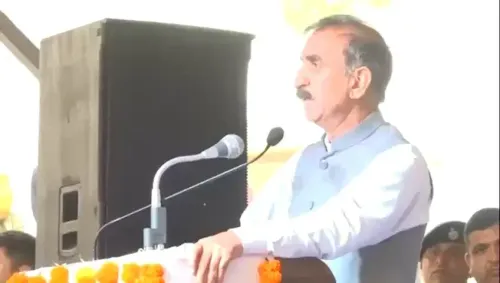
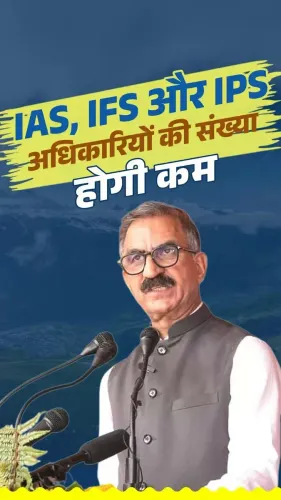
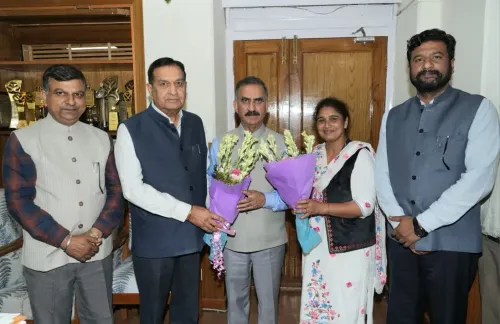
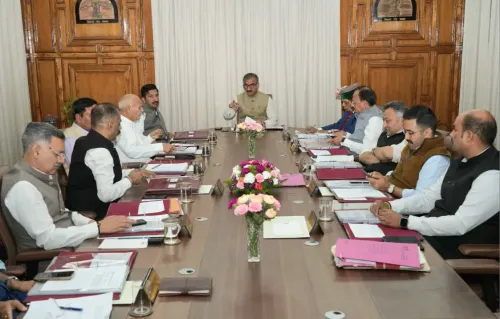
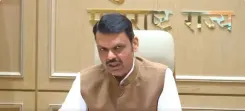
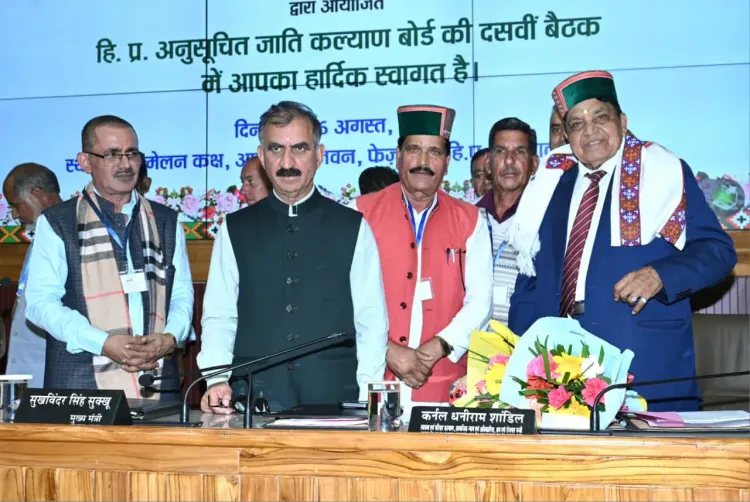
Himachal Pradesh Chief Minister Sukhvinder Sukhu on Wednesday, 26 August directed that the caste column be eliminated from school admission forms starting the next academic session. The decision was announced at a meeting of the Himachal Pradesh Scheduled Caste Welfare Board (HPSCWB) in Shimla, as part of the state government's stated commitment to ending caste-based discrimination in educational institutions.
What the Decision Means
The removal of the caste column is intended to prevent children from developing a sense of inferiority rooted in caste identity from an early age. Chief Minister Sukhu clarified, however, that members of the Scheduled Caste community will continue to provide caste details when applying for government welfare schemes and benefits, ensuring they face no barriers in accessing entitlements. The change applies specifically to the school admission process and does not affect eligibility documentation for welfare programmes.
Welfare Schemes Highlighted at the Meeting
The Chief Minister outlined several initiatives being prioritised for Scheduled Caste welfare. Under the Rajiv Gandhi Start-up Swarozgar Saur Yojana, the government is offering subsidies for solar projects ranging from 100 KW to 2 MW — a subsidy of 5 per cent in tribal areas and 4 per cent in other regions. He stressed that all eligible beneficiaries must be made aware of available schemes so that no one is left out.
The state is also extending education loans of up to ₹20 lakh to meritorious students for higher education at an interest rate of just 1 per cent, aimed at preventing financial hardship from forcing students to drop out.
Apna Parivar Sukhi Parivar Yojana for Poorest Families
Sukhu announced plans to implement the Apna Parivar Sukhi Parivar Yojana for extremely poor families. Under this scheme, eligible households will receive 300 units of free electricity, while women from these families will be entitled to a monthly pension of ₹1,500. The scheme is positioned as a direct relief measure targeting the most economically vulnerable sections of the population.
Context and Significance
The move to strip caste identifiers from school forms is notable in a country where caste remains a deeply embedded social marker. Critics and social reformers have long argued that embedding caste in foundational documents — including school records — normalises hierarchies from childhood. Himachal Pradesh's step, if implemented effectively, could serve as a reference point for other states. Notably, the directive was issued at a Scheduled Caste Welfare Board meeting, signalling that the decision carries institutional backing rather than being a standalone announcement. The state government is expected to issue formal guidelines to schools ahead of the next admission cycle.
Point of View
Or whether caste simply migrates to other institutional touchpoints. The carve-out for welfare scheme documentation is pragmatically necessary but also reveals the tension at the heart of the reform: the state simultaneously wants to erase caste as a social marker and preserve it as an administrative category. That tension is not unique to Himachal Pradesh — it is the central unresolved contradiction of India's affirmative action architecture, and no single state-level directive will resolve it.
NationPress
10 Oct 2026
Frequently Asked Questions
What has Himachal Pradesh decided about caste in school admission forms?
Chief Minister Sukhvinder Sukhu has directed that the caste column be removed from school admission forms in Himachal Pradesh starting the next academic session. The decision was announced on 26 August at a Himachal Pradesh Scheduled Caste Welfare Board meeting in Shimla.
Will Scheduled Caste students still need to declare their caste anywhere?
Yes. While the caste column will be removed from school admission forms, Scheduled Caste members will still be required to provide caste details when applying for government welfare schemes and benefits to ensure they can access their entitlements without difficulty.
What is the Apna Parivar Sukhi Parivar Yojana announced by CM Sukhu?
It is a welfare scheme for extremely poor families in Himachal Pradesh under which eligible households will receive 300 units of free electricity, and women from these families will get a monthly pension of ₹1,500. The government has announced plans to implement the scheme.
What education support is the Himachal Pradesh government offering to students?
The state government is providing loans of up to ₹20 lakh to meritorious students for higher education at an interest rate of 1 per cent, aimed at ensuring financial constraints do not force students to discontinue their studies.
What is the Rajiv Gandhi Start-up Swarozgar Saur Yojana?
It is a solar energy scheme under which the Himachal Pradesh government provides subsidies for projects ranging from 100 KW to 2 MW — 5 per cent in tribal areas and 4 per cent in other areas — to support entrepreneurship and renewable energy adoption.