INDIA bloc marches on Supreme Court, demands CEC Gyanesh Kumar's resignation
Synopsis
The INDIA bloc took its fight over alleged electoral fraud to the streets of New Delhi on 12 October, marching toward the Supreme Court and demanding CEC Gyanesh Kumar quit. With Congress, AAP, and RJD united behind a single slogan — 'vote theft' — the opposition is betting that judicial pressure and mass mobilisation can force a reckoning over the Special Intensive Revision of voter rolls.
Key Takeaways
INDIA bloc leaders launched a protest march towards the Supreme Court in New Delhi on 12 October 2026 .
The opposition demanded the resignation of Chief Election Commissioner Gyanesh Kumar over allegations of 'vote theft' and irregularities in the Special Intensive Revision (SIR) of electoral rolls.
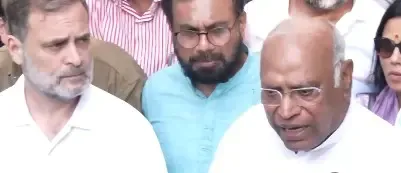
Congress president Mallikarjun Kharge and Rahul Gandhi departed from the Constitution Club of India as the march began.
RJD leader Tejashwi Yadav alleged the Election Commission had become a 'complete puppet' of the BJP ; AAP MP Sanjay Singh demanded the CEC's immediate resignation.
The bloc plans to submit a legal representation to the Supreme Court; the Election Commission has not publicly responded to the specific allegations.
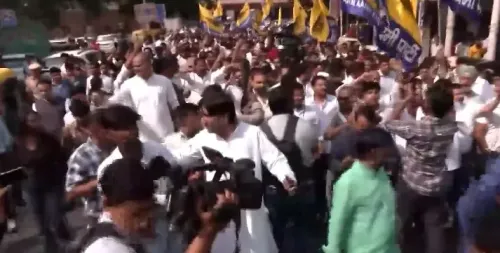
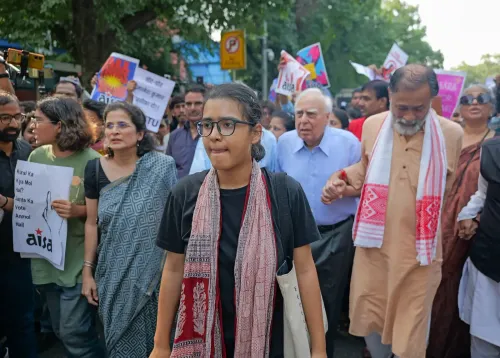
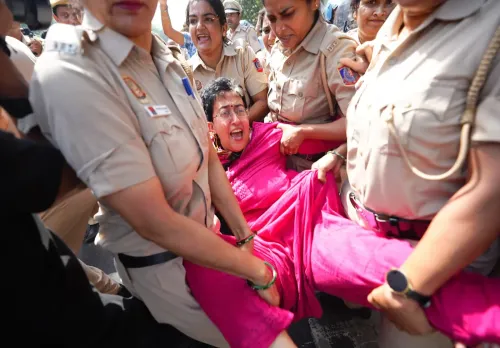
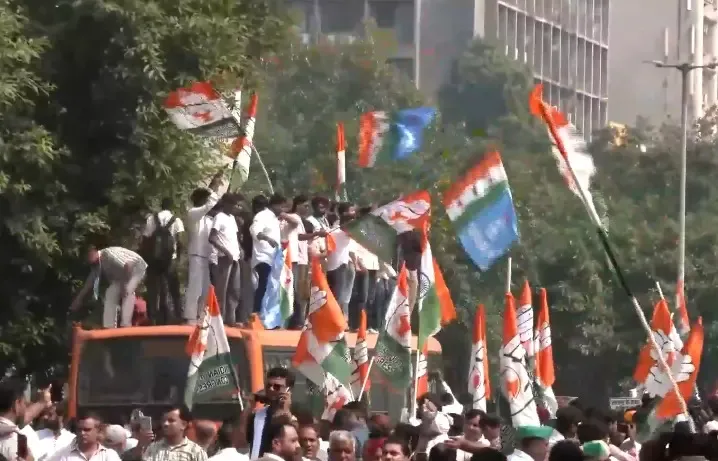
Leaders of the INDIA bloc on Monday, 12 October 2026, launched a protest march towards the Supreme Court in New Delhi, vowing to seek legal intervention to protect democratic and constitutional rights. The demonstration unfolded amid heavy security deployment and barricading by the Delhi Police, as opposition leaders simultaneously demanded the resignation of Chief Election Commissioner (CEC) Gyanesh Kumar over allegations of 'vote theft' and irregularities in the electoral process.
How the March Unfolded
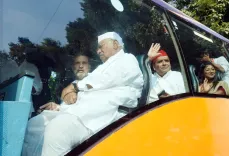
A bus carrying Congress president Mallikarjun Kharge, Lok Sabha Leader of the Opposition Rahul Gandhi, and other alliance leaders departed from the Constitution Club of India as the march got underway. Congress MP Manish Tewari told reporters: 'We want to submit a representation to the Hon'ble Supreme Court. Therefore, the entire Opposition is collectively going to Barakhamba Road. Let's see where it goes from here.'
Aam Aadmi Party (AAP) Delhi President Saurabh Bharadwaj said the bloc planned to proceed to Jantar Mantar, adding: 'We are going to Jantar Mantar to see whether the police stop us or allow us to proceed. We have the right to express our views.'
What Triggered the Protest
Congress leader Sandeep Dikshit described the march as part of an ongoing campaign, tracing its roots to when Rahul Gandhi first raised concerns about the Special Intensive Revision (SIR) of electoral rolls at Indira Gandhi Bhawan. Dikshit alleged the SIR was 'a completely fraudulent, wrongful and deceptive process' and said the campaign had since drawn support from students, civil society organisations, and multiple political parties.
Rashtriya Janata Dal (RJD) leader Tejashwi Yadav said his party had been fighting against the SIR process and had already launched a campaign in Bihar. He alleged that the Election Commission of India had become 'a complete puppet' of the ruling Bharatiya Janata Party (BJP) and accused it of facilitating fraudulent elections. 'Democracy is being crushed. When democracy is continuously under attack and being undermined, how can we remain silent?' Yadav said.
Key Demands and Allegations
AAP MP Sanjay Singh was blunt in his demand: 'Vote theft; Gyanesh Kumar must resign.' Congress MP Gaurav Gogoi alleged that the BJP was increasingly apprehensive about losing power, saying: 'The BJP is scared. They know that power will not remain with them for much longer.' The opposition collectively framed the CEC's continuation in office as incompatible with free and fair elections, though the Election Commission has not publicly responded to these specific allegations.
Context and What Comes Next
The march marks a significant escalation in the opposition's challenge to the electoral process. The SIR of voter rolls has been a flashpoint, with critics arguing it disproportionately affects marginalised communities. Notably, this is among the most coordinated street actions the INDIA bloc has taken in recent months, bringing together Congress, AAP, RJD, and other constituents under a single demand. Whether the Supreme Court agrees to hear any representation filed by the bloc remains to be seen, and the legal route could shape the opposition's strategy heading into coming electoral cycles.
Point of View
Which has been building since the SIR dispute began, can sustain momentum across an alliance that has historically struggled with internal cohesion. If the bloc cannot convert street mobilisation into a coherent legal or legislative challenge, this march risks becoming another high-visibility moment that leaves the underlying grievances unresolved.
NationPress
12 Oct 2026
Frequently Asked Questions
Why did the INDIA bloc march towards the Supreme Court on 12 October?
The INDIA bloc marched to the Supreme Court on 12 October 2026 to submit a legal representation seeking judicial intervention to protect democratic and constitutional rights. The march was also tied to demands for the resignation of Chief Election Commissioner Gyanesh Kumar over allegations of 'vote theft' and irregularities in the Special Intensive Revision of electoral rolls.
What is the Special Intensive Revision (SIR) of electoral rolls?
The Special Intensive Revision (SIR) is a process of updating and verifying voter rolls conducted by the Election Commission of India. Opposition leaders, led by Rahul Gandhi, have alleged that the SIR process is 'fraudulent, wrongful and deceptive,' with critics claiming it could disenfranchise marginalised voters — allegations the Election Commission has not publicly addressed in this context.
Who led the INDIA bloc protest march in New Delhi?
Congress president Mallikarjun Kharge and Lok Sabha Leader of the Opposition Rahul Gandhi led the march from the Constitution Club of India, joined by Congress MPs Manish Tewari, Gaurav Gogoi, and Sandeep Dikshit, along with AAP's Sanjay Singh and Saurabh Bharadwaj, and RJD's Tejashwi Yadav.
What has the Election Commission said about the vote theft allegations?
The Election Commission of India had not publicly responded to the specific 'vote theft' allegations or the demand for CEC Gyanesh Kumar's resignation as of the time of this report. The opposition's claims remain contested and have not been adjudicated by any court.
What happens next after the INDIA bloc march?
The INDIA bloc plans to submit a formal representation to the Supreme Court seeking legal intervention on electoral roll irregularities. Whether the court agrees to hear the matter will be a key development shaping the opposition's broader strategy ahead of future electoral cycles.