Is India Still the World’s Leading Recipient of Remittances?

Synopsis
Discover how India is maintaining its position as the world’s largest recipient of remittances, with a staggering $135.4 billion inflow in FY25. The recent Economic Survey highlights the trends and policies shaping India's economic landscape, ensuring stability in external accounts amidst global challenges.
Key Takeaways
India is the world's largest recipient of remittances, with inflows of $135.4 billion in FY25.
The Economic Survey emphasizes the need for coordinated efforts to reduce manufacturing costs.
India attracted 18.5 percent of GDP in gross investment inflows in FY25.
Foreign exchange reserves rose to $701.4 billion , sufficient for 11 months of imports.
External debt remains manageable, constituting less than 5 percent of total debt.
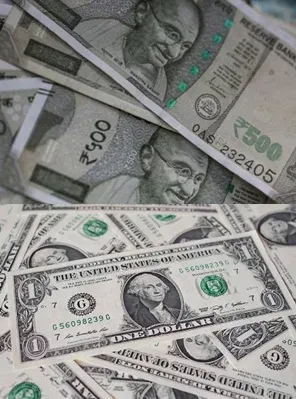
New Delhi, Jan 29 (NationPress) India continues to hold the title of the world’s top recipient of remittances, with inflows reaching $135.4 billion in FY25, bolstering the stability of the external account, according to the Economic Survey 2025-26 released on Thursday.
The proportion of remittances from developed economies has risen, demonstrating a growing input from skilled and professional workers, as reported by the Survey presented by Finance Minister Nirmala Sitharaman in Parliament.
To enhance India’s export competitiveness, a coordinated approach to reduce manufacturing costs is essential, as highlighted in the Survey.
Additionally, sustainable external resilience and increased currency credibility can result from boosting manufacturing export capacity, backed by a disciplined, productivity-focused industrial policy, prudent management of input costs throughout value chains, and the complementary advancement of high-value services.
India has reliably attracted significant gross investment inflows, totaling 18.5 percent of GDP in FY25, even in the face of tightening global financial conditions.
As per UNCTAD data, India remains the largest recipient of gross FDI inflows in South Asia, outpacing major Asian competitors like Indonesia and Vietnam.
In 2024, India secured the fourth position globally in Greenfield investment announcements, with more than 1,000 projects, and emerged as the foremost destination for Greenfield digital investments from 2020-24, attracting $114 billion.
From April to November 2025, gross FDI inflows rose to $64.7 billion, compared to $55.8 billion during the same period in 2024.
The Survey noted, "India's FPI pattern exhibits recurring cycles of inflows and outflows, with notable changes often associated with global financial shifts. The data show volatility, featuring six months of net outflows and three months of net inflows, resulting in a modest net balance for the year to date."
Moreover, India’s foreign exchange reserves climbed to $701.4 billion (as of January 16), from $668 billion at the end of March.
In terms of adequacy, these reserves are sufficient to cover approximately 11 months of goods imports and about 94 percent of the outstanding external debt as of the end of September 2025, providing a solid liquidity buffer, the Survey pointed out.
The Economic Survey emphasized that currency performance is influenced by the economy’s capacity to generate domestic savings, maintain external balance, attract stable FDI, and cultivate export competitiveness based on innovation, productivity, and quality.
India’s external debt reached $746 billion at the end of September 2025, up from $736.3 billion at the end of March 2025, with the External Debt to GDP ratio at 19.2 percent by the end of September 2025.
Furthermore, external debt represents less than 5 percent of India’s total debt, which alleviates external sector risks.
Point of View
It is evident that India's position as the leading recipient of remittances highlights the enduring strength of its diaspora and the economy's resilience. The Economic Survey's insights into manufacturing and export capacity provide a roadmap for future growth, ensuring that the nation stays competitive on the global stage. Our commitment to fostering innovation and productivity will be crucial in navigating the challenges ahead. Nation always stands with the people for a prosperous future.
NationPress
2 Oct 2026
Frequently Asked Questions
What are remittances?
Remittances are funds transferred by individuals, particularly foreign workers, back to their home country, often to support families and local economies.
How do remittances impact India's economy?
Remittances contribute significantly to India's GDP and help stabilize the external account, providing essential support for domestic consumption and investment.
What is the Economic Survey?
The Economic Survey is an annual document presented by the government that reviews the country's economic performance and outlines policies for future growth.
What is the significance of FDI?
Foreign Direct Investment (FDI) is crucial as it brings in capital, technology, and expertise, enhancing the country's economic development.
What challenges does India's economy face?
India's economy faces challenges such as global financial volatility, manufacturing cost pressures, and the need to enhance export competitiveness.