India's Renewable Energy Initiative: A Global Model Amidst Energy Crises
Synopsis
India's innovative approach to renewable energy is being recognized as a potential blueprint for other nations facing energy challenges. With significant milestones achieved ahead of schedule, India is setting a standard for energy security and transition.
Key Takeaways
India has surpassed 50% non-fossil fuel energy capacity.
The Khavda Renewable Energy Park is set to be one of the largest globally.
Private sector involvement is crucial for project execution.
India’s strategy contrasts with challenges faced by developed nations.
Execution and infrastructure development are key to India's success.
New Delhi, April 16 (NationPress) India’s push towards renewable energy is emerging as a model for achieving a balance between energy security and transition in the face of global disruptions. This is particularly evident when comparing its initiatives to regions like New York, which are grappling with the challenges of implementing clean energy strategies, as highlighted in a recent report.
The New York Post underscores that the ongoing crisis affecting crucial global energy corridors, notably the Strait of Hormuz, has revealed weaknesses in systems reliant on fossil fuels. This has led to an increased emphasis on developing diversified and resilient energy frameworks.
In this light, India’s strategy of expanding renewable energy capacity while also utilizing traditional energy sources—often referred to as an "all-of-the-above" approach—is garnering attention for its effectiveness in ensuring energy security during the transition phase, according to the report.
India has achieved a significant milestone, with more than 50% of its installed electricity capacity sourced from non-fossil fuels, surpassing its 2030 goal ahead of schedule. Although actual power generation still heavily depends on conventional sources, the rate of capacity additions ranks among the fastest globally.
Large-scale renewable initiatives are pivotal to this transition.
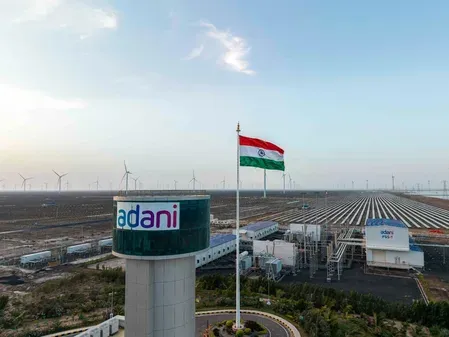
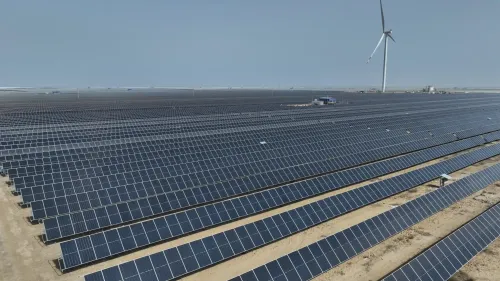
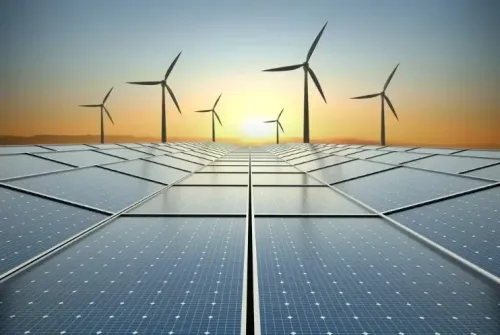
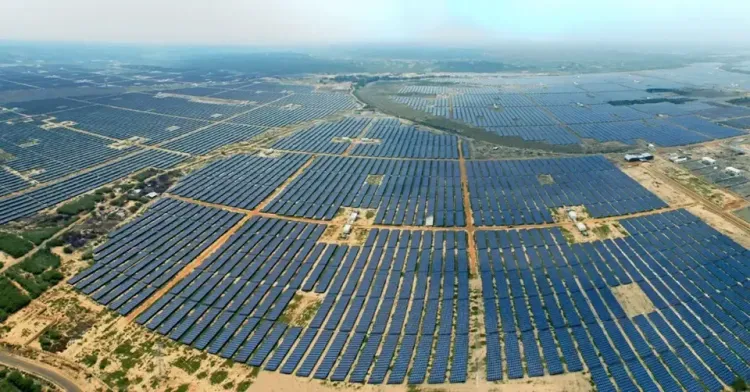
The forthcoming Khavda Renewable Energy Park in Gujarat, primarily developed by Adani Green Energy Limited (AGEL), aims to integrate solar, wind, and battery storage, positioning itself to be one of the largest projects globally with a planned capacity of 30 GW.
This initiative exemplifies a broader strategy of combining various renewable sources to guarantee a continuous power supply, thereby addressing the intermittency issues associated with solar and wind energy, as noted in the report.
Furthermore, a significant aspect of India’s energy transition has been the proactive involvement of the private sector, which has been instrumental in executing large-scale projects under a government-established policy framework.
This collaborative model, along with expedited project execution and streamlined approvals in critical areas, has facilitated India’s rapid enhancement of renewable infrastructure.
In contrast, many developed nations have encountered difficulties in achieving clean energy objectives due to regulatory obstacles, supply chain issues, and project delays, all while continuing to set ambitious climate objectives.
New York, for instance, has faced setbacks in its renewable energy deployment due to regulatory challenges, permitting issues, and infrastructural constraints, despite its pursuit of lofty climate ambitions.
Recent discussions in the U.S. have highlighted the increasing hurdles in executing New York’s clean energy transition, with Governor Kathy Hochul acknowledging the necessity to reevaluate certain components of the state’s energy strategy in light of rising costs and implementation hurdles.
This comparison has become particularly salient amid global energy disruptions, with experts emphasizing the importance of execution, policy adaptability, and public-private coordination as crucial differentiators.
In contrast, India’s commitment to execution, infrastructure development, and diversified energy sourcing is viewed as enabling it to navigate current global uncertainties more adeptly.
Point of View
It is evident that India's renewable energy strategy is not only ambitious but also practical, particularly in the context of global energy challenges. By blending renewable sources with traditional energy, India is ensuring a stable power supply while paving the way for a sustainable future.
NationPress
19 Sept 2026
Frequently Asked Questions
What percentage of India's energy is generated from non-fossil fuels?
India has surpassed 50% of its installed electricity capacity sourced from non-fossil fuel sources, ahead of its 2030 target.
What is the Khavda Renewable Energy Park?
The Khavda Renewable Energy Park, primarily developed by Adani Green Energy Limited, aims to integrate solar, wind, and battery storage with a planned capacity of 30 GW.
How does India’s energy strategy differ from that of advanced economies?
India's strategy focuses on execution and infrastructure development, while many advanced economies face challenges such as regulatory hurdles and project delays.
What role does the private sector play in India's energy transition?
The private sector is significantly involved in executing large-scale renewable projects under a supportive government policy framework.
Why is India considered a model for other nations?
India's effective balance of energy security and transition through innovative strategies and rapid infrastructure development positions it as a model for other countries facing energy challenges.