Jamnagar POCSO court sentences man to death for murder of 8-year-old girl

Synopsis
A Jamnagar POCSO court has sentenced Nitin Manek to death for the prolonged torture and murder of an eight-year-old girl in Sikka, invoking the 'rarest of the rare' doctrine. With 95 pieces of evidence and a chargesheet filed in 35 days, the case is now a benchmark in Gujarat's prosecution of crimes against children — and automatically heads to the High Court for confirmation.
Key Takeaways
Nitin Manek of Sikka, Jamnagar has been sentenced to death by a special POCSO court in Gujarat .
The victim was an eight-year-old girl subjected to prolonged physical abuse, including burns with matchsticks and assaults with an iron pestle.
The court classified the case as one of the 'rarest of the rare' , the legal standard for capital punishment in India.
Police filed the chargesheet within 35 days ; prosecutors examined 23 witnesses and presented 95 documentary pieces of evidence .
Manek was also sentenced to life imprisonment under the POCSO Act and fined ₹50,000 .
The death sentence will now go to the Gujarat High Court for mandatory confirmation.
A special Protection of Children from Sexual Offences (POCSO) court in Jamnagar, Gujarat, has sentenced Nitin Manek to death for the murder of an eight-year-old girl who was subjected to prolonged and severe physical abuse in 2025. The court classified the case as one of the 'rarest of the rare' — the legal threshold required under Indian law before the death penalty can be awarded.
The victim, a minor girl from Sikka in Jamnagar district, was subjected to repeated assaults, including burns inflicted with matchsticks and blows from an iron pestle, according to court records. The accused, Nitin Manek, a resident of the same locality, was convicted of murder and handed the capital punishment. He was additionally sentenced to life imprisonment under the POCSO Act and ordered to pay a fine of ₹50,000.
How the Case Was Cracked
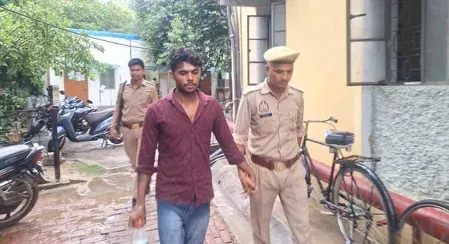
The crime initially went undetected, prompting police to launch a formal investigation. Investigators identified Manek as the prime accused and subsequently arrested him. Notably, the police collected scientific, technical, and documentary evidence and filed a chargesheet within just 35 days of the incident — a timeline that prosecutors highlighted during the trial as a sign of thorough preparation.
During the proceedings before the POCSO court, the public prosecutor examined 23 witnesses and placed approximately 95 documentary pieces of evidence on record. The volume and quality of evidence presented is understood to have been central to the court's decision to impose the maximum sentence.
What the Court Decided
After weighing the evidence and the gravity of the offence, the court awarded the death sentence for the murder charge, with an additional sentence of life imprisonment under the POCSO Act running concurrently. The 'rarest of the rare' classification signals that the court found no mitigating circumstance sufficient to commute the punishment.
Government and Official Response
Gujarat Deputy Chief Minister Harsh Sanghavi publicly congratulated the police team and the judiciary following the verdict. Officials stated that 'the Gujarat government, under Chief Minister Bhupendra Patel, has maintained a zero-tolerance policy towards crimes against women and girls.' The response underscores the political weight the state government has attached to POCSO prosecutions in recent years.
Broader Context
This verdict comes amid sustained scrutiny of child safety across India, with courts and civil society pressing for faster trials and stricter sentencing in POCSO cases. The case from Sikka adds to a pattern of special POCSO courts delivering capital punishment in cases involving extreme brutality against minors. The swiftness of the chargesheet — filed within 35 days — and the death sentence together are expected to draw attention to Gujarat's prosecution model for crimes against children.
The case now moves to the automatic confirmation stage before the Gujarat High Court, as required by Indian law whenever a sessions court awards the death penalty.
Point of View
95 evidence items, conviction and capital sentence — is being cited by officials as a model. But the 'rarest of the rare' standard has historically been applied inconsistently by Indian courts, and the Gujarat High Court's confirmation hearing will be the real test of whether the evidentiary record holds under appellate scrutiny. The political response, with the Deputy CM publicly congratulating the police, also raises a familiar tension: justice institutions function best when insulated from the pressure of instant official approval. The deeper question is systemic: the case was initially undetected, meaning the abuse continued unnoticed by community and state alike — the verdict closes the legal chapter but does not address the failure of early warning.
NationPress
9 Oct 2026
Frequently Asked Questions
Who is Nitin Manek and what was he convicted of?
Nitin Manek is a resident of Sikka in Jamnagar district, Gujarat, convicted of murdering an eight-year-old girl after subjecting her to prolonged physical abuse in 2025. A special POCSO court sentenced him to death for murder and life imprisonment under the POCSO Act.
What does 'rarest of the rare' mean in Indian law?
'Rarest of the rare' is the legal standard established by the Supreme Court of India in the 1980 Bachan Singh case, requiring courts to award the death penalty only in cases of extreme culpability where no mitigating factors exist. The Jamnagar court invoked this doctrine given the exceptional brutality of the crime against a minor.
What evidence was presented in the Jamnagar POCSO case?
The prosecution examined 23 witnesses and placed approximately 95 documentary pieces of evidence before the court, including scientific, technical, and documentary material collected during the investigation. The chargesheet was filed within 35 days of the incident.
What happens next after the death sentence is awarded?
Under Indian law, any death sentence awarded by a sessions or special court must be confirmed by the respective High Court before it can be carried out. The case will now go before the Gujarat High Court for mandatory confirmation proceedings.
What is the Gujarat government's stance on POCSO crimes?
Deputy Chief Minister Harsh Sanghavi congratulated the police and judiciary after the verdict. Officials stated that the Gujarat government under Chief Minister Bhupendra Patel maintains a zero-tolerance policy towards crimes against women and girls.