IPL 2026: Dinesh Karthik Calls Record Batting Scores 'Inhuman'
Synopsis
RCB batting coach Dinesh Karthik stunned the cricket world by calling IPL 2026's batting standards 'inhuman', as Punjab Kings shattered the all-time IPL chase record by overhauling 265 against Delhi Capitals. With 220 now dubbed 'the new 180', the 2026 season is rewriting T20 history in real time.
Key Takeaways
Punjab Kings scripted the largest successful chase in IPL history , overhauling 265 runs against Delhi Capitals at the Arun Jaitley Stadium on April 26, 2026 , with seven balls to spare .
Sunrisers Hyderabad also chased down 229 runs against Rajasthan Royals in Jaipur on the same day, marking two massive successful chases in a single day.
IPL 2026 has recorded four successful 200-plus chases and carries the highest overall run rate in the tournament's history.
Dinesh Karthik declared that "220 is the new 180" in T20 cricket, highlighting how scoring benchmarks have fundamentally shifted in the current season.
For the first time in IPL history, power-play run rates have crossed 10 runs per over , dot-ball percentage has dropped below 40 percent , and boundary percentage has exceeded 25 percent .
RCB analyst Freddie Wilde was credited by Karthik for providing advanced data analytics that help the coaching staff develop targeted strategies for players and the team.
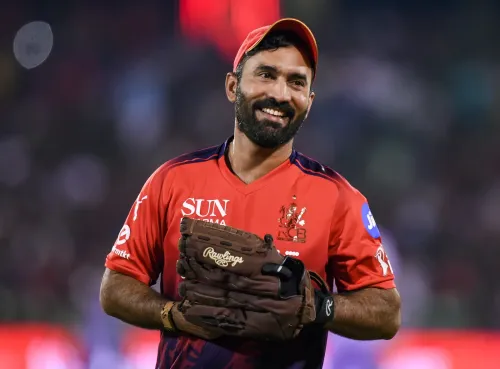
New Delhi, April 26: Royal Challengers Bengaluru (RCB) batting coach and mentor Dinesh Karthik has declared that IPL 2026 is rewriting the rulebook of T20 cricket, describing the relentless big-hitting culture as 'inhuman' at times, even as record-breaking chases continue to stun the cricketing world. Speaking ahead of RCB's match at a pre-match press conference on Saturday, April 26, Karthik credited both batting and bowling units for pushing the sport into uncharted territory.
Record Chases Redefine IPL 2026 Landscape
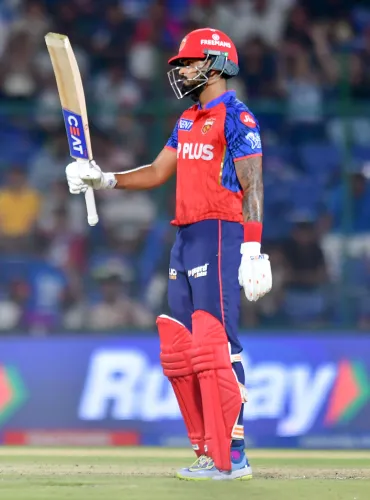
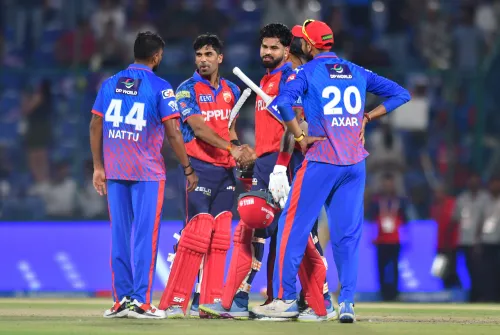
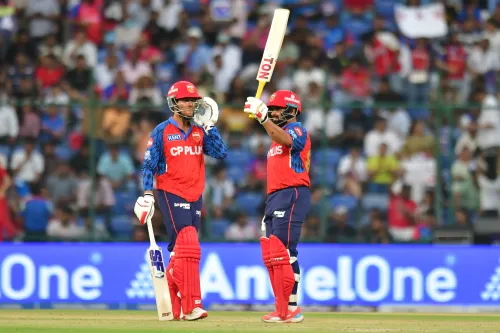
The 2026 IPL season has already witnessed four successful 200-plus run chases, with the overall run rate being the highest in the competition's history. On Saturday, Punjab Kings (PBKS) scripted history by chasing down 265 runs against Delhi Capitals at the Arun Jaitley Stadium — the largest successful chase in IPL history — with seven balls to spare.
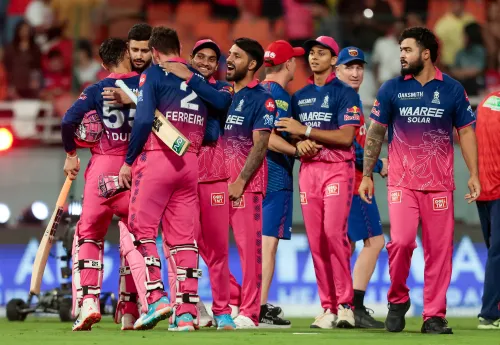
Earlier the same evening, Sunrisers Hyderabad overhauled 229 runs set by Rajasthan Royals at the Sawai Mansingh Stadium in Jaipur. These back-to-back mammoth chases underscored a seismic shift in how teams approach run targets in the shortest format.
"First up, credit to all teams who are chasing down such big totals, and also to the teams that are setting such massive totals. The game has changed; the landscape of T20 cricket is changing every day. You see these scores and think, 'Wow, it's just incredible'," said Karthik.
Karthik on the 'Inhuman' Batting Standards of IPL 2026
Karthik was unequivocal in his admiration for the audacity modern batters display, calling it both extraordinary and at times beyond human norms. "At times, it's inhuman the way teams have been batting. Yes, it's obviously a challenge batting-wise because you're trying to be so much more aggressive. With the ball, it's a different challenge — you try to protect as much as you can and try to do your best at it," he stated.
He further elaborated that the IPL is constantly raising the bar not just for Indian teams but for cricket nations worldwide. "It's been a privilege to be part of it, and you just sometimes look at it and marvel at how well this game is progressing and to what heights it's reaching," he added.
Key statistical markers highlight just how unprecedented this season has been. Run-making in the power-play has crossed 10 runs per over for the first time in IPL history. The dot-ball percentage has dropped below 40 percent, and the boundary percentage has exceeded 25 percent — all metrics never previously recorded in any IPL season.
220 Is the New 180 — How the Scoring Benchmark Has Shifted
Karthik coined a phrase that encapsulates the new batting reality: "220 is the new 180." He explained that what was once considered an imposing total is now routinely overhauled, placing enormous pressure on bowling units and their coaches.
"200-220 scores — teams seem to be getting it, and it almost feels like 220 is the old 180 or something like that, and teams are getting there quite often. So, it is a challenging situation for any bowling coach and any bowler, for that matter, because the pitches are obviously quite flat and batters have improved their range of stroke play," he noted.
He also pointed to the impact player rule as a psychological game-changer, noting that batting units now know they bat deeper than in previous formats, emboldening them to attack from ball one. Punjab Kings' chase of 265 was a prime example — they never appeared under pressure despite the monumental target.
Karthik highlighted how shot-making has evolved from exotic innovation to powerful extensions of classical strokes. "A few years ago, scoops and reverse scoops were like, 'Oh, how can players play that?' Now it's more like, can you check your drive and can it go for a six? People are focusing more on making sure their normal shots have a lot more power added to them," he explained.
Bat vs Ball Debate — Karthik Says T20 Is in a 'Good Place'
While acknowledging the ongoing debate over the imbalance between bat and ball, Karthik insisted the format remains healthy. "It's always a debate, isn't it? When you start scoring a lot of runs, you feel how you equalise it for the bowler and vice versa. I think this format is in a good place," he said.
He credited structural changes — including the addition of DRS reviews and the impact player rule — for creating a more dynamic contest. "The results have been quite alarming in a positive way. The world looks at IPL and goes, this is a different brand of cricket altogether," he elaborated.
Karthik also stressed that pitch conditions remain a key variable. He cited how RCB's match against DC produced 180 on a slower surface, while Jaipur and Delhi produced totals of 230 and 260-plus respectively, demonstrating that venue and surface still play a decisive role.
RCB's Analytics Edge — Freddie Wilde and the Data Revolution
Beyond batting philosophy, Karthik shed light on RCB's growing reliance on data analytics, specifically crediting Freddie Wilde, the team's analyst, for providing cutting-edge insights that help the coaching staff make informed decisions.
"With regards to Freddie, he is probably one of the most talented analysts out there because he brings out a lot of interesting information. He presents it to us, and then he expects us as a coaching group to understand, dissect the information, and use it appropriately for the team," said Karthik.
He reflected on his transition from player to coach, noting how access to deep performance metrics has transformed his understanding of the game. "Two years ago I was playing, and today I am on this side of the fence, and I am thinking, wow, it is so interesting to see so much data and how do you use it to upskill the players," he concluded.
With IPL 2026 setting new benchmarks with every passing week, the remainder of the season promises more record-breaking performances, as teams continue to push the ceiling of what T20 cricket can deliver — and the world watches closely to see if any limits remain.
Point of View
Introduced as a tactical tweak, has fundamentally altered batting aggression by giving teams a psychological safety net of an extra specialist batter. While this makes for spectacular entertainment, it raises a critical question the BCCI must confront: is the bat-ball balance now so skewed that bowlers are becoming a sacrificial commodity rather than equal combatants? Punjab Kings chasing 265 with seven balls to spare is not a fluke — it is a structural outcome of rule changes, and the cricketing establishment owes the audience an honest debate about where this ends.
NationPress
19 Sept 2026
Frequently Asked Questions
What did Dinesh Karthik say about IPL 2026 batting scores?
Dinesh Karthik, RCB's batting coach and mentor, called the batting in IPL 2026 'inhuman' at times, saying teams are fearlessly chasing down 200-plus totals with remarkable consistency. He described the season as constantly raising the bar for T20 cricket globally.
What is the biggest successful chase in IPL history?
Punjab Kings set a new IPL record for the biggest successful chase on April 26, 2026, by overhauling 265 runs against Delhi Capitals at the Arun Jaitley Stadium with seven balls to spare. This surpassed all previous records for successful run chases in IPL history.
Why are scores so high in IPL 2026?
IPL 2026's record-breaking scores are attributed to flat pitches, short boundaries, the impact player rule, and a new generation of batters who combine classical technique with explosive power. Power-play run rates have crossed 10 runs per over for the first time, and boundary percentages have exceeded 25 percent.
What is the impact player rule and how does it affect batting?
The impact player rule allows teams to introduce a substitute player mid-match, effectively enabling batting units to go deeper with specialist batters. Karthik noted this has a significant psychological impact, as batters know they have more firepower available and can attack more freely from the outset.
Who is Freddie Wilde and what is his role at RCB?
Freddie Wilde is Royal Challengers Bengaluru's data analyst, described by Dinesh Karthik as 'one of the most talented analysts out there.' He provides the coaching staff with advanced performance metrics and insights that help RCB make strategic decisions to improve player and team performance.