Kerala CPI-M cracks: Jayarajan steps in as dissent mounts against Vijayan
Synopsis
For the first time in nearly three decades, Pinarayi Vijayan's iron grip on Kerala's CPI-M is cracking — openly, publicly, and from within the party's own ideological fortress in Kannur. With the LDF reduced to just 35 seats and posters demanding Jayarajan's return surfacing across the state, the question is no longer whether there is dissent, but whether the party's internal mechanisms can contain it.
Key Takeaways
The CPI-M-led Left Democratic Front (LDF) was reduced to just 35 seats in Kerala's Assembly polls — the party's worst-ever electoral result in the state.
Jayarajan issued a Facebook post on 7 May urging cadres to stop social media campaigns glorifying him and attacking party leadership.
Posters demanding Jayarajan's return appeared in Kannur , the CPI-M's traditional ideological stronghold, with slogans reading "Call P.
Jayarajan, save the party." Both Pinarayi Vijayan and State CPI-M Secretary M.V.
Govindan are facing unprecedented internal criticism following the poll debacle.
Cadres are also demanding the removal of Kannur district secretary K.K.
Ragesh and a complete overhaul of state and district leadership.
Vijayan has yet to publicly respond; formal post-poll review through internal party forums is expected in the coming weeks.
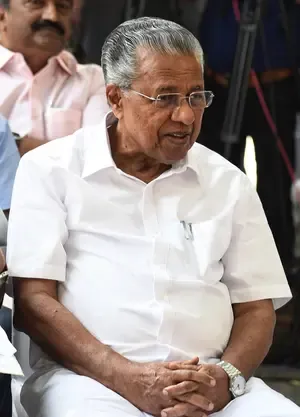
For perhaps the first time in nearly three decades, the unquestioned authority of Communist Party of India (Marxist) (CPI-M) strongman Pinarayi Vijayan is facing open turbulence from within party ranks in Kerala, following the Left Democratic Front's (LDF) worst-ever electoral humiliation in the state's Assembly polls.
Jayarajan Breaks Silence Amid Growing Cadre Revolt
Senior CPI-M leader P. Jayarajan broke his silence on 7 May through a carefully worded Facebook post, appealing to party cadres to immediately halt social media campaigns that glorify him while simultaneously attacking sections of the party leadership. The intervention came days after the crushing Assembly poll debacle that reduced the CPI-M-led Left Democratic Front to just 35 seats — a result widely described as the party's worst ever in Kerala.
Jayarajan's appeal carries particular weight given that both Vijayan and State CPI-M Secretary M.V. Govindan are facing unprecedented internal criticism in the aftermath of the electoral rout. The senior leader drew a pointed contrast with Congress culture, reminding workers that slogans such as "Call Indira, call Sonia, save the Congress" were antithetical to Communist organisational discipline. He urged cadres to raise criticism within party forums rather than airing differences on social media.
Kannur, the Party's Ideological Fortress, Shows Cracks
Kannur, long regarded as the ideological heartland of the CPI-M in Kerala, has become an unexpected flashpoint for the dissent. Posters surfaced in the district openly demanding Jayarajan's return to leadership, with one prominently displayed slogan reading, "Call P. Jayarajan, save the party." There is also growing resentment among cadres against Kannur district secretary K.K. Ragesh, with many openly demanding a complete overhaul of both state and district leadership structures.
Notably, Kannur has historically been the base from which Vijayan built his iron grip over the party — making the emergence of open dissent there symbolically significant beyond its immediate political implications.
Three Decades of Vijayan's Dominance Under Scrutiny
Since becoming State CPI-M Secretary in 1997, Vijayan had steadily consolidated near-absolute control over both the party machinery and, from 2016 onward, the Kerala government. After leading the Left to a historic consecutive term in 2021 — the first time in Kerala's history that a ruling government was voted back — dissent had virtually disappeared from public view within the party.
That enforced silence now appears broken. Vijayan has yet to publicly respond to the criticism, and observers across Kerala's political spectrum are watching closely for when — and how — he chooses to break his silence. This comes amid broader questions about whether the LDF's electoral collapse reflects structural weaknesses in the party's governance model or a more immediate anti-incumbency wave.
What Happens Next
The CPI-M's internal party forums are expected to take up the post-poll review in the coming weeks, where the scale of the defeat and questions of leadership accountability will be formally deliberated. Whether Jayarajan's intervention succeeds in containing the rebellion — or whether the public display of dissent continues to escalate — will likely shape the party's trajectory ahead of the next electoral cycle. All eyes remain on Vijayan's response and any formal organisational changes the party's central leadership may direct.
Point of View
Which keeps his political options open. The deeper question mainstream coverage is missing is whether this is a genuine reckoning with governance failures or a factional repositioning ahead of the party's internal elections. Either way, the era of Vijayan's unchallenged authority appears to be entering a new, uncertain phase.
NationPress
22 Sept 2026
Frequently Asked Questions
Why is there dissent within Kerala's CPI-M after the Assembly elections?
The CPI-M-led Left Democratic Front was reduced to just 35 seats in Kerala's Assembly polls — its worst-ever electoral result in the state. The scale of the defeat has triggered unprecedented internal criticism against both Chief Minister Pinarayi Vijayan and State CPI-M Secretary M.V. Govindan, with cadres demanding leadership accountability.
What did P. Jayarajan say in his Facebook post?
Jayarajan appealed to CPI-M cadres on 7 May to stop social media campaigns that glorify him while attacking sections of the party leadership. He reminded workers that Communist organisational discipline was fundamentally different from Congress culture, and urged them to raise criticism within internal party forums rather than publicly.
Why are posters demanding Jayarajan's return significant?
Kannur is historically the ideological fortress of the CPI-M in Kerala and the base from which Vijayan built his dominance over the party. Open dissent emerging from there — in the form of posters reading 'Call P. Jayarajan, save the party' — signals that the revolt has reached the party's most symbolically important stronghold.
How long has Pinarayi Vijayan controlled the CPI-M in Kerala?
Vijayan has been the dominant force in Kerala's CPI-M since becoming State Secretary in 1997 — nearly three decades. He became Chief Minister in 2016 and led the Left to a historic consecutive term in 2021, after which internal dissent had largely disappeared from public view until now.
What happens next within the CPI-M after the election defeat?
The CPI-M's internal party forums are expected to conduct a formal post-poll review in the coming weeks, where leadership accountability will be deliberated. Whether Jayarajan's intervention contains the rebellion and whether Vijayan publicly responds will be the key developments to watch.