Manipur's Churachandpur farmers reap first legal harvest under NCB's Project HINICHI
Synopsis
In Churachandpur, Manipur, 124 farming households have brought in their first legal harvest of green peas — replacing poppy fields that once fed the illicit narcotics trade. Project HINICHI, a rare three-way convergence of the NCB, local police, and corporate CSR, is now being watched as a replicable model for alternative development across India's narcotics-affected districts.
Key Takeaways
Project HINICHI was launched in April 2026 by the Narcotics Control Bureau (NCB) in partnership with Churachandpur Police and Segula Technologies .
The initiative covers 124 households across 254 acres in Churachandpur district, Manipur .
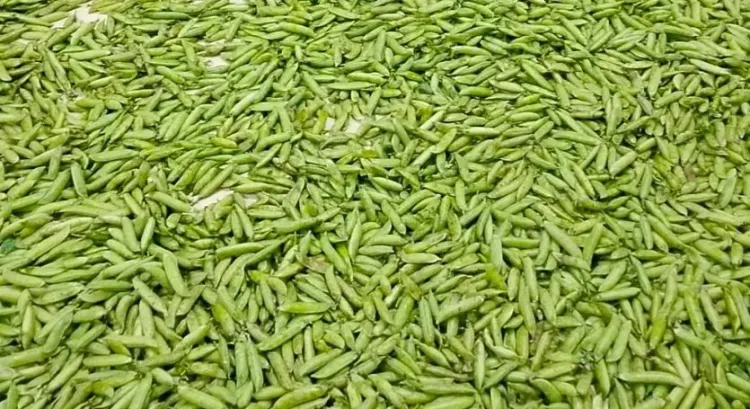
Farmers harvested their first crop of green peas in June 2026 , marking the first legal harvest under the programme.
The project provides crop inputs, agricultural training, and market-linkage support to participating families.
The NCB has described the model as replicable for other regions grappling with illicit cultivation across India.
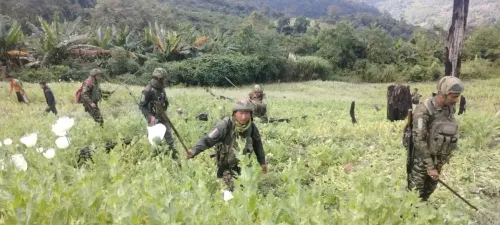
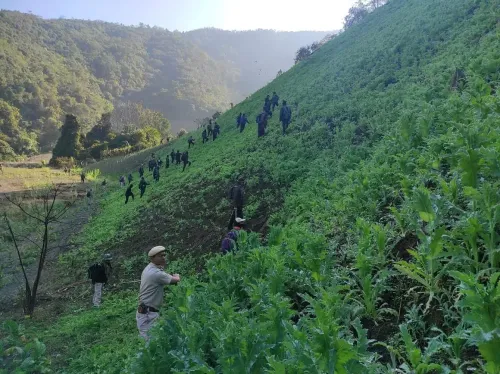
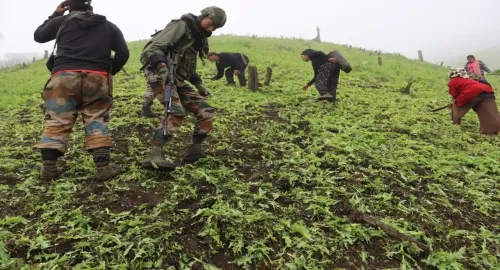
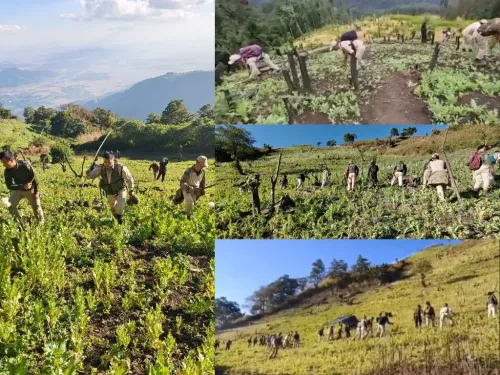
The Narcotics Control Bureau (NCB), in partnership with Churachandpur Police and corporate social responsibility partner Segula Technologies, marked a significant milestone on 11 June 2026 as farmers in Churachandpur district, Manipur, brought in their first legal harvest of green peas under Project HINICHI — an alternative cropping initiative designed to wean communities away from illicit poppy cultivation. The programme, launched in April 2026, has already reached 124 households farming across 254 acres of previously poppy-dependent land.
What Project HINICHI Delivers
The initiative provides participating farmers with essential crop inputs, structured agricultural training, and market-linkage support — a three-pronged model intended to make legal farming economically competitive with illicit poppy cultivation. Green peas were selected as the primary alternative crop given their steady market demand and reliable income potential. Officials noted that disbursement of inputs and training was completed before the first planting cycle, enabling a full growing season under the new framework.
Scale and Community Impact
The transition has extended beyond individual households. Collective farming practices and shared training sessions have reportedly strengthened cooperation among villagers, with community bonds deepening as farmers work alongside one another rather than in isolated plots. For many of the 124 families involved, this harvest represents not only a source of income but also, according to project officials, a restoration of dignity and stability that illicit cultivation had long undermined.
The Broader Anti-Narcotics Mission
The NCB framed Project HINICHI as a convergence of law enforcement, local administration, and corporate social responsibility — a model it believes can be replicated in other regions of India grappling with entrenched illicit cultivation. 'From poppy fields to prosperity, this initiative is about empowering communities, strengthening livelihoods and advancing the national mission of a drug-free India,' the Bureau stated. Notably, Churachandpur has historically been among the districts in Manipur where poppy cultivation has been difficult to eradicate through enforcement alone, making the voluntary transition significant.
Replication Potential and What Comes Next
As the first harvest reaches local markets, authorities and partner organisations are assessing outcomes — including income levels, acreage converted, and household participation rates — to build a replicable blueprint. The NCB has indicated that Project HINICHI's success could inform similar alternative development programmes in other narcotics-affected districts across the country. Whether the model sustains beyond the first harvest cycle, particularly without continued CSR and government support, will be the critical test in the months ahead.
Point of View
But one harvest does not a transformation make. Churachandpur's poppy economy is deeply entrenched, and past alternative development efforts in Manipur and the Northeast have faltered when government and CSR support tapered off after the initial showcase cycle. The real measure will be whether the 124 households remain on legal crops in year two — without subsidised inputs. The NCB's framing of this as a replicable model is premature until income data is published and compared against what poppy cultivation actually netted these families. Enforcement-plus-incentive is the right instinct; the follow-through is everything.
NationPress
19 Sept 2026
Frequently Asked Questions
What is Project HINICHI in Manipur?
Project HINICHI is an alternative cropping initiative launched in April 2026 by the Narcotics Control Bureau (NCB), in collaboration with Churachandpur Police and CSR partner Segula Technologies. It aims to transition farmers in Churachandpur district, Manipur, from illicit poppy cultivation to legal agriculture, beginning with green peas across 254 acres involving 124 households.
When did farmers harvest their first crop under Project HINICHI?
Farmers reaped their first harvest of green peas in June 2026, roughly two months after the project was launched in April 2026. It is the first legal harvest recorded under the initiative.
Who are the partners behind Project HINICHI?
The project is a three-way partnership between the Narcotics Control Bureau (NCB), Churachandpur Police, and Segula Technologies, which is participating as a corporate social responsibility (CSR) partner.
Why is Churachandpur significant in the context of poppy cultivation?
Churachandpur district in Manipur has historically been one of the areas in India's Northeast where illicit poppy cultivation has been difficult to eradicate through law enforcement alone. Project HINICHI represents a shift toward voluntary transition supported by economic incentives and training.
Can Project HINICHI be replicated in other parts of India?
The NCB has indicated that the model — combining crop inputs, agricultural training, and market-linkage support — could be replicated in other narcotics-affected districts. However, sustained outcomes beyond the first harvest cycle will be critical before it can be formally scaled.