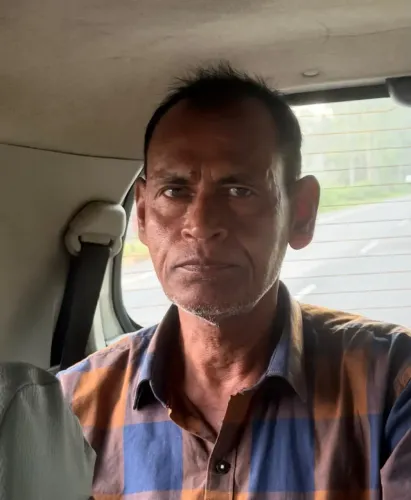
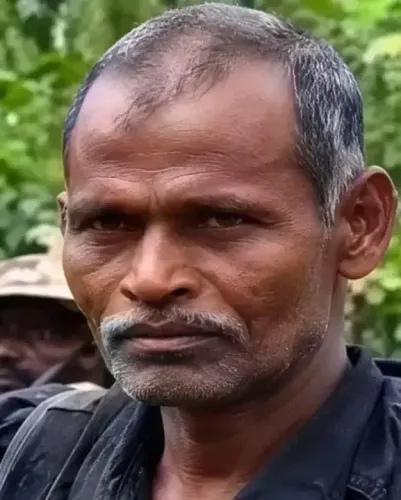
CPI (Maoist) leader Asim Mandal sent to police custody till Sep 29

Synopsis
After decades underground and 55 criminal cases across three states, senior CPI (Maoist) leader Asim Mandal — known as Akash — has finally been netted by the Kolkata Police STF. With a ₹2.2 crore bounty on his head and custodial interrogation authorised till 29 September, the arrest could expose the command structure holding together the Bengal-Jharkhand-Odisha Maoist corridor.
Key Takeaways
Asim Mandal , alias Akash , senior CPI (Maoist) leader, was arrested on 18 September 2026 from Patashpur, East Midnapore by the Kolkata Police STF .
A lower court remanded him to police custody until 29 September 2026 ; no bail application was filed.
He faces 55 criminal cases across West Bengal , Jharkhand , and Odisha , including charges relating to attacks on security forces.
The governments of Jharkhand and Odisha had announced a combined reward of ₹2.2 crore for his capture.
Mandal served as Secretary of the West Bengal State Committee in 2010 and later held senior posts in the Bengal-Jharkhand-Odisha Regional Committee .
He reportedly went underground after the November 2011 killing of Maoist leader Kishanji , evading agencies for over a decade.
A lower court in Kolkata on Friday, 19 September 2026, remanded senior CPI (Maoist) leader Asim Mandal — known by aliases Akash, Timir, and Manoj — to police custody until 29 September. The order came a day after his arrest by the Special Task Force (STF) of the Kolkata Police from Patashpur in East Midnapore district, marking what security agencies describe as a significant blow to Left-Wing extremist networks across three eastern states.
What the Court Heard
Counsel for the Kolkata Police STF told the court that 55 cases were registered against Mandal across West Bengal, Jharkhand, and Odisha. The governments of Jharkhand and Odisha had jointly announced a reward of ₹2.2 crore for his capture.
'Akash is an active member of a banned organisation. His activities harmed the sovereignty and integrity of the state. He was also responsible for creating a cycle of illegal activities and sabotage involving the three states. He used to hide himself by frequently changing names,' the STF counsel stated before the court.
No bail application was moved on Mandal's behalf. His counsel, Yasin Rahman, argued that accusations of sabotage had been levelled against Mandal for decades, and noted that many individuals once associated with Left-Wing extremist activities before 2011 had since become prominent figures in mainstream politics and society.
A Decades-Long Trail of Extremist Activity
A native of Fulchak village under Chandrakona Police Station in West Midnapore district, Mandal is said to have been drawn into Left-Wing extremist activities during his student years in the 1980s. He subsequently joined the People's War Group and operated extensively in the Sarenga and Goaltor regions of West Bengal, as well as the Gurabanda area of East Singhbhum district in Jharkhand.
Following the merger that formed CPI (Maoist) in September 2004, Mandal returned to the Jangalmahal region — spanning parts of Bankura, Purulia, and West Midnapore districts — and became deeply embedded in the outfit's operations. He reportedly played a key role in the Lalgarh movement and was subsequently appointed Secretary of the West Bengal State Committee in 2010, later holding senior positions in the Bengal-Jharkhand-Odisha Regional Committee.
Underground for Over a Decade
According to police sources, the Maoist network in West Bengal suffered a severe setback following the November 2011 encounter in which senior leader Kishanji was killed. In the aftermath, Mandal is said to have gone completely underground, evading security agencies for years by frequently changing identities and locations — until his arrest on Thursday, 18 September 2026.
The 55 criminal cases registered against him include charges related to attacks on security forces and armed encounters, primarily in Jharkhand. Security agencies consider his arrest a major operational success that could disrupt the coordination of Maoist activities across the tri-state region.
Security Implications for Eastern India
Mandal's capture is being viewed as a significant setback for Maoist infrastructure in the tribal and forested belts straddling West Bengal, Jharkhand, and Odisha — a corridor that has historically been among the most active theatres of Left-Wing extremism in India. This comes amid a broader national effort to dismantle Maoist leadership structures, which security agencies say have been under sustained pressure over the past decade.
With custodial interrogation now authorised until 29 September, investigators are expected to use the period to unravel the network's current command structure, funding sources, and operational links across the three states.
Point of View
And he held organisational command over the tri-state corridor that remains the most operationally active Maoist zone in India. The 55 registered cases signal institutional persistence — this network has survived multiple crackdowns — but the loss of a regional committee-level leader will test its command coherence. The defence counsel's observation that many pre-2011 extremists are now mainstream political figures is a pointed reminder that the line between insurgency and politics in Jangalmahal remains contested. Whether the interrogation yields actionable intelligence or produces a prolonged legal battle will determine whether this arrest is a turning point or merely a headline.
NationPress
18 Sept 2026
Frequently Asked Questions
Who is Asim Mandal, alias Akash, and why was he arrested?
Asim Mandal, also known by the aliases Akash, Timir, and Manoj, is a senior leader of the banned CPI (Maoist) organisation. He was arrested on 18 September 2026 by the Kolkata Police Special Task Force from Patashpur in East Midnapore district, West Bengal, in connection with 55 criminal cases registered across West Bengal, Jharkhand, and Odisha.
How long is Asim Mandal in police custody?
A lower court in Kolkata remanded Mandal to police custody until 29 September 2026, giving investigators approximately 11 days for custodial interrogation. No bail application was filed on his behalf.
What reward was announced for Asim Mandal's capture?
The governments of Jharkhand and Odisha had jointly announced a reward of ₹2.2 crore for information leading to Mandal's capture, reflecting the seriousness with which both states viewed his activities.
What role did Asim Mandal play in the CPI (Maoist) organisation?
Mandal served as Secretary of the CPI (Maoist) West Bengal State Committee in 2010 and later held senior positions in the Bengal-Jharkhand-Odisha Regional Committee. He was also reportedly a key figure during the Lalgarh movement and had earlier worked with the People's War Group before it merged to form CPI (Maoist) in 2004.
Why is this arrest considered significant for security agencies?
Mandal's arrest is regarded as a major setback to Maoist activities across the tribal and forested regions of West Bengal, Jharkhand, and Odisha. He had evaded security agencies for over a decade after going underground following the 2011 encounter killing of senior Maoist leader Kishanji, making his capture an operationally significant achievement.