Karnataka Minister Nagendra likely to resign over tribal welfare scam row
Synopsis
Karnataka Planning Minister B. Nagendra — accused in a tribal welfare fund case — reportedly offered to quit after a phone call to CM Shivakumar, with the BJP's 200-km Raichur-to-Ballari march and internal Congress dissent forcing the party's hand. The Congress high command's green light is now the only thing standing between him and the exit door.
Key Takeaways
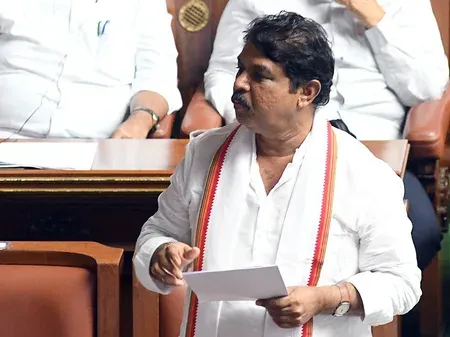
Nagendra , Karnataka's Minister for Planning and Statistics, is reportedly set to resign from the Cabinet on 26 August .
Nagendra is an accused in the alleged tribal welfare fund irregularities case — no conviction has been recorded.
Shivakumar and offered to step down, citing embarrassment to the Congress party.
The BJP has announced a 200-km padyatra from Raichur to Ballari between 1–10 September , with Nagendra's resignation as its primary demand.
The Karnataka Legislative Assembly session was abruptly concluded amid disruptions over Nagendra's induction.
Internal Congress dissent from leaders excluded in the recent Cabinet expansion has added pressure on the government.
Karnataka Minister for Planning and Statistics B. Nagendra, who is an accused in the alleged tribal welfare fund irregularities case, is reportedly set to resign from the Karnataka Cabinet on 26 August, as mounting Opposition pressure and internal Congress dissent push the state government toward a political course correction.
The Phone Call That Set It in Motion
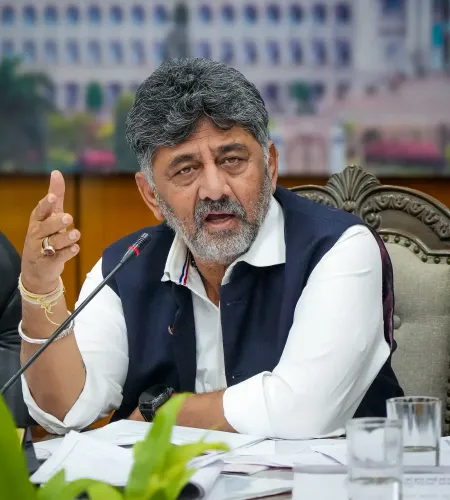
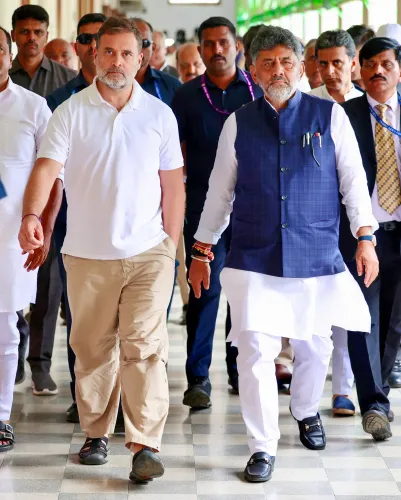
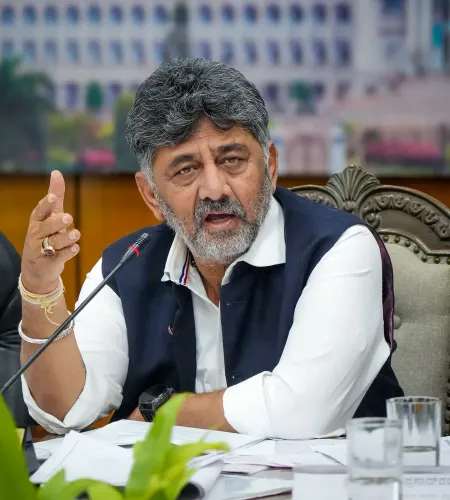
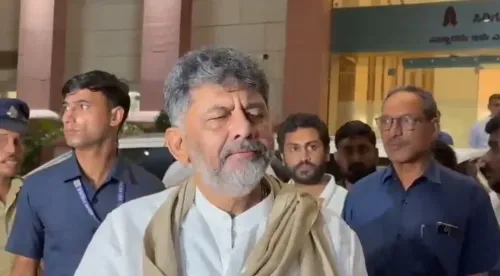
According to sources close to the development, Nagendra called Chief Minister D.K. Shivakumar and offered to step down, telling him that his continued presence in the Cabinet was causing 'unnecessary embarrassment' to the party. He reportedly conveyed to the Chief Minister that the Bharatiya Janata Party (BJP) was specifically targeting him and that he was prepared to resign to protect the Congress's political image.
Shivakumar is learnt to have responded by telling Nagendra that he would refer the matter to the Congress high command and seek its approval before formally accepting the resignation. The high command had been closely involved in the recent Cabinet expansion, and the Chief Minister is understood to be awaiting its clearance before proceeding.
BJP's Raichur-to-Ballari Padyatra Turns Up the Heat
The resignation move comes amid a sharp escalation in Opposition activity. The Karnataka BJP announced a 200-km padyatra from Raichur to Ballari, scheduled between 1 and 10 September, with Nagendra's resignation as its stated central demand. Ballari is Nagendra's native district, making the march a pointed political statement.
The controversy also triggered repeated disruptions in the Karnataka Legislative Assembly and contributed to the abrupt conclusion of the Assembly session. This is not the first time that a Cabinet induction has unravelled under sustained Opposition pressure in the state — the pattern underscores the fragility of coalition arithmetic in Karnataka's Congress government.
Nagendra's Defence and the Dalit Angle
Nagendra had, at a recent press conference, pushed back against the calls for his ouster. He argued that the Opposition was targeting him specifically because he is a Dalit leader, framing the pressure as politically motivated rather than legally grounded. He maintained that being an accused does not amount to being a convict, and questioned the BJP's sustained campaign against his induction.
Notably, the tribal welfare fund case in which Nagendra is named as an accused involves alleged irregularities — the specifics of which remain under investigation. No conviction has been recorded against him.
Internal Congress Pressure Adds to the Crisis
Beyond the Opposition offensive, the episode has reportedly deepened fault lines within the Congress itself. Several senior leaders who were excluded from the recent Cabinet expansion are said to be unhappy with the party leadership and have questioned the decision to bring Nagendra into the ministry. This internal dissent has added a second layer of political risk for the Shivakumar-led government.
Sources indicated that Nagendra could formally submit his resignation later on Wednesday, contingent on the Congress high command's approval. With both external pressure and internal friction converging, the Congress leadership is reportedly treating the resignation as the most viable way to contain the fallout and stabilise the government ahead of the BJP's September march.
Point of View
Which suggests the Cabinet expansion itself was a political miscalculation, not just a communication failure. The BJP's padyatra is theatre, but effective theatre — it gives the Opposition a sustained, visible campaign frame at a time when the government is already on the defensive over multiple fronts.
NationPress
10 Oct 2026
Frequently Asked Questions
Why is Karnataka Minister B. Nagendra likely to resign?
Nagendra is reportedly set to resign because his continued presence in the Karnataka Cabinet is causing political embarrassment to the Congress party, with the BJP mounting sustained pressure through Assembly disruptions and a planned 200-km padyatra. He is an accused in an alleged tribal welfare fund irregularities case, though no conviction has been recorded against him.
What is the tribal welfare irregularities case against Nagendra?
The case involves alleged irregularities in tribal welfare funds in Karnataka. Nagendra has been named as an accused in the matter, which remains under investigation. He has maintained that being an accused is not equivalent to being a convict.
What is the BJP's Raichur-to-Ballari padyatra about?
The Karnataka BJP announced a 200-km padyatra from Raichur to Ballari between 1 and 10 September, with Nagendra's resignation as its central demand. Ballari is Nagendra's native district, giving the march pointed political symbolism.
Who decides whether Nagendra's resignation is accepted?
Chief Minister D.K. Shivakumar has indicated he will refer Nagendra's resignation offer to the Congress high command for approval before accepting it, as the high command was directly involved in the recent Cabinet expansion that brought Nagendra into the ministry.
How has the Nagendra controversy affected the Congress internally?
Several senior Congress leaders who were excluded from the recent Cabinet expansion are reportedly unhappy with the party leadership and have questioned the decision to induct Nagendra. This internal dissent has added to the political pressure on the Shivakumar government beyond the Opposition's campaign.