Is 2025 a Landmark Year for NIA with Over 92% Conviction Rate?
Synopsis
In 2025, the NIA achieved an impressive conviction rate of over 92%, marking a significant milestone in the fight against terrorism and organized crime. This report highlights their key achievements, including high-profile extraditions, expedited investigations, and substantial arrests, reflecting their unwavering commitment to national security.
Key Takeaways
NIA's conviction rate exceeded 92% in 2025.
High-profile extraditions marked significant achievements.
Quick resolutions were achieved in recent terrorist incidents.
Extensive collaboration with law enforcement agencies.
Focus on combating Left-Wing Extremism and organized crime.
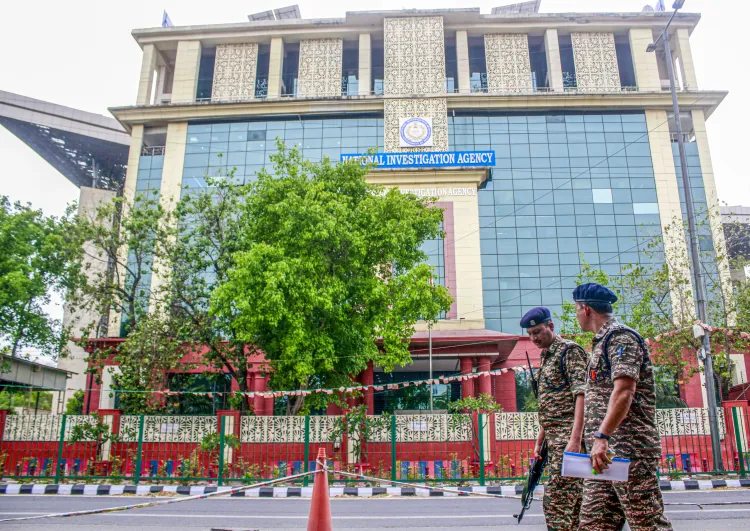
New Delhi, Dec 31 (NationPress) The National Investigation Agency (NIA) has wrapped up a remarkably successful year in 2025, maintaining a conviction rate exceeding 92% while achieving significant milestones against terrorism and organized crime.
The agency's tireless efforts resulted in remarkable extraditions, quick resolutions of recent terror incidents, and major disruptions to extremist networks across various sectors.
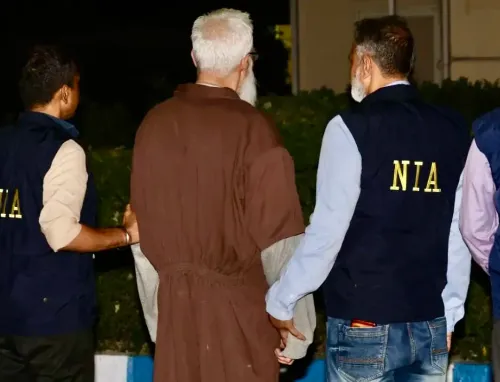
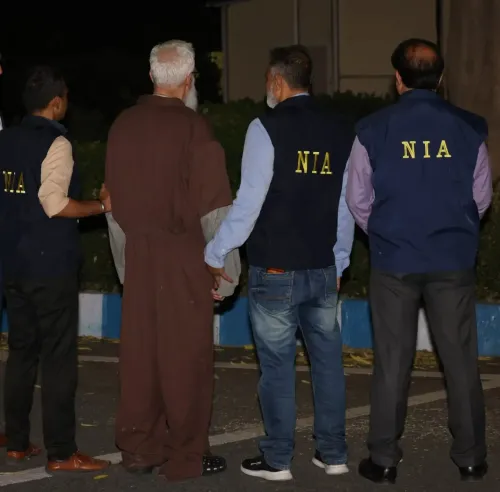
A notable achievement was the extradition of Tahawwur Hussain Rana, a main conspirator in the 2008 Mumbai 26/11 attacks that resulted in 166 fatalities.
Following extensive legal battles in the United States, where Rana’s appeals were consistently rejected, the Pakistani-Canadian businessman was brought to India in April.
Upon arriving in New Delhi, he was officially arrested and taken into NIA custody, marking a crucial advancement towards justice for one of India’s most catastrophic terrorist incidents orchestrated by Lashkar-e-Taiba (LeT).
In another significant diplomatic breakthrough, gangster Anmol Bishnoi, brother and close aide of Lawrence Bishnoi, was deported from the United States in November.
Having been on the run since 2022, Anmol faces allegations of masterminding criminal syndicates operating from India and abroad to carry out terrorist operations, particularly in Delhi and nearby regions.
The NIA is focusing on expediting the trial in this conspiracy case. The agency completed its investigation into the April 22 terrorist assault in Jammu and Kashmir, where militants from LeT and its proxy, The Resistance Front (TRF), targeted tourists in Baisaran Valley, resulting in the deaths of 26 civilians in a religiously motivated attack.
A thorough chargesheet was presented against seven suspects, including the three attackers neutralized by security forces and handlers based in Pakistan.
Significant progress was also made in the November 10 car bomb explosion near Delhi’s Red Fort, which claimed around 15 lives and injured over 20. Classified as a terrorist act linked to radical groups, the case led to nine arrests within weeks of the incident.
In support of the Centre’s goal to eradicate Left-Wing Extremism by March 31, 2026, the NIA initiated nine investigations against top Maoist leaders, filed charges against 34 individuals, and worked extensively with state police and the Central Reserve Police Force (CRPF).
Across 55 newly registered cases, the agency apprehended 276 suspects, including those involved in jihadi terror (67), LWE (74), Northeast insurgencies (37), Khalistani networks (28), gangster syndicates (11), and other categories (59). It achieved 66 convictions, filed charges against 320 individuals, and seized 12 properties linked to absconding terrorists and criminals.
Nationwide operations dismantled Khalistani elements, ISIS and Al-Qaeda modules, human trafficking networks—including those exploiting the ‘dunki’ route—and cross-border smuggling involving nationals from Bangladesh and Myanmar.
Significant breakthroughs were made in targeted killing cases of Praveen Nettaru, Ramalingam, and others, alongside convictions in the 2019 Vishakhapatnam naval espionage case and multiple Fake Indian Currency Notes (FICN) networks.
To tackle evolving threats, the NIA developed specialized databases for tracking lost government weapons and organized crime networks while conducting advanced training on cryptocurrency investigations. These improvements, coupled with infrastructure enhancements, have considerably strengthened the agency’s capabilities.
As India faces dynamic security challenges, the NIA's performance in 2025 highlights its crucial role in dismantling terror ecosystems and maintaining national security through thorough investigations and inter-agency collaboration.
Point of View
It's clear that the NIA's achievements in 2025 showcase a robust commitment to national security. The agency’s proactive approach, highlighted by high conviction rates and swift investigations, reinforces its pivotal role in addressing the evolving threats to our nation. The collaboration with various law enforcement agencies further strengthens the fight against terrorism and organized crime.
NationPress
30 Sept 2026
Frequently Asked Questions
What is the conviction rate of NIA in 2025?
The NIA maintained an impressive conviction rate of over 92% in 2025.
Who was extradited in relation to the 26/11 attacks?
Tahawwur Hussain Rana, a key conspirator in the 2008 Mumbai 26/11 attacks, was extradited to India in April 2025.
What were the major cases investigated by NIA in 2025?
Major cases included the Pahalgam terrorist attack, the car bomb explosion near the Red Fort, and investigations into Left-Wing Extremism.
How many arrests did NIA make in 2025?
The NIA arrested a total of 276 suspects across various categories in 2025.
What measures did NIA take to enhance its capabilities?
The NIA developed specialized databases for tracking weapons and organized crime networks and conducted advanced training on cryptocurrency investigations.