Omar Abdullah Pitches J&K as Academic Hub, Invites Edu Investors
Synopsis
J&K CM Omar Abdullah traveled to Bengaluru to personally pitch the state's newly enacted Private Universities Act to top education institutions, urging them to set up campuses in the region. The move signals a bold policy bet — transforming a conflict-scarred UT into a competitive academic destination, with cross-party legislative backing already secured.
Key Takeaways
CM Omar Abdullah met education sector leaders in Bengaluru on Sunday, April 27, 2025 , to pitch J&K as an investment destination for higher education.
The Jammu and Kashmir Private Universities Act, 2026 was passed during the Budget Session with cross-party support and has received assent from LG Manoj Sinha .
The Act enables reputed private institutions to establish university campuses in Jammu and Kashmir for the first time under a structured legal framework.
The CM assured investors of a transparent, investor-friendly environment aimed at attracting students, scholars, and research collaborations nationally and globally.
On Saturday , CM Abdullah also met Karnataka filmmakers in Bengaluru, inviting them to shoot in J&K's scenic locations with full government support.
The initiative is part of a broader J&K government strategy to diversify the economy and reduce student brain drain from the Union Territory.
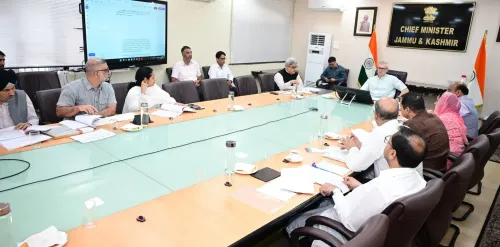
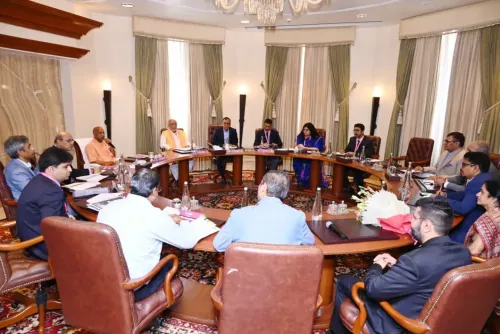
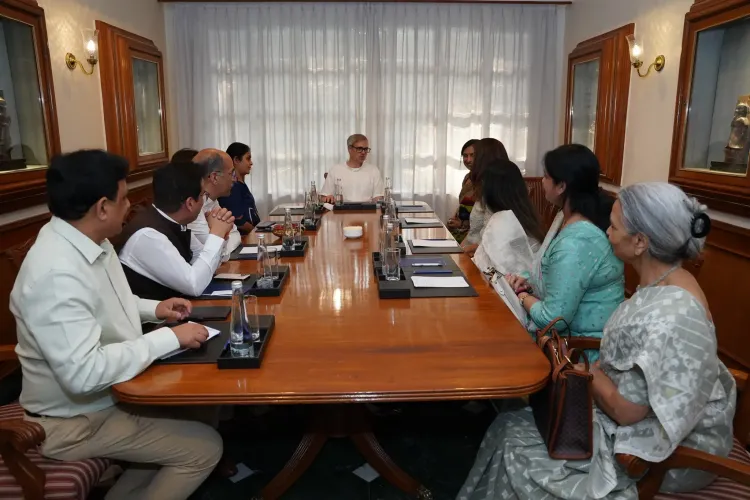
Jammu and Kashmir Chief Minister Omar Abdullah met a high-level delegation of education sector leaders in Bengaluru on Sunday, April 27, 2025, extending a formal invitation to leading institutions to invest in the region's higher education landscape and help transform Jammu and Kashmir into a world-class academic destination. The outreach follows the landmark passage of the Jammu and Kashmir Private Universities Act, 2026, which is being positioned as the most significant policy reform in J&K's higher education history.
A New Era for Higher Education in J&K
The Jammu and Kashmir Private Universities Bill, 2026 was passed by the Union Territory's Legislative Assembly during the recent Budget Session, drawing rare cross-party support — a signal of its perceived importance. The Bill subsequently received the assent of Lieutenant Governor Manoj Sinha, formally converting it into an enforceable Act.
The legislation is designed to open J&K's higher education market to reputed private players, enabling them to establish full campuses within the Union Territory. Analysts note this is a structural shift — J&K had long struggled with a near-exclusive dependence on government-run universities, leaving a significant gap in quality seats and research infrastructure.
What CM Omar Abdullah Said to Investors
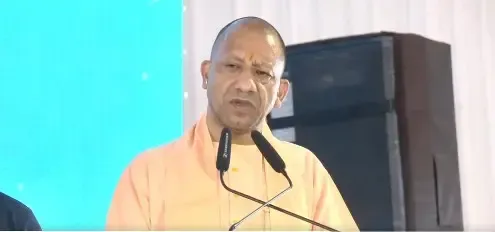
Addressing the delegation, Chief Minister Omar Abdullah underscored that the new regulatory framework creates "substantial opportunities" for established institutions to set up campuses in Jammu and Kashmir. He described the vision as building a "modern, inclusive, and globally competitive higher education ecosystem."
The Chief Minister assured investors of a transparent, enabling, and investor-friendly environment, emphasizing that the administration's goal is to attract not just students but also scholars, researchers, and international academic collaborations. He called on institutions to become active partners in shaping the region's academic future.
Present at the meeting were Advisor to the Chief Minister Nasir Aslam Wani, MLA Zadibal Tanvir Sadiq, senior government officers, and multiple representatives from the education sector.
Strategic Context: Why Bengaluru, Why Now
The choice of Bengaluru — India's technology and education capital — as the venue for this outreach is deliberate. The city is home to some of India's most prominent private universities, engineering colleges, and research institutions, many of which have the capital and ambition to expand nationally.
This comes amid a broader push by the J&K administration to diversify its economy beyond tourism and horticulture. Establishing J&K as an academic hub would generate employment, attract youth talent, reduce the brain drain of local students migrating to Delhi, Pune, or Bengaluru for quality education, and inject sustained economic activity into the region.
Notably, J&K has historically had among the lowest Gross Enrollment Ratios (GER) in higher education compared to national averages — a gap the new Act directly targets by encouraging private sector participation.
CM's Parallel Push: Bollywood and Karnataka Filmmakers
In a parallel initiative during his Bengaluru visit, CM Omar Abdullah also held meetings with Karnataka filmmakers on Saturday, inviting them to use Jammu and Kashmir's scenic landscapes for outdoor shoots. He highlighted the region's diverse terrain — from snow-capped peaks to lush valleys — as a ready-made backdrop for cinematic productions.
"The government will extend full support and a friendly, enabling environment for artists. The government is committed to making filmmaking in Jammu and Kashmir easier and more accessible," the Chief Minister told the filmmakers, signaling a dual-track strategy of promoting both education investment and film tourism simultaneously.
Impact and What Comes Next
If the government's outreach translates into concrete investments, J&K could see new private university campuses operational within the next three to five years, significantly expanding the number of quality higher education seats available to local students. This would also reduce the financial burden on families who currently send children out of state for degrees.
The broader implication is political as well — the Omar Abdullah government is seeking to demonstrate tangible governance dividends in the first full year following the restoration of elected government in J&K, and education reform is a high-visibility, low-controversy lever. Observers will watch whether the investment commitments made in Bengaluru translate into formal MoUs and ground-level action in the months ahead.
Point of View
He is signaling that J&K's post-Article 370 future must be built on economic and intellectual foundations, not just security narratives. The Private Universities Act represents a rare legislative consensus, but the harder test lies ahead: whether bureaucratic inertia, land acquisition challenges, and security perceptions will deter institutions from actually committing capital. The dual pitch — education investment by day, film tourism by night — reveals a CM acutely aware that J&K's image rehabilitation requires simultaneous action on multiple fronts, not just political optics.
NationPress
19 Sept 2026
Frequently Asked Questions
What is the Jammu and Kashmir Private Universities Act 2026?
The Jammu and Kashmir Private Universities Act, 2026 is a legislation passed by the J&K Legislative Assembly during the Budget Session that allows reputed private institutions to establish university campuses in the Union Territory. It received assent from Lieutenant Governor Manoj Sinha and is now enforceable law.
Why did CM Omar Abdullah visit Bengaluru?
CM Omar Abdullah visited Bengaluru to meet senior education sector representatives and invite them to invest in J&K's higher education sector under the new Private Universities Act. He also met Karnataka filmmakers to promote J&K as a film shooting destination.
How will the Private Universities Act benefit students in Jammu and Kashmir?
The Act is expected to increase the number of quality higher education seats in J&K, reducing the need for students to migrate to other states for degrees. It aims to build a modern, inclusive, and globally competitive academic ecosystem within the region.
Who was present at CM Omar Abdullah's education meeting in Bengaluru?
The meeting was attended by Advisor to the CM Nasir Aslam Wani, MLA Zadibal Tanvir Sadiq, senior government officers, and multiple representatives from the education sector.
What did CM Omar Abdullah say to Karnataka filmmakers?
CM Omar Abdullah invited Karnataka filmmakers to use Jammu and Kashmir's diverse landscapes for outdoor shoots, promising full government support and an enabling environment for film productions in the region.