Is Pakistan's Nuclear Arsenal Shielding Proxy Warfare and Escalation?

Synopsis
The international community must confront the reality of Pakistan's nuclear arsenal being misused as a cover for aggression and proxy warfare. This article examines the alarming implications of Pakistan's actions and the urgent need for political accountability.
Key Takeaways
Pakistan's nuclear arsenal is viewed as a tool for strategic leverage.
The country has been accused of acting as a rogue state .
Recent bombings in Afghanistan have resulted in significant civilian casualties.
There is no clear doctrine from Pakistan regarding threat escalation .
International pressure is needed to prevent nuclear deterrence from being misused.
Washington, April 20 (NationPress) The global community must move past viewing Pakistan's nuclear capabilities as a mere "static reality" overseen by specialists in secrecy. As a tool for strategic advantage, the existence of nuclear weapons in Pakistan necessitates political ramifications, according to analysts.
A report from the American publication 'The National Interest' suggests that if Pakistan behaves like a "rogue state," the international community has a duty to respond accordingly—sending a clear signal that nuclear intimidation is intolerable, futile, and will incur severe conventional repercussions.
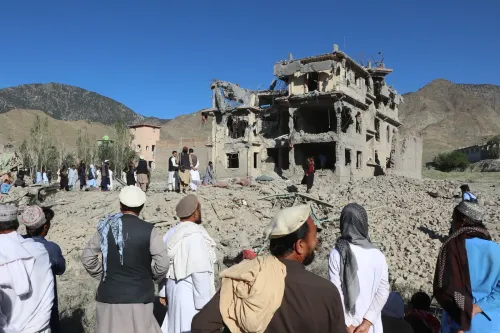
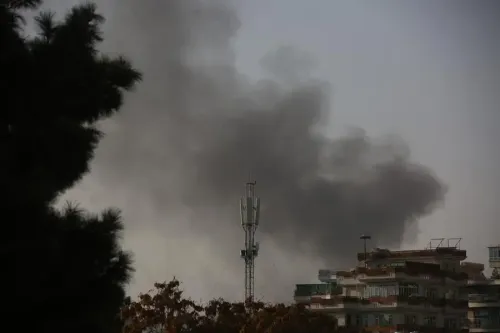
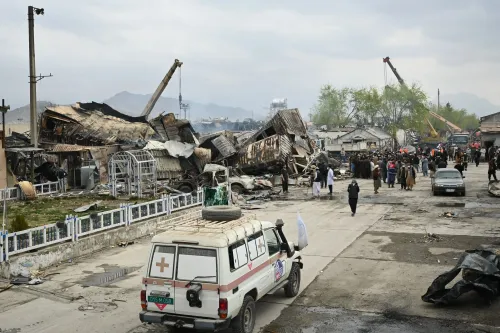
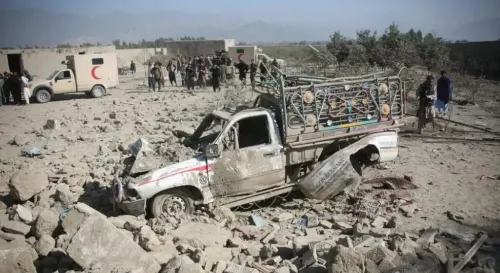
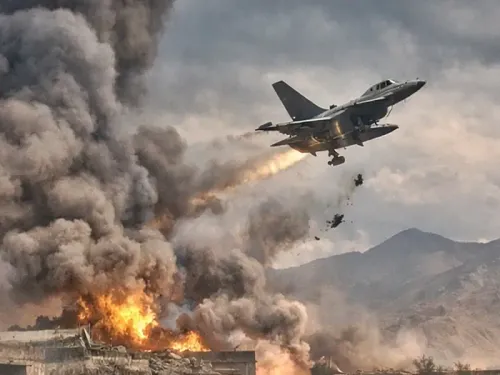
"Pakistan's recent airstrikes in Afghanistan have once again revealed a truth that the world hesitates to acknowledge: it fundamentally operates as a rogue state, acting with blatant disregard for international law. From February 26 to March 18, the United Nations reported that Pakistani airstrikes in Afghanistan resulted in at least 289 fatalities, including women and children, and displaced approximately 115,000 individuals. Notably, the bombing of a drug rehabilitation center in Kabul on March 16 killed 143 civilians and injured many more," the report elaborates.
The analysis underscores the alarming nature of these strikes, particularly in light of Pakistan's inability to articulate a coherent doctrine regarding threat escalation.
"The Pakistani military's actions in Afghanistan have been reckless. In a confrontation with a more formidable opponent, there is no telling how this recklessness could escalate to the use of nuclear weapons. If the Pakistan Army cannot exercise restraint in its use of artillery, airstrikes, and cross-border tensions, what more might it be willing to do in the future?" the report raises.
Highlighting the dangers posed by Pakistan, the report asserts that while one could argue against any nation possessing nuclear weapons, in a world that allows them, such arms should only reside with states demonstrating discipline and a profound respect for escalation risks.
"Pakistan is exhibiting the contrary: it is normalizing cross-border aggression, obscuring the distinction between militants and civilians, and dismissing civilian casualties under the umbrella of broad counterterrorism rhetoric. The country has long been accused of exploiting its nuclear shield to justify cross-border terrorism conducted through Islamist militant proxies targeting neighboring states. A nation that behaves in such a manner should not possess a nuclear arsenal in the first place," the report concludes.
It further states, "International pressure must commence with a straightforward principle: no nation should be permitted to use nuclear deterrence as a facade for proxy warfare and reckless escalation, as Pakistan has been doing for decades."
Point of View
It is vital to recognize the escalating tension surrounding Pakistan's nuclear capabilities and their implications for international security. While the need for nations to possess nuclear deterrents can be debated, it is imperative that those weapons remain in the hands of stable and responsible states.
NationPress
18 Sept 2026
Frequently Asked Questions
What recent actions have raised concerns about Pakistan's nuclear arsenal?
Pakistan's recent airstrikes in Afghanistan, which killed civilians and displaced thousands, have prompted analysts to label it a rogue state, raising concerns about the irresponsible use of its nuclear capabilities.
What risks are associated with Pakistan's nuclear weapons?
The primary risk is that Pakistan's nuclear arsenal may be used to justify aggressive military actions and proxy warfare, potentially destabilizing the region and posing a threat to international security.
How can the international community respond to Pakistan's actions?
The international community should apply diplomatic pressure and establish clear consequences for Pakistan's use of nuclear deterrence as a cover for aggressive actions and proxy warfare.