Is There a PIL in Supreme Court Against False FIRs?
Synopsis
In a significant move, a PIL has been submitted to the Supreme Court, urging the installation of display boards to inform about the consequences of false complaints. This initiative aims to protect the rights of innocent citizens and ensure accountability within the justice system.
Key Takeaways
Importance of Preventive Measures: The PIL emphasizes the need for proactive steps to combat false complaints.
Rights Protection: It seeks to uphold the rights of innocent individuals under Article 21.
Judicial Overload: False complaints significantly burden the judiciary.
Awareness Initiatives: Display boards are proposed to educate citizens about legal repercussions.
Accountability in Complaints: The need for complainants to affirm the truth of their allegations is highlighted.
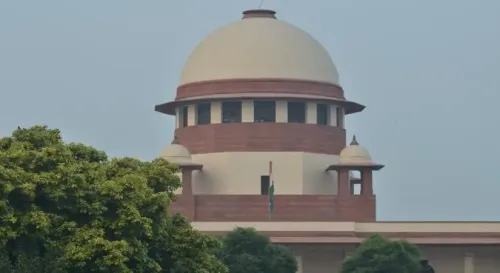
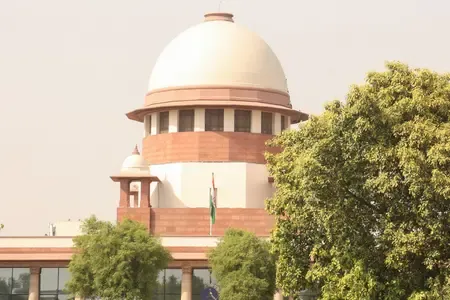
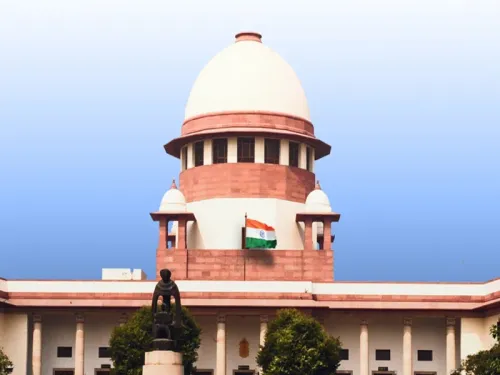
New Delhi, Feb 14 (NationPress) A public interest litigation (PIL) has been submitted to the Supreme Court requesting that both the Centre and state authorities install "display boards" at police stations, court complexes, and public offices. These boards would emphasize the penal provisions and penalties associated with filing false complaints, making false charges, and presenting fabricated evidence.
The petition, brought forth by advocate Ashwini Kumar Upadhyay through advocate-on-record Ashwani Kumar Dubey, argues that these preventive measures are crucial to uphold the right to life, liberty, and dignity of innocent individuals as stipulated in Article 21 of the Constitution.
The request specifies that these display boards should be positioned at all police stations, tehsil and district court premises, panchayat bhawans, municipal offices, and educational institutions, clearly outlining the provisions and penalties for false complaints, false charges, false statements, false information, and false evidence.
The petitioner has also requested that authorities inform complainants about the legal repercussions of filing false complaints prior to registering an FIR or accepting any complaints.
"Authorities must alert the complainant regarding the penalties for false complaints, false charges, false statements, false information, and false evidence before accepting the complaint, to protect the freedom of speech and expression of innocent citizens," the petition asserts.
Moreover, the petition seeks orders for authorities to obtain a written undertaking or affidavit from complainants, confirming that the statements made in the complaint, information, statement, evidence, and charges are accurate, in order to mitigate frivolous litigation and malicious prosecution.
Referencing data from the National Crime Records Bureau (NCRB), the plea highlights a significant discrepancy between registered cases and convictions under various special criminal laws, with acquittals appearing in disproportionately high numbers.
"This statistical trend indicates a systemic issue of false complaints, false charges, and fabricated evidence inundating the criminal justice system," the petition states.
Quoting the Law Commission's 277th Report, the petitioner argued that false charges, fabricated evidence, and wrongful prosecutions are primary contributors to miscarriages of justice and violations of Article 21.
The report indicated that available remedies are "episodic, uncertain, and ineffective" and that a large portion of undertrials ultimately achieve acquittal after prolonged periods of incarceration.
The plea also noted that despite the introduction of Chapter XIV of the Bharatiya Nyaya Sanhita, 2023, the lack of any administrative or preventive mechanisms has rendered these provisions largely ineffective.
It further claimed that the unchecked misuse of criminal law instills a chilling effect on the freedoms guaranteed under Article 19, including free speech, movement, and the right to pursue trade and profession, as fear of malicious prosecution stifles legitimate dissent and enterprise.
"False complaints and malicious prosecutions turn the criminal process itself into punishment, resulting in loss of liberty, social stigma, mental trauma, and irreversible damage to reputation, even when cases conclude in acquittal," the petition noted, adding that speedy trials and the presumption of innocence lose relevance when false cases proliferate unchecked.
The petitioner emphasized that the judiciary is encumbered due to false complaints, false charges, and fabricated evidence, asserting that neither the Centre nor the states have taken effective measures to address this issue, thus necessitating judicial intervention by the Supreme Court.
Point of View
It is imperative that we support measures that enhance accountability in our legal system. The proposed PIL not only seeks to inform citizens but also addresses the alarming rate of false complaints that burden our judiciary. NationPress stands firmly for justice and the protection of innocent lives.
NationPress
29 Sept 2026
Frequently Asked Questions
What is the purpose of the PIL filed in the Supreme Court?
The PIL aims to direct authorities to install display boards informing citizens about the penalties associated with filing false complaints and charges.
What rights does the PIL seek to protect?
The PIL seeks to protect the right to life, liberty, and dignity of innocent citizens as guaranteed under Article 21 of the Constitution.
What statistical evidence supports the PIL's claims?
The PIL cites data from the National Crime Records Bureau (NCRB) highlighting a significant gap between registered cases and actual convictions.
What recommendations are made in the PIL?
The PIL recommends informing complainants about the legal consequences of false complaints and obtaining written affirmations regarding the truthfulness of their claims.