Rajasthan Assembly's 75-year Amrit Mahotsav session reviews landmark laws
Synopsis
Rajasthan's legislature turned 75 with a session that was part history lesson, part policy showcase — from a 1955 tenancy law that broke the zamindari system to a 2023 gig workers act that made Rajasthan a national first. The breadth of laws revisited signals how the Assembly is framing its democratic identity ahead of a new political cycle.
Key Takeaways
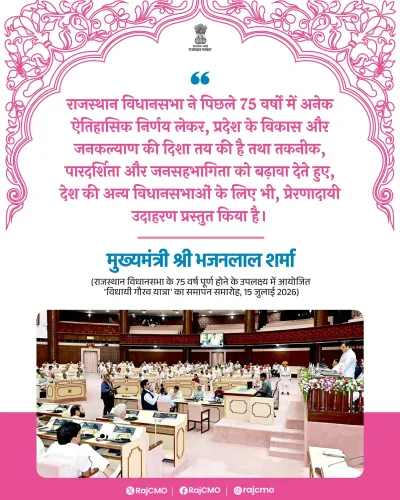
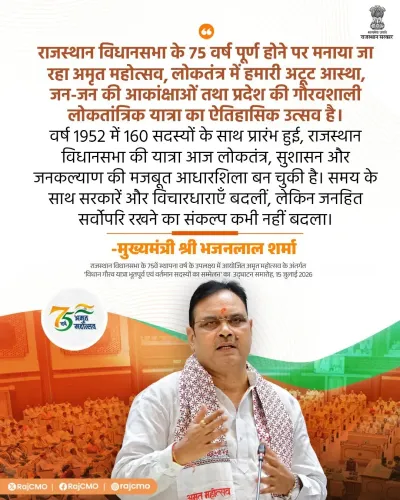
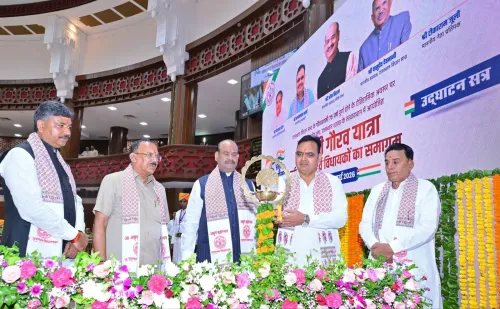
The Rajasthan Legislative Assembly held its second Amrit Mahotsav session on 15 July , marking 75 years of the state legislature.
The session was moderated by Speaker Vasudev Devnani , former CM Vasundhara Raje , and CPA Secretary Sandeep Sharma .
Rajasthan was highlighted as the first state in India to enact a social security law for platform-based gig workers under the Gig Workers Act, 2023 .
Laws spanning from 1955 to 2025 were reviewed, covering land rights, education, cooperative societies, religious conversion, and coaching regulation.
Former CM Raje called for legislators to deepen their use of the Assembly library and maintain Rajasthan's tradition of ideological debate without personal animosity.
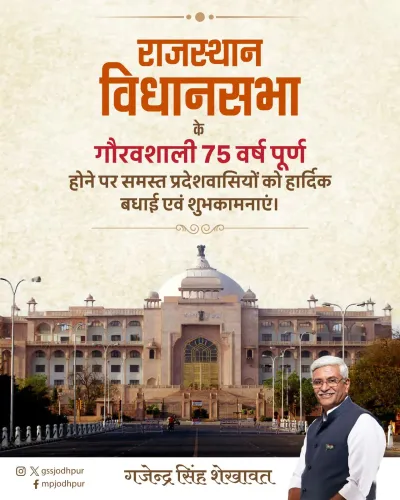
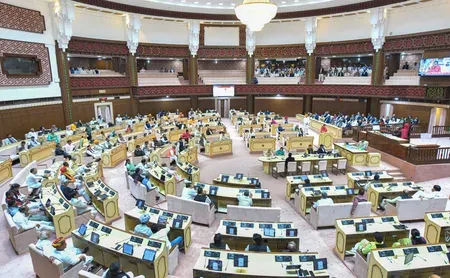
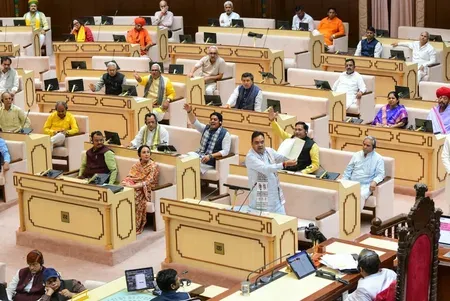
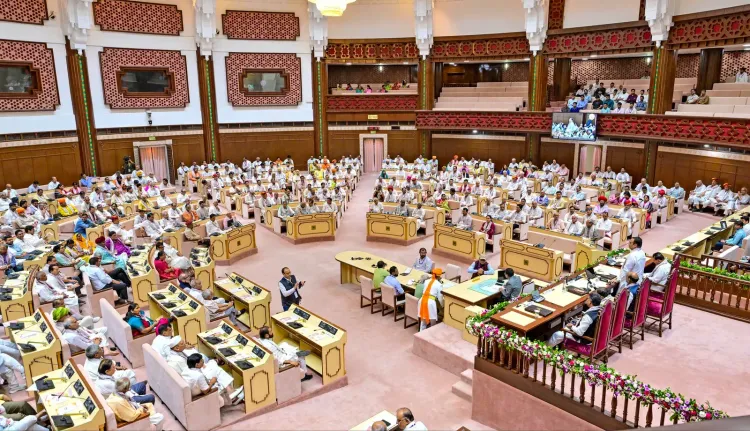
The Rajasthan Legislative Assembly on Wednesday, 15 July held the second session of its Amrit Mahotsav — a commemorative series marking 75 years of the state legislature — with sitting and former members revisiting key legislations that have shaped Rajasthan's democratic and social landscape over seven and a half decades. The session was moderated by Assembly Speaker Vasudev Devnani, former Chief Minister Vasundhara Raje, and Commonwealth Parliamentary Association Secretary Sandeep Sharma.
Raje on Legislative Legacy and Preparedness
Former Chief Minister Vasundhara Raje reflected on the Assembly's democratic heritage, noting that its traditions have been consistently reinforced by parliamentary propriety, ideological maturity, and a steadfast commitment to public welfare. She invoked the intellectual leadership of former Chief Ministers Bhairon Singh Shekhawat and Mohanlal Sukhadia, arguing that the quality of legislative debate rises when members enter the House well prepared.
Raje urged legislators to make greater use of the Assembly library and build a sustained reading culture. She also called upon members to preserve Rajasthan's democratic tradition — one where, she said, ideological differences have historically never eroded mutual respect or personal relationships.
Key Legislations Revisited
Distinguished speakers shared perspectives on a range of landmark laws. Former MLA Rajendra Rathore described the Rajasthan Coaching Centres (Control and Regulation) Act, 2025 as a pioneering initiative that mandates accountability among coaching institutes, prohibits misleading advertisements, and enforces safety and fire protection standards — creating, he said, a safer and more transparent environment for students.
Jaipur Rural MP Rao Rajendra Singh spoke on the Rajasthan Tenancy Act, 1955, calling it a landmark post-zamindari reform that secured land rights for cultivators. He highlighted the Act's protections for Scheduled Castes and Scheduled Tribes under Section 42 as a reflection of the Assembly's progressive legislative vision.
Former Minister Kalicharan Saraf addressed the Rajasthan Prohibition of Unlawful Religious Conversion Act, 2025, stating that the legislation reinforces communal harmony and every citizen's constitutional right to religious freedom.
Gig Workers, Sati Prevention, and Education
Former Assembly Speaker Deependra Singh Shekhawat highlighted the Rajasthan Platform-Based Gig Workers (Registration and Welfare) Act, 2023, noting that Rajasthan became the first state in India to extend a social security framework to millions of platform-based workers associated with services such as Ola, Uber, Zomato, and Swiggy. He said the welfare board and dedicated fund established under the Act would provide greater security and stability to this workforce.
Former MLA Tara Bhandari recalled the Rajasthan Sati (Prevention) Act, 1987, describing it as a landmark social reform that strengthened women's rights and symbolised the state's commitment to progressive values. Former Minister Dr B.D. Kalla discussed the Rajasthan Primary Education Act, 1964, noting that the inclusion of vocational activities such as spinning and weaving in schools represented an early push toward practical education and self-sufficiency.
Other Laws in Focus
Former MLA Nathu Singh Gurjar reflected on the Rajasthan Panchayat Samiti and Zila Parishad Act, 1959; MLA Rajendra Pareek spoke on the Rajasthan Cooperative Societies Act, 1965; and former MLA Pradyuman Singh discussed the Rajasthan Land Revenue Act, 1956 — each underscoring the enduring administrative and developmental contributions of these statutes to the state.
The Amrit Mahotsav series is expected to continue as the Assembly marks its 75th anniversary, with further sessions likely to examine additional pillars of Rajasthan's legislative history.
Point of View
From the 2025 coaching regulation act to the religious conversion prohibition, reflect the current BJP government's legislative priorities as much as the Assembly's collective legacy. Rajasthan's gig workers act remains genuinely significant as a national first, yet its real-world implementation and the welfare fund's adequacy have drawn limited scrutiny. The session's bipartisan framing — invoking Congress-era Chief Minister Mohanlal Sukhadia alongside BJP icons — is deliberate, but the harder question of whether today's legislature matches that era's quality of debate went unasked.
NationPress
14 Oct 2026
Frequently Asked Questions
What is the Rajasthan Assembly Amrit Mahotsav session?
It is a commemorative series of sessions marking 75 years of the Rajasthan Legislative Assembly. The second session, held on 15 July, brought together sitting and former MLAs to discuss landmark legislations enacted over the past seven and a half decades.
Why is the Rajasthan Gig Workers Act, 2023 significant?
The Rajasthan Platform-Based Gig Workers (Registration and Welfare) Act, 2023 made Rajasthan the first state in India to extend a social security framework to platform-based workers such as those associated with Ola, Uber, Zomato, and Swiggy. The Act establishes a welfare board and a dedicated fund to provide greater financial security to this workforce.
What did Vasundhara Raje say at the Amrit Mahotsav session?
Former Chief Minister Vasundhara Raje reflected on the Assembly's democratic legacy and urged legislators to study thoroughly and use the Assembly library regularly. She also called on members to preserve Rajasthan's tradition of maintaining mutual respect across ideological divides.
Which laws were discussed at the Rajasthan Assembly's 75th anniversary session?
The session covered a wide range of laws including the Rajasthan Tenancy Act (1955), Primary Education Act (1964), Cooperative Societies Act (1965), Sati (Prevention) Act (1987), Gig Workers Welfare Act (2023), and two 2025 laws on coaching centre regulation and prohibition of unlawful religious conversion.
Who moderated the Rajasthan Assembly Amrit Mahotsav second session?
The session was moderated by Rajasthan Legislative Assembly Speaker Vasudev Devnani, former Chief Minister Vasundhara Raje, and Commonwealth Parliamentary Association Secretary Sandeep Sharma.