Kerala CM Satheesan writes to Tamil Nadu's Vijay over NH project stone supply disruption
Synopsis
Kerala CM Satheesan has written to Tamil Nadu's new CM Joseph Vijay over a gazette notification that is choking off stone aggregate supplies from Tirunelveli, Tenkasi, and Kanniyakumari — materials without which several National Highway projects in Kerala, including those feeding the Vizhinjam International Seaport, risk significant delays. It is an early test of the bilateral relationship under Vijay's leadership.
Key Takeaways
Satheesan wrote to Tamil Nadu CM Joseph Vijay on 28 July 2026 seeking intervention on construction material supply.
Tamil Nadu Gazette Notification No.
306 (dated 9 July 2026 ) introduced regulations on inter-state transportation of rough stones and construction materials.
Stone aggregate supply from Tirunelveli , Tenkasi , and Kanniyakumari districts to Kerala has been significantly disrupted.
The affected materials are essential for ongoing National Highway projects in Kerala, including connectivity to the Vizhinjam International Seaport and Vallarpadam Container Terminal .
Satheesan has requested a 'suitable relaxation or mechanism' to allow uninterrupted supply exclusively for nationally significant infrastructure projects.
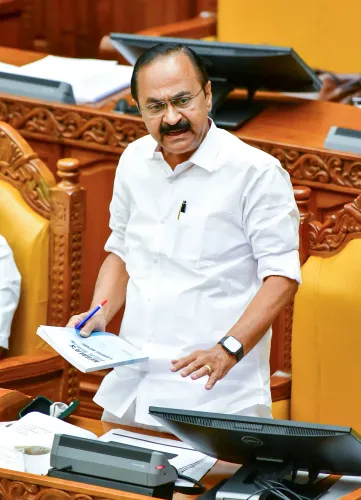
Kerala Chief Minister V.D. Satheesan on Tuesday, 28 July 2026, wrote to Tamil Nadu Chief Minister Joseph Vijay, urging his personal intervention to restore the flow of stone aggregates from Tamil Nadu to Kerala — materials critical to the execution of several ongoing National Highway projects in the state.
What Triggered the Letter
At the centre of the dispute is Tamil Nadu Government Gazette Notification No. 306, dated 9 July 2026, which introduced provisions regulating the inter-state transportation of rough stones and other construction materials. According to Satheesan's letter, the notification has significantly disrupted the movement of stone aggregates from the Tamil Nadu districts of Tirunelveli, Tenkasi, and Kanniyakumari — traditionally the principal source of such materials for Kerala's large-scale infrastructure works.
Why Kerala Is Particularly Vulnerable
Kerala has limited in-state availability of suitable stone aggregates for infrastructure projects of this scale, making cross-border supply from neighbouring Tamil Nadu districts a structural necessity rather than a convenience. Satheesan's letter notes that the Tamil Nadu restrictions have 'adversely impacted the supply chain, disrupted construction activities and pose a serious risk of delay in the completion of several strategically important projects.'
The stakes extend beyond state borders. The National Highway projects in question are expected to strengthen regional connectivity, improve logistics efficiency, and facilitate trade and tourism across southern India. Critically, they are also linked to the Vizhinjam International Seaport and the International Container Transshipment Terminal at Vallarpadam — two flagship infrastructure assets whose full potential depends on unimpeded road connectivity.
Satheesan's Appeal to Vijay
In his letter, Satheesan acknowledged Tamil Nadu's policy objectives around sustainable natural resource management, while arguing that a 'balanced approach' can be evolved to accommodate nationally important infrastructure requirements without undermining those goals. He specifically requested that Vijay consider granting 'suitable relaxation or evolving an appropriate mechanism' to facilitate uninterrupted transportation of stone aggregates exclusively for ongoing National Highway and other nationally significant projects in Kerala.
The Kerala CM framed the request within the broader context of the two states' long-standing cooperative relationship, describing it as 'founded on geographical proximity, cultural affinity and a long tradition of mutual cooperation.'
Broader Implications for Southern Infrastructure
This is not the first time inter-state resource movement policies have created friction along the Kerala-Tamil Nadu corridor. The two states share extensive supply chain interdependencies across construction, agriculture, and energy. Any prolonged disruption to stone aggregate supply could push back project timelines, inflate costs, and delay connectivity to ports that are central to India's maritime trade ambitions in the south. The Centre's National Highway programme, which underpins much of the construction activity in question, adds a federal dimension to what is ostensibly a bilateral state-level issue. How Vijay's government responds will be closely watched by infrastructure stakeholders across the region.
Point of View
And a gazette notification — however well-intentioned on resource conservation grounds — has created a supply-chain chokepoint with national infrastructure consequences. What makes this politically interesting is the recipient: Joseph Vijay is barely into his tenure as Tamil Nadu CM, and how he navigates this first bilateral ask from a neighbouring state will signal his administrative priorities. The Vizhinjam port angle also gives the Centre a stake in the outcome — if NH connectivity to a flagship maritime project slips, it becomes a federal problem, not just a state one.
NationPress
26 Oct 2026
Frequently Asked Questions
Why did Kerala CM Satheesan write to Tamil Nadu CM Joseph Vijay?
Satheesan wrote to Vijay on 28 July 2026 to seek his personal intervention in restoring the supply of stone aggregates from Tamil Nadu to Kerala, which has been disrupted by a Tamil Nadu government gazette notification regulating inter-state transportation of construction materials. The disruption is threatening timelines for several National Highway projects in Kerala.
What is Tamil Nadu Gazette Notification No. 306 and why does it matter?
Gazette Notification No. 306, issued by the Tamil Nadu government on 9 July 2026, introduced regulations on the inter-state movement of rough stones and other construction materials. It has significantly reduced the flow of stone aggregates from Tirunelveli, Tenkasi, and Kanniyakumari districts to Kerala, where such materials are a primary input for large-scale infrastructure works.
Which Kerala infrastructure projects are at risk due to this disruption?
Several ongoing National Highway projects in Kerala are affected. These include projects that provide road connectivity to the Vizhinjam International Seaport and the International Container Transshipment Terminal at Vallarpadam — both strategically significant to southern India's trade and logistics network.
What has Satheesan specifically requested from the Tamil Nadu government?
Satheesan has requested that Tamil Nadu consider granting a suitable relaxation or evolving a mechanism to allow uninterrupted transportation of stone aggregates exclusively for ongoing National Highway and other nationally significant infrastructure projects in Kerala, without undermining Tamil Nadu's broader resource management policy objectives.
Why can't Kerala source stone aggregates from within its own territory?
According to Satheesan's letter, Kerala has limited availability of suitable stone aggregates for large-scale infrastructure works, making it structurally dependent on supply from neighbouring Tamil Nadu districts. This geographic constraint means the Tamil Nadu restrictions have an outsized impact on Kerala's construction sector.