Supreme Court Affirms Loss of Scheduled Caste Status for Converts to Christianity
Synopsis
The Supreme Court's recent ruling affirms that individuals converting to Christianity cannot maintain their Scheduled Caste status. This decision underscores the constitutional interpretation of caste identity, revealing the complexities surrounding religious conversion and caste rights in India.
Key Takeaways
The Supreme Court upholds that conversion to Christianity leads to loss of Scheduled Caste status.
The ruling is based on the Constitution (Scheduled Castes) Order of 1950.
Individuals practicing religions other than Hinduism, Sikhism, or Buddhism cannot claim Scheduled Caste status.
The decision impacts the legal protections available to converts under the SC/ST Act.
This ruling could influence the social standings of many individuals within the caste system.
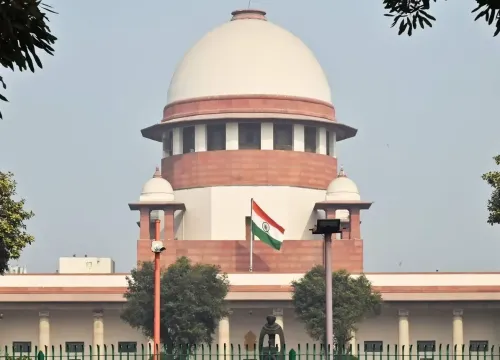
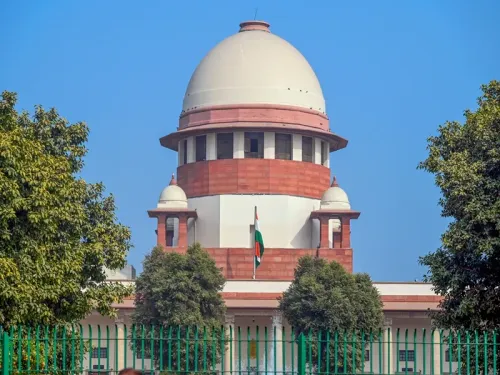
New Delhi, March 24 (NationPress) The Supreme Court confirmed on Tuesday a ruling from the Andhra Pradesh High Court, which stated that individuals who have embraced Christianity and actively practice the religion cannot retain their Scheduled Caste status.
A Bench comprising Justices Prashant Kumar Mishra and N.V. Anjaria clarified that “no individual who professes a faith outside of Hinduism, Sikhism, or Buddhism can be acknowledged as a member of the Scheduled Caste,” emphasizing that converting to any other religion leads to an “immediate and total forfeiture” of that status.
In its ruling, the apex court supported the Andhra Pradesh High Court’s stance, asserting that the prohibition outlined in the Constitution (Scheduled Castes) Order of 1950 is “categorical” and allows for no exceptions.
The Bench led by Justice Mishra remarked that one cannot profess a different religion while simultaneously claiming Scheduled Caste status. The Supreme Court highlighted that the appellant had remained committed to Christianity and served as a pastor for over ten years, conducting regular Sunday services, thereby leaving “no doubt” about his religious affiliation.
“In this instance, the petitioner has not claimed to have reverted from Christianity to his original faith or been readmitted to the Madiga community. On the contrary, the evidence confirms that the appellant has persisted in identifying as a Christian… These corroborating facts unequivocally indicate that he remains a Christian,” Justice Mishra’s Bench noted.
Previously, the Andhra Pradesh High Court, in its April 30, 2025, ruling, determined that an individual who had converted to Christianity and worked as a pastor could not invoke the safeguards afforded to Scheduled Castes under the Scheduled Castes and Scheduled Tribes (Prevention of Atrocities) Act.
The High Court remarked that the complainant had been “serving as a pastor for the last decade” and was actively conducting regular Sunday services, thus clearly demonstrating his adherence to Christianity.
It further stated that “upon converting to Christianity, the petitioner cannot remain part of the Scheduled Caste community,” thus disallowing the invocation of the SC/ST Act’s provisions, as the caste system is not part of Christianity.
The Andhra Pradesh High Court also indicated that the Constitution (Scheduled Castes) Order of 1950 explicitly states that individuals adhering to religions outside of those specified cannot be considered members of the Scheduled Castes.
Point of View
Highlighting the complexities of caste in contemporary India.
NationPress
22 Sept 2026
Frequently Asked Questions
What did the Supreme Court rule regarding Scheduled Caste status for converts to Christianity?
The Supreme Court ruled that individuals who convert to Christianity cannot claim Scheduled Caste status and lose this identity upon conversion.
Can a person who converts to Christianity reclaim their Scheduled Caste status?
No, the Supreme Court confirmed that conversion to Christianity results in the complete loss of Scheduled Caste status.
What is the basis of the Supreme Court's ruling?
The ruling is based on the Constitution (Scheduled Castes) Order of 1950, which states that only individuals practicing Hinduism, Sikhism, or Buddhism can be classified as Scheduled Caste.
What implications does this ruling have for religious converts?
The ruling suggests that religious converts may not receive the protections afforded to Scheduled Castes under laws designed to prevent discrimination.
How does this ruling affect the caste system in India?
This ruling reinforces the notion that the caste system is incompatible with Christianity, thus complicating the social dynamics for converts in India.