Manish Tewari Claims Delimitation is a Facade for Women's Reservation Bill
Synopsis
Congress MP Manish Tewari claims the Centre's delimitation effort is misleadingly presented as the Women’s Reservation Bill, warning it could undermine the political influence of smaller states in the Lok Sabha. Tewari's remarks raise critical questions about the government's approach to representation.
Key Takeaways
Manish Tewari accuses the Centre of misrepresenting the delimitation exercise.
The proposed changes could lessen the political weight of smaller states.
The Delimitation Commission should independently decide on seat allocations.
The definition of 'population' has been revised in the proposed bill.
Tewari urges the government to reserve seats for women without expanding total Lok Sabha strength.
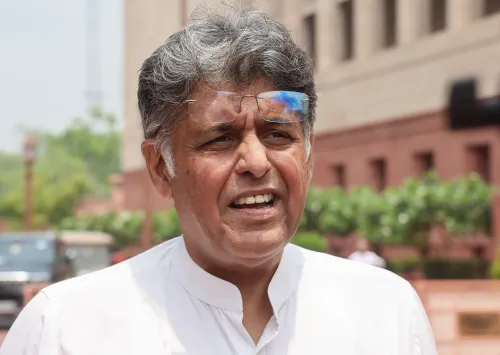
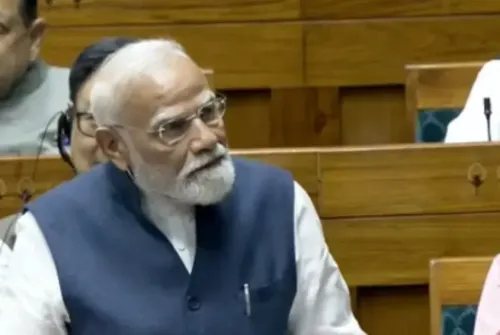
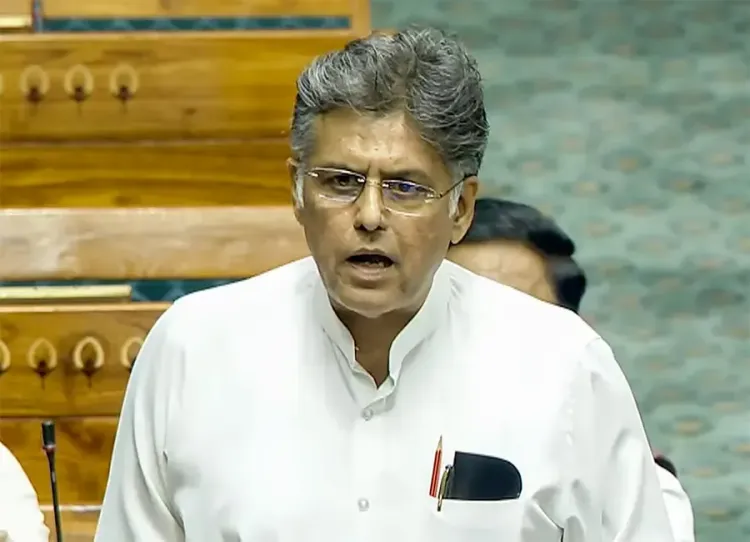
New Delhi, April 16 (NationPress) Congress MP Manish Tewari asserted on Thursday that the Centre's upcoming delimitation initiative is being falsely represented as the Women’s Reservation Bill. He contended that if the delimitation proceeds as planned, it could diminish the political influence of peripheral states in the Lok Sabha.
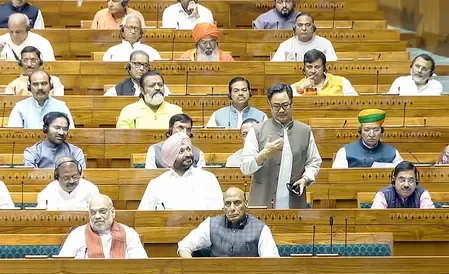
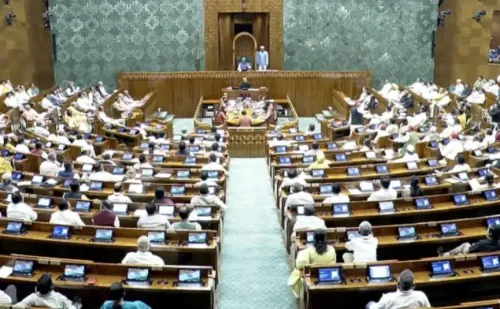
Tewari's comments emerged during a lengthy discussion in the Lok Sabha following the introduction of the Constitution (One Hundred and Thirty-First Amendment) Bill and the Delimitation Bill, 2026 by Law Minister Arjun Ram Meghwal. Additionally, Union Home Minister Amit Shah introduced the Union Territories Laws (Amendment) Bill, 2026.
“This legislation on delimitation is merely a guise for the Women’s Reservation Bill,” Tewari stated.
He reminded that the Women’s Reservation Bill was already approved in 2023, which set the stage for its implementation after the first census post-2023, followed by delimitation.
Citing the BJP-led central government’s inconsistency, he remarked that the same administration that previously advocated for a post-2023 census has reverted to utilizing the 2011 census.
Tewari pointed out, “The Bill does not specify that the number of seats will be increased by 50 percent.”
He emphasized that determining such matters falls under the jurisdiction of the Delimitation Commission, not the government.
Alleging that the government is undermining the Commission’s authority, he stated, “The government cannot dictate to the Commission what the increase in seat numbers will be.”
Discussing the projections outlined in the Bill, Tewari noted, “In central India, seats will rise from 199 to 308. In northwestern India, there will be an increase of 16. Punjab’s representation is set to grow from 13 to 19. In southern states, it will escalate from 132 to 198. Additionally, the northeast will gain 14 seats.”
He stressed that the core issue is about absolute numbers, not proportions.
“The political weight of smaller, peripheral states that have achieved developmental milestones will be diminished in the Lok Sabha,” he maintained.
According to Tewari, the definition of ‘population’ has been modified in Clause 3 of the Delimitation Bill. “Previously, it was based on the latest census; now it will rely on a census determined by Parliament,” he explained.
Emphasizing that the fundamental principle of democracy is ‘one person, one vote and one value’, he argued, “Ultimately, we must reconcile this foundational principle of Indian democracy with the aspirations of federalism.”
He declared that the entire discussion hinges on managing this contradiction.
Tewari further asserted, “This necessitates a much more serious and structured dialogue than the arbitrary manner in which the government is attempting to push this Bill through Parliament.”
He added, “This is the elephant in the room, the true problem that remains unaddressed.”
He urged the government to allocate 33 percent of seats for women within the existing 543 Lok Sabha seats instead of enlarging the total number of seats.
“The House does not operate at 543; envision this House at 815. Do not alter the strength of Parliament,” Tewari cautioned.
Point of View
Urging a careful examination of how changes in delimitation could affect the balance of power within the Lok Sabha. Tewari's comments reflect a broader concern regarding the implications of these legislative moves for smaller and peripheral states.
NationPress
17 Sept 2026
Frequently Asked Questions
What is the Women's Reservation Bill?
The Women's Reservation Bill aims to reserve 33% of seats in the Lok Sabha and state assemblies for women.
What is delimitation?
Delimitation is the process of redrawing boundaries of electoral constituencies to reflect population changes.
Why is Manish Tewari concerned about delimitation?
Tewari believes that the current delimitation process could weaken the political influence of smaller, peripheral states in the Lok Sabha.
What changes does the Delimitation Bill propose?
The Delimitation Bill suggests altering the definition of ‘population’ based on a census determined by Parliament, rather than the last conducted census.
How does delimitation affect political representation?
Delimitation can lead to changes in the number of seats allocated to different regions, impacting political representation and influence.