Why Are Protests Causing Traffic Chaos in Dhaka?
Synopsis
Protests in Dhaka have caused significant traffic disruptions, affecting daily life. Mobile phone shop owners and students are demanding justice and changes in regulations. The protests have escalated, leading to clashes with police. With the situation worsening, the deployment of military personnel raises concerns about public safety and governance in Bangladesh.
Key Takeaways
Traffic disruptions in Dhaka are severe due to ongoing protests.
Mobile phone shop owners are calling for regulatory changes and justice.
Protesters are facing clashes with police, leading to injuries.
The military has been deployed to maintain order amid escalating tensions.
Public sentiment is mixed, balancing support for protests with concerns for safety.
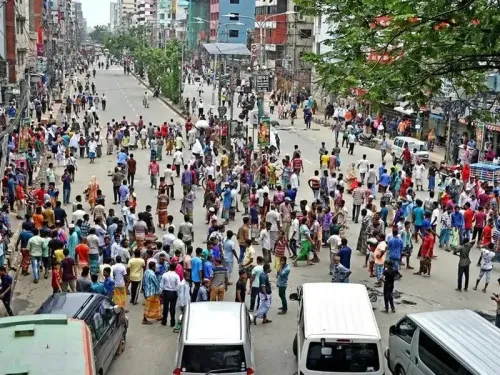
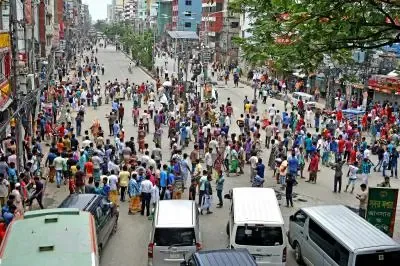
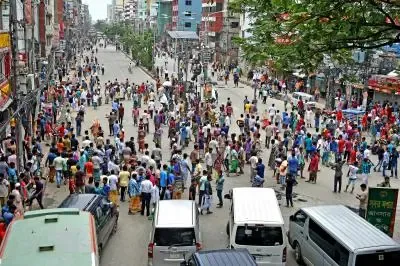
Dhaka, Jan 5 (NationPress) Life in Bangladesh's capital faced significant disruption on Monday as intensifying protest demonstrations led to a complete halt of traffic in numerous crucial areas. Major intersections were blocked, resulting in widespread congestion and considerable difficulties for commuters, as reported by local media.
The turmoil impacted office workers, students, and patients, as limited public transport forced many individuals to embark on lengthy walks to their destinations.
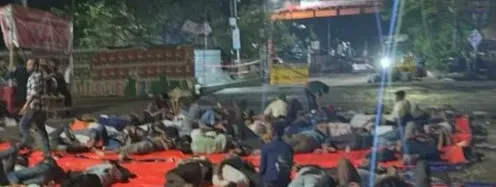
On Sunday morning, mobile phone shop owners from across Bangladesh conducted a sit-in, obstructing the Karwan Bazar intersection in Dhaka as part of a nationwide strike over various demands, including a call for delaying the implementation of the National Equipment Identity Register, according to The Daily Star.
The traders had announced their sit-in on Saturday, which their families joined, declaring an indefinite closure of mobile phone shops throughout the country.
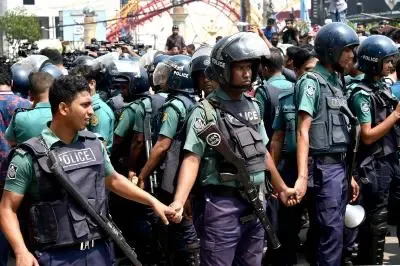
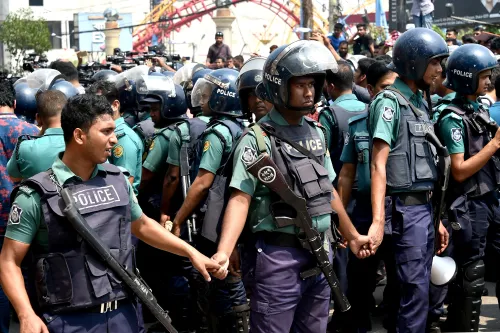
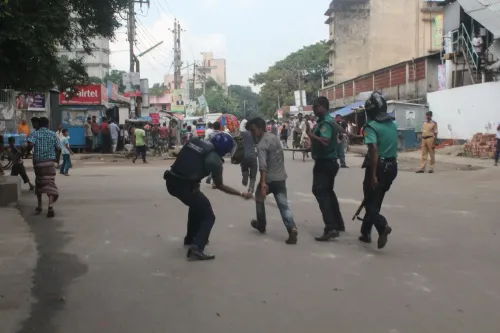
An hour after the protest commenced, police reportedly baton-charged the demonstrators; however, some returned in the afternoon, continuing their protest. This led to chases with law enforcement across nearby areas, including the Sonargaon intersection, close to Bashundhara City Shopping Complex, Panthapath, and Kathalbagan. Reports indicate that over a dozen individuals, including several police officers, were injured during the conflicts.
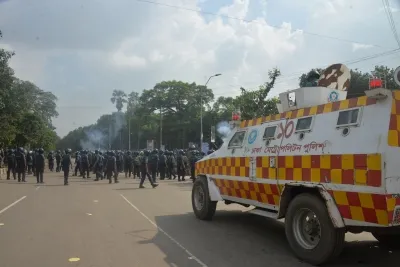
According to eyewitness accounts, The Daily Star reported that police utilized tear gas, sound grenades, and a water cannon to disperse the crowd, detaining several protestors while others sought refuge in adjacent buildings.
In light of the unrest, members of the Bangladesh Army and Rapid Action Battalion were later mobilized to avert further escalation.
Tejgaon Division Deputy Commissioner Mohammad Ibne Mizan informed The Daily Star that law enforcement had initially requested the mobile phone traders to vacate the area.
"As they declined, we resorted to tear gas, a water cannon, and sound grenades to disperse them... The protestors regrouped and retaliated against the police by hurling brick chips. We pursued them to the Motalib Plaza area," he elaborated.
According to a senior police official, at least ten individuals were detained, while Shamim Mollah, Vice President of the Mobile Business Community Bangladesh, stated that eleven traders were apprehended at the scene.
Simultaneously, students from Tejgaon College in the capital obstructed the Farmgate intersection, demanding justice for fellow student Sakibul Hasan Rana, who passed away on December 10, four days after sustaining injuries during an attack at the college dormitory.
This blockade caused traffic in the surrounding areas to come to a grinding halt.
"We are here seeking justice for Rana. Earlier, we lifted our blockade following assurances from authorities, yet the identified assailants remain at large," expressed Habib Rahman, a friend of the victim.
Additionally, on Sunday afternoon, leaders and supporters of the radical group Inquilab Moncho gathered at the Shahbagh intersection, commencing their "March for Insaf" initiative, demanding the immediate arrest and strict punishment for those responsible for the killing of their leader, Sharif Osman Hadi.
Bangladesh has been experiencing rising protests and a worsening law and order situation since the interim government led by Muhammad Yunus assumed power.
Point of View
The ongoing protests in Dhaka highlight critical societal issues that demand attention. While the aspirations of the protesters must be acknowledged, the response from law enforcement raises questions about the balance between maintaining order and respecting citizens' rights to express dissent. Continuous monitoring is necessary to ensure the situation does not escalate further, impacting the lives of everyday citizens.
NationPress
9 Oct 2026
Frequently Asked Questions
What are the main reasons for the protests in Dhaka?
The protests are primarily driven by demands from mobile phone shop owners regarding regulatory changes and justice for victims of violence.
How have the protests affected daily life in Dhaka?
The protests have led to severe traffic disruptions, affecting commuters, students, and emergency services, forcing many to walk long distances.
What actions have authorities taken in response to the protests?
Authorities have deployed police forces, including the use of tear gas and water cannons to disperse crowds, and military personnel have been mobilized to maintain order.
What is the public sentiment regarding the protests?
Many citizens sympathize with the protesters' demands but are concerned about the disruptions and potential violence that may ensue.
What is the government's stance on the protests?
The government has urged protesters to vacate areas to restore order while also acknowledging the need to address the underlying issues raised.