Why Were Income Tax Slabs Left Unchanged in Union Budget 2026?
Synopsis
In the Union Budget 2026, Finance Minister Nirmala Sitharaman announced no changes to income tax slabs, despite significant reforms last year. The budget focuses on simplifying compliance and providing taxpayer relief, including extended deadlines and exemptions. Discover the details that could impact your finances.
Key Takeaways
No change in income tax slabs Extended deadline for tax return revisions to March 31 TDS exemption on tribunal-awarded interest Income tax exemption for NRIs on capital goods Reduced TCS rates for overseas tour packages and LRS
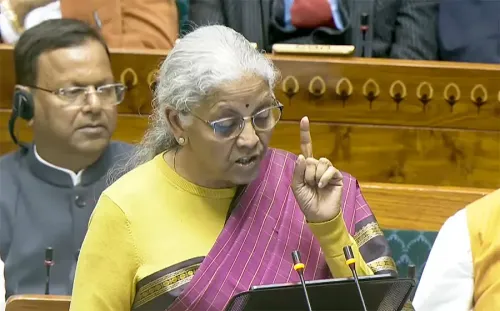
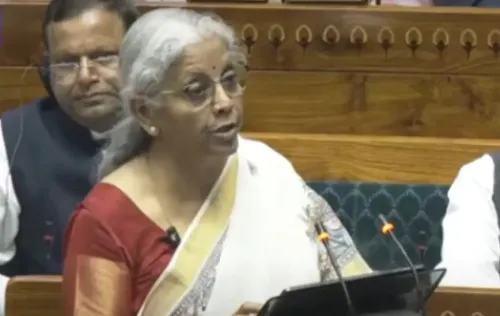
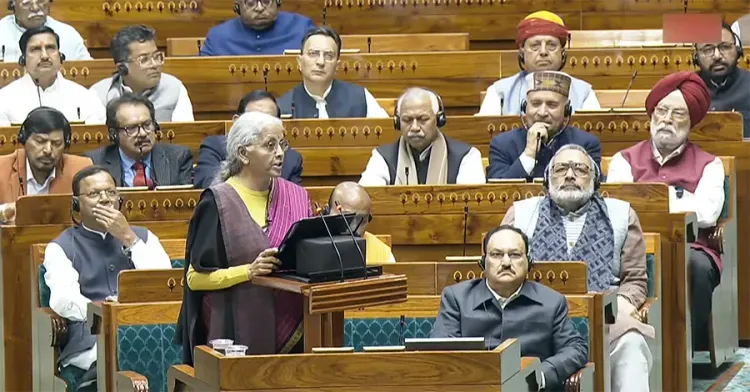
New Delhi, Feb 1 (NationPress) On Sunday, Finance Minister Nirmala Sitharaman unveiled the Union Budget 2026, maintaining the current income tax rates and slabs in light of last year's significant tax reforms. While the fundamental tax structure remains intact, the FM introduced various initiatives designed to simplify tax compliance and offer relief to taxpayers.
Among the proposals is an extension of the deadline for revising income tax returns from December 31 to March 31, albeit with a nominal fee.
Additionally, staggered deadlines for filing returns were suggested: individuals utilizing ITR‑1 and ITR‑2 can continue to file by July 31, while non-audit business cases and trusts will have until August 31.
To further aid taxpayers, interest granted by the motor accident claims tribunal to an individual will now be exempt from income tax, eliminating the corresponding TDS requirement.
Non-resident Indians (NRIs) supplying capital goods to Indian firms will also receive income tax exemption for a span of five years.
Furthermore, changes were proposed to the tax collection at source (TCS) rates, decreasing them from 5% and 20% to 2% on the sale of overseas tour packages with no minimum threshold.
Likewise, TCS on education and medical expenses under the Liberalised Remittance Scheme (LRS) will be reduced from 5% to 2%.
To facilitate compliance for small taxpayers, a new rule-based automated system will allow them to obtain a lower or nil deduction certificate without needing to file an application with the assessing officer.
Moreover, taxpayers who hold securities in multiple companies will be able to submit Form 15G or 15H to depositories, which will then forward it directly to the relevant companies.
On the securities front, the FM suggested increasing the securities transaction tax (STT) on futures from 0.02% to 0.05% and on options from 0.01% to 0.15%.
Point of View
It is crucial to recognize the government's efforts in maintaining a stable tax structure while introducing measures to ease compliance for taxpayers. The 2026 Union Budget reflects a balanced approach, aiming to simplify processes and provide relief without altering income tax slabs. This strategy may foster greater taxpayer trust and compliance.
NationPress
7 Oct 2026
Frequently Asked Questions
What are the key highlights of the Union Budget 2026?
The key highlights include no changes to income tax slabs, extended deadlines for tax return revisions, TDS exemptions on motor accident claims, and reduced TCS rates.
How will the budget affect individual taxpayers?
The budget introduces measures to simplify tax compliance and offers relief through extended filing deadlines and exemptions, benefiting individual taxpayers.
What changes were proposed for non-resident Indians?
Non-resident Indians providing capital goods to Indian companies will receive income tax exemption for a period of five years.
What new features are available for small taxpayers?
A new automated system will allow small taxpayers to obtain lower or nil deduction certificates without filing applications, streamlining the process.
How will the securities transaction tax change?
The budget proposed increasing the securities transaction tax on futures and options, which may impact trading costs.