Did VHP Urge Bengal CM to Take Legal Action Against Suspended Trinamool Legislator Humayun Kabir?
Synopsis
The VHP has formally requested West Bengal's Chief Minister Mamata Banerjee to take legal action against suspended Trinamool Congress legislator Humayun Kabir for organizing a mosque foundation event on a historically significant date. This situation raises questions about communal harmony and the implications of religious sentiments in contemporary politics.
Key Takeaways
VHP's legal request highlights communal tensions in West Bengal.
The proposed mosque is linked to the historical Babri Masjid incident.
Legal implications under Sections 196 and 299 could have significant consequences.
Public sentiment surrounding religious events remains sensitive.
Political responses to communal issues are crucial for maintaining harmony.
Kolkata, December 15 (NationPress) The Vishva Hindu Parishad (VHP) has addressed a letter to West Bengal Chief Minister Mamata Banerjee on Monday, requesting legal measures against Humayun Kabir, the suspended legislator of the Trinamool Congress from the Bharatpur Assembly constituency in the minority-heavy Murshidabad district. This action follows his organization of a foundation stone laying ceremony for the Babri Mosque in Beldanga on December 6.
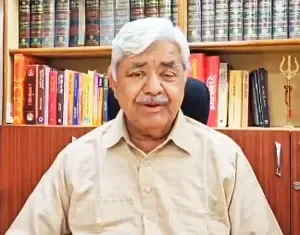
The letter, authored by VHP Counsel and senior advocate Alok Kumar, which has been shared with IANS, suggests that the Chief Minister should have her administration review the implications of Section 196 and Section 299 of the Bharatiya Nyaya Sanhita (BNS), 2023.
Section 196 addresses penalties for inciting enmity, hatred, or hostility among various religious, racial, linguistic, or regional groups, or castes/communities through any form of communication, aiming to prevent actions detrimental to social harmony.
Conversely, Section 299 pertains to the punishment for intentionally and maliciously offending the religious sentiments of any community by disparaging their beliefs through spoken or written statements, signs, or electronic means.
In the correspondence, the VHP Counsel urged Chief Minister Banerjee to consider registering a first information report (FIR) against Humayun Kabir and his associates involved in organizing the ceremony, advocating for legal action.
The mosque proposed at Beldanga is to be built in accordance with the original structure at Ayodhya in Uttar Pradesh, which was demolished on December 5, 1992. This historical context explains why Humayun Kabir chose December 6 for the ceremony.
The VHP letter indicated that since Mughal emperor Babur has been historically linked to the destruction of Hindu temples, naming the mosque after him, in conjunction with public statements, signifies that the initiative was neither random nor incidental.
"This clearly constitutes a malicious act likely to offend Hindu religious sentiments. Hence, it qualifies as an offense under Section 299 of the BNS," the VHP Counsel's letter asserted.
Point of View
The ongoing developments highlight the intricate balance between political actions and communal sentiments. The VHP's request indicates a growing concern regarding the implications of religiously charged events in a diverse society. It is essential to approach this matter with sensitivity, ensuring that the legal framework is upheld while fostering an environment of respect among various communities.
NationPress
3 Oct 2026
Frequently Asked Questions
What prompted the VHP to write to the Bengal CM?
The VHP demanded legal action against Humayun Kabir for organizing a mosque foundation stone laying ceremony on December 6.
What are Sections 196 and 299 of the BNS?
Section 196 addresses promoting enmity between groups, while Section 299 focuses on maliciously outraging religious sentiments.
Why is the date December 6 significant?
December 6 marks the anniversary of the demolition of the Babri Masjid in Ayodhya in 1992.
What action does VHP want the Bengal government to take?
VHP seeks the registration of an FIR against Humayun Kabir and his associates involved in the mosque ceremony.