South Korean Minister: AI Revolution in Manufacturing is Essential for National Survival
Synopsis
In a recent interview, South Korea's industry minister emphasized the critical importance of AI transformation in manufacturing for the nation's survival and competitiveness. He warned that failing to adapt could lead to job losses and diminished manufacturing prowess.
Key Takeaways
AI transformation is vital for South Korea's manufacturing survival.
The M.AX initiative seeks to enhance competitiveness against global rivals.
Automation could change job roles rather than eliminate them.
South Korea is diversifying its import strategies amid geopolitical tensions.
Collaboration with major firms is key to successful implementation .
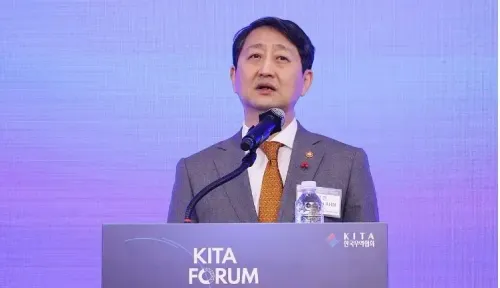
Seoul, April 19 (NationPress) Currently, the globe is engaged in two distinct conflicts: one in the Middle East and another in the realm of artificial intelligence (AI), according to the industry minister of South Korea. While the ongoing Middle Eastern conflict may appear to be the more pressing danger due to its visibility, the triumph in the AI domain is crucial for South Korea's future, Kim Jung-kwan, the Minister of Trade, Industry, and Resources, emphasized in an exclusive interview with Yonhap News Agency.
"We can endure the Middle East conflict by diversifying our trade routes and supply chains, but if we falter in the AI arena, we risk losing future jobs and our manufacturing edge," Kim stated.
Earlier this month, the National Assembly of South Korea approved a supplementary budget of 26.2 trillion won (approximately US$17.8 billion) primarily aimed at addressing the economic repercussions of the conflict between the United States and Iran.
Notably, 83 billion won has been allocated by the industry ministry for the "Manufacturing AI Transformation (M.AX)" initiative, which Kim argues may initially seem disconnected from the Middle East crisis.
"Consider how the U.S., which was once a manufacturing powerhouse, lost its competitive advantage in just one or two generations due to the failure to pass manufacturing knowledge from older to younger workers," he remarked.
"South Korea is facing a similar predicament, as a significant portion of our manufacturing workforce is in their 50s and 60s," he stressed, underscoring the necessity to preserve the country's global leadership in manufacturing. Successful AI transformation in the labor-intensive sector is essential, if not the only way, to achieve this.
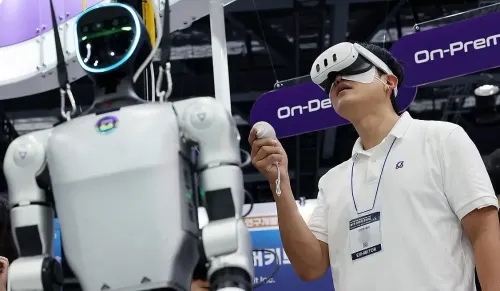
Kim acknowledged concerns that robots might replace human jobs in the wake of AI integration, but he countered that without maintaining competitiveness, jobs would vanish entirely. He proposed that with more AI factories and industrial robots, young workers previously engaged in welding or casting would transition into roles as robot managers. This shift would transform manufacturing into an industry that possesses a competitive "edge" rather than being seen as "dirty, dangerous, and difficult," he argued.
The minister asserted that the M.AX initiative, if executed effectively, would bolster South Korea's competitiveness against manufacturing rivals, such as China, the U.S., and Japan, insisting that advancements in AI are vital for maintaining industrial productivity against economies with greater labor and capital.
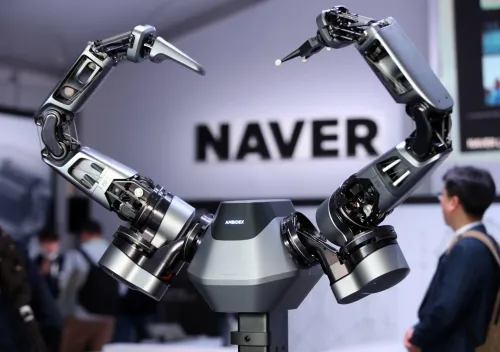
To this end, Seoul has initiated the M.AX Alliance with major local companies, including Samsung Electronics Co. and Hyundai Motor Co., along with leading AI firms to facilitate AI transformation in manufacturing. The alliance aims to commence mass production of humanoid robots by 2029 and establish 500 AI factories by 2030.
In terms of crude oil, South Korea has predominantly imported from the Middle East via the Strait of Hormuz; however, recent crises indicate the need for diversification in its import strategies. Kim noted that this would necessitate an increase in imports from the U.S.
Furthermore, South Korea should prioritize the internalization of supply chains for critical minerals and industrial resources by actively engaging in overseas resource development projects, he concluded.
Point of View
It is clear that the South Korean government's focus on AI transformation in manufacturing is a proactive measure aimed at preserving the country's competitive edge. This strategy not only addresses immediate economic challenges posed by global conflicts but also signals a long-term vision for sustainable growth in a rapidly evolving technological landscape.
NationPress
19 Sept 2026
Frequently Asked Questions
Why is AI transformation important for South Korea's manufacturing?
AI transformation is crucial for maintaining competitiveness, preserving jobs, and ensuring the long-term viability of the manufacturing sector in South Korea.
What is the M.AX initiative?
The M.AX initiative is a program designed to facilitate the AI transformation of the manufacturing sector, aiming to boost productivity and competitiveness.
How does the government plan to support this transformation?
The South Korean government has allocated significant funds and formed alliances with major companies to promote the development and integration of AI technologies in manufacturing.
What are the concerns regarding AI and jobs?
There are fears that increased automation could displace workers, but proponents argue that it will create new roles and opportunities in managing advanced technologies.
What is the timeline for the M.AX initiative?
The initiative aims to mass-produce humanoid robots by 2029 and establish 500 AI factories by 2030.