AP Plans World's First Cocoa City: Naidu's Bold Agri Vision

Synopsis
Andhra Pradesh CM Chandrababu Naidu has unveiled plans for the world's first Cocoa City on 250 acres, alongside targets to expand natural farming to 13,300 gram panchayats, scale horticulture to 50 lakh acres, and deploy Pre-Monsoon Dry Sowing across 20 lakh acres ahead of a below-normal monsoon season.
Key Takeaways
World's first Cocoa City is planned by Andhra Pradesh on 250 acres , announced by CM N.
Chandrababu Naidu on April 24, 2025 .
Natural farming target for 2026–27 set at all 13,300 gram panchayats , covering 25 lakh farmers and 11 lakh hectares .
AP Mushroom Mission 2026–2031 targets annual production of one lakh metric tonnes .
El Niño may reduce 2025 monsoon to 92% of normal , threatening Anantapur, Kadapa, Kurnool, Prakasam districts; PMDS to cover 20 lakh acres as mitigation.
Horticulture expansion target set at 50 lakh acres statewide; Rayalaseema to be developed as a global horticulture hub .
Over 8 lakh farmers registered on the AP Farmer App , which includes soil data, weather forecasts, and government scheme details.
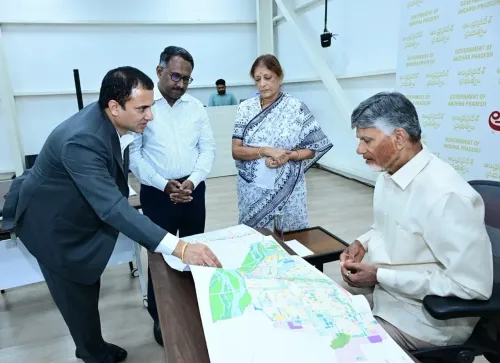
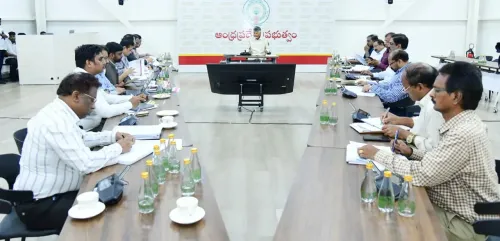
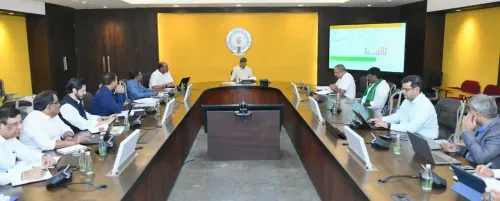
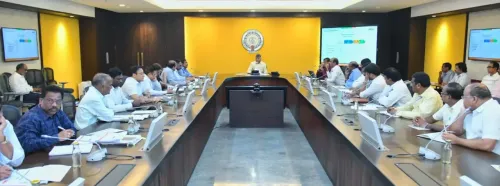
Amaravati, April 25 (NationPress): Andhra Pradesh Chief Minister N. Chandrababu Naidu has announced plans to establish the world's first dedicated Cocoa City, a 250-acre integrated experience and agri-innovation centre designed to serve as a model for progressive farmers across the country. The announcement was made during a high-level agriculture review meeting in Amaravati on Friday, April 24, where the CM issued a sweeping set of directives aimed at transforming the state into a global agricultural powerhouse.
World's First Cocoa City: What Andhra Pradesh Is Planning
Chief Minister Naidu directed senior officials to identify a suitable location for the proposed Cocoa City, which will span 250 acres and function as an experience centre for farmers, agri-entrepreneurs, and researchers. The facility is envisioned as a one-of-a-kind destination globally — combining cultivation, processing, branding, and marketing of cocoa under one roof.
This initiative is part of a broader strategy to diversify Andhra Pradesh's agricultural portfolio beyond traditional staples and position the state as a hub for high-value cash crops. Cocoa cultivation has been gradually gaining traction in parts of Andhra Pradesh, particularly in tribal and coastal belt regions, making this an organic extension of existing grassroots momentum.
Notably, India's cocoa production is currently dominated by Kerala, Karnataka, and Andhra Pradesh, with the country meeting only a fraction of its domestic chocolate industry demand — an industry valued at over ₹15,000 crore and growing rapidly. A dedicated Cocoa City could position AP at the centre of India's emerging cocoa economy.
Horticulture Expansion and Rayalaseema as a Global Hub
CM Naidu ordered the preparation of an action plan to expand horticulture cultivation to 50 lakh acres across Andhra Pradesh. He called for a cluster-based development strategy to transform the drought-prone Rayalaseema region into a global horticulture hub — a significant pivot for a region historically battered by farmer distress and water scarcity.
Officials confirmed that apple cultivation is being experimentally carried out in Anantapur district, with early results showing favourable climate conditions and good taste quality. The CM directed a scientific study of the region to enable large-scale expansion. He also instructed officials to boost cultivation of avocado, fig, jackfruit, guava, and pepper, with figs to be processed into premium dry fruit products to enhance farmer income.
The CM also directed officials to study saffron cultivation expansion in the Araku Agency area of Visakhapatnam district — a tribal highland zone already known for its globally recognised Araku coffee. If saffron cultivation scales successfully, it could add another high-value crop to the region's portfolio, building on the Araku coffee success story.
Natural Farming, Mushroom Mission and Farmer App Milestones
Under the AP Mushroom Mission 2026–2031, CM Naidu set an annual production target of one lakh metric tonnes. In 2025–26, natural farming was adopted across 9.26 lakh hectares by 17.74 lakh farmers spanning 4,116 gram panchayats. For 2026–27, the CM set an ambitious target to scale natural farming to all 13,300 gram panchayats, covering 25 lakh farmers and 11 lakh hectares.
The CM directed officials to enable certification-based marketing of natural farming produce, which would allow farmers to command premium prices in domestic and export markets. He also noted the decline in urea usage per hectare during the last Rabi season as a positive indicator of sustainable farming practices taking root.
Officials reported that over 8 lakh farmers have registered on the state's Farmer App, which now includes comprehensive data such as soil test results, groundwater availability, pesticide usage, government scheme benefits, and crop-specific weather forecasts. The CM stressed that mere registration numbers are insufficient — actual usage and tangible farmer benefits must be the benchmark.
El Niño Warning and Pre-Monsoon Dry Sowing Strategy
Officials warned CM Naidu that the 2025 southwest monsoon is expected to be below normal at approximately 92% of average levels, with El Niño likely to severely impact rainfed districts including Anantapur, Sri Sathya Sai, Kadapa, Kurnool, and Prakasam. These districts are already among the most agriculturally vulnerable in the state.
As a proactive mitigation measure, the state is implementing Pre-Monsoon Dry Sowing (PMDS), under which seeds are sown before the onset of rains. Officials said this technique improves yields while reducing cultivation costs, fertiliser usage, and water consumption — enabling farmers to earn an additional ₹5,000 to ₹7,000 per acre. The CM directed that PMDS be implemented across 20 lakh acres this year.
The Rythanna Meekosam awareness campaign reached 48.73 lakh farmer families in Phase 1 and 46.21 lakh families in Phase 2 through a five-point outreach programme, officials confirmed. The CM also asked officials to develop a doorstep delivery system for produce from Rythu Bazaars by engaging suitable private or cooperative agencies.
Broader Implications: Can AP Lead India's Agricultural Transformation?
Andhra Pradesh's agricultural ambitions under CM Naidu reflect a larger national conversation about moving Indian farming beyond subsistence toward market-linked, high-value, and sustainable models. The Cocoa City concept, if executed well, could become a replicable blueprint for other states looking to build agri-tourism and value-chain ecosystems around niche crops.
However, the scale of these targets — from 13,300 gram panchayats adopting natural farming to 50 lakh acres under horticulture — will require robust institutional support, supply chain infrastructure, and consistent political will beyond election cycles. Observers will watch closely whether these directives translate into ground-level action or remain aspirational benchmarks.
With the 2025 monsoon season approaching and El Niño posing a real threat to kharif output, the next three to six months will be a critical test of Andhra Pradesh's agricultural resilience and the effectiveness of its pre-emptive strategies.
Point of View
Globally branded, and politically savvy — but the real test lies in the unglamorous details: soil health, supply chains, and whether tribal and small farmers actually benefit or merely serve as backdrop. Andhra Pradesh has a history of ambitious agri-announcements, from Araku coffee's global success to the Rythu Bazaar network, but also of targets that outpace implementation. With El Niño threatening the most vulnerable districts and natural farming targets scaled to all 13,300 gram panchayats, the government is simultaneously playing offence and defence. What's missing from the narrative is accountability infrastructure — who monitors these targets, what are the penalties for failure, and how are marginal farmers being protected if the monsoon underperforms? The vision is compelling; the execution architecture needs equal ambition.
NationPress
15 Sept 2026
Frequently Asked Questions
What is Andhra Pradesh's Cocoa City project?
Andhra Pradesh's Cocoa City is a proposed 250-acre dedicated facility — the first of its kind in the world — designed to serve as an experience and innovation centre for cocoa cultivation, processing, and marketing. Chief Minister N. Chandrababu Naidu announced it on April 24, 2025, and directed officials to identify a suitable location for the project.
What is the AP Mushroom Mission 2026–2031?
The AP Mushroom Mission 2026–2031 is a state government initiative with an annual production target of one lakh metric tonnes of mushrooms. It is part of Andhra Pradesh's broader push to diversify agricultural income and promote high-value crop cultivation among farmers.
How will Andhra Pradesh handle a below-normal monsoon in 2025?
Officials have warned that the 2025 southwest monsoon may be around 92% of normal levels due to El Niño, particularly impacting Anantapur, Kadapa, Kurnool, and Prakasam districts. The state is implementing Pre-Monsoon Dry Sowing (PMDS) across 20 lakh acres to reduce dependence on monsoon onset and help farmers earn an additional ₹5,000–₹7,000 per acre.
What are Andhra Pradesh's natural farming targets for 2026–27?
For 2026–27, CM Chandrababu Naidu has set a target to expand natural farming to all 13,300 gram panchayats in Andhra Pradesh, covering 25 lakh farmers across 11 lakh hectares. In 2025–26, natural farming was already adopted by 17.74 lakh farmers across 9.26 lakh hectares.
What crops is Andhra Pradesh focusing on for horticulture expansion?
Andhra Pradesh is focusing on avocado, fig, jackfruit, guava, pepper, apple, saffron, and cocoa as part of its horticulture diversification strategy. The CM has ordered an action plan to expand total horticulture cultivation to 50 lakh acres statewide, with Rayalaseema targeted as a global horticulture hub.