India's Union Budget 2026-27: A Shift to Crop-Specific Strategies for High-Value Agriculture
Synopsis
The Union Budget 2026-27 introduces a transformative crop-specific strategy aimed at enhancing India's high-value agriculture. This initiative is expected to bolster the agricultural sector significantly, impacting millions of farmers and contributing to the country's export goals.
Key Takeaways
The Union Budget 2026-27 emphasizes crop-specific agricultural strategies.
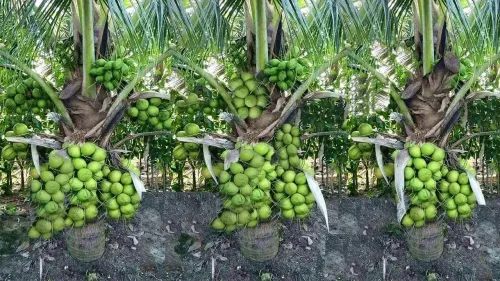
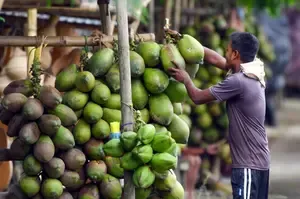
India ranks second globally in coconut production, supporting millions of livelihoods.
Horticultural production has surged significantly over the past decade.
Targeted interventions aim to enhance various agricultural sectors across India.
The coconut sector is becoming a crucial contributor to agricultural exports.
New Delhi, April 19 (NationPress) The Union Budget for 2026-27 signifies a pivotal move towards crop-specific and regionally tailored initiatives aimed at enhancing high-value agriculture across India, as announced by the government on Sunday.
In the past decade, India's agricultural sector has experienced remarkable growth at a rate of 4.45 percent, with the country now holding the title of the second-largest producer of coconuts globally.
The coconut industry plays a vital role in supporting the livelihoods of approximately 30 million individuals, which includes nearly 10 million farmers, according to the official statement.
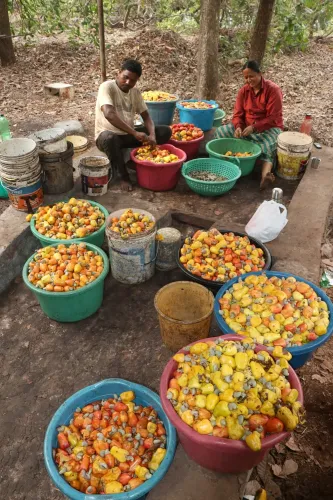
In the fiscal year 2024-25, India's cashew exports reached an impressive $369.17 million, while cocoa exports were valued at $295.58 million.
Walnut exports from India were around $7.8 million in FY 2024-25, with significant markets including the UAE, Turkey, Iraq, Singapore, Algeria, Qatar, Bhutan, Kuwait, Seychelles, and Nigeria.
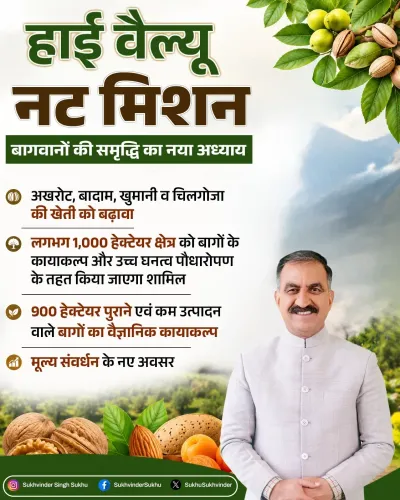
The recent budget proposes targeted measures for the cultivation of coconut, sandalwood, cocoa, and cashew in coastal regions, along with agarwood cultivation in the North Eastern states and premium nuts such as almonds, walnuts, and pine nuts in mountainous areas.
Over the last decade, horticultural production has surged from 277.35 million tonnes in 2013-14 to 370.74 million tonnes in 2024-25.
India ranks second globally in the production of vegetables, fruits, and potatoes, with fruits contributing 9.18 percent and vegetables 8.18 percent to global production.
Moreover, India stands as the world's largest producer of onions and shallots (excluding dehydrated varieties), accounting for nearly 22.42 percent of global production.
As of January 2026, there are approximately 150 million agarwood trees in India, with around 90 percent located in the North Eastern states within plantation and agroforestry systems.
Tamil Nadu leads the way in overall coconut production, while Andhra Pradesh boasts the highest productivity, followed by West Bengal and Tamil Nadu.
These regional differences underscore the diverse strengths in coconut production across various states in India, as highlighted in the statement.
Beyond primary production, the coconut sector is becoming an increasingly significant contributor to agricultural exports, aligning with the government's ambitious vision to achieve $2 trillion in exports by 2030 and $21 trillion by 2047.
Point of View
The recent budget's focus on targeted agricultural strategies is a commendable move that reflects a robust understanding of regional strengths. This initiative aims to elevate India's agricultural exports and support millions of farmers, ultimately fostering a sustainable agricultural ecosystem.
NationPress
16 Sept 2026
Frequently Asked Questions
What is the focus of India's Union Budget 2026-27?
The Union Budget 2026-27 focuses on crop-specific and regionally aligned strategies to boost high-value agriculture in India.
How has India's agricultural sector performed recently?
India's agricultural sector has demonstrated significant growth at a rate of 4.45 percent over the past decade.
Which region leads in coconut production in India?
Tamil Nadu is the leading state in overall coconut production in India.
What are India's main agricultural exports?
India's key agricultural exports include cashews, cocoa, and walnuts, with substantial contributions from coconut and horticultural products.
How many agarwood trees are present in India?
As of January 2026, India has around 150 million agarwood trees, primarily located in the North Eastern states.