India Most Important US Partner in 21st Century: Kurt Campbell
Synopsis
Former US Deputy Secretary of State Kurt Campbell declared India America's most vital strategic partner of the 21st century at the Hudson Institute's New India Conference — while issuing rare warnings about diplomatic tensions, weakening Indo-Pacific deterrence, and self-inflicted cuts to education and tech exchanges that risk squandering a generational opportunity.
Key Takeaways
Kurt Campbell , former US Deputy Secretary of State , declared India the most important US strategic partner of the 21st century at the Hudson Institute's New India Conference .
Campbell acknowledged "troubling" strains in the India-US relationship , saying both sides need a reminder about mutual respect .
He cited the Indian-American diaspora's rapid delivery of medical supplies during Covid-19 as evidence of the partnership's unique human depth.
Campbell warned that recent cuts to US-India education and technology exchange programmes are "tragically and inexplicably" undermining bilateral progress.
He cautioned that US military deterrence in the Indo-Pacific is declining as resources are diverted to conflicts in Ukraine and the Middle East .
Campbell called for deeper integration of India into the Indo-Pacific strategic architecture and greater institutional support for the bilateral relationship.
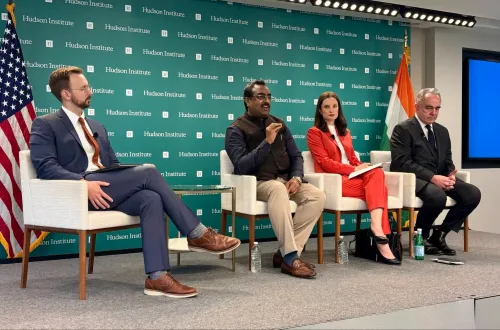
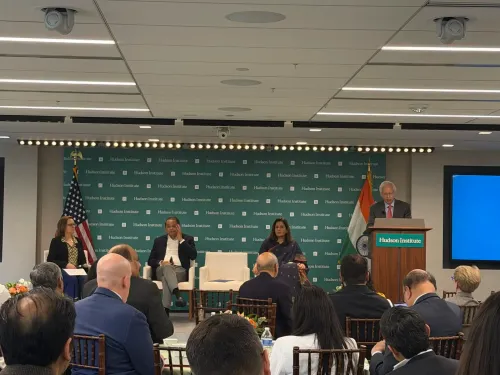
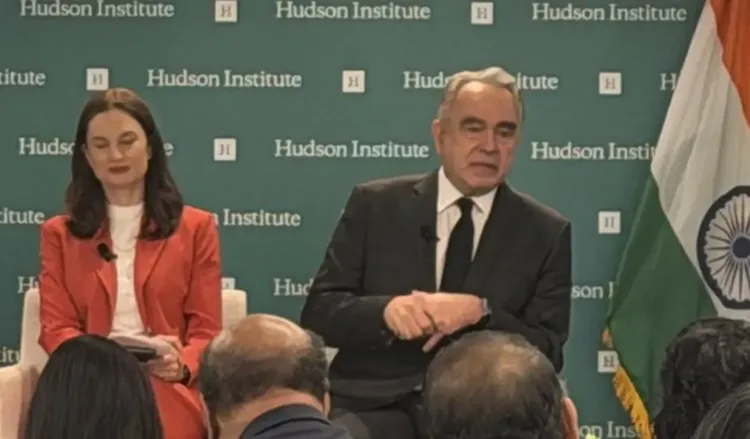
Washington, April 23 — Kurt Campbell, former US Deputy Secretary of State, has declared that the relationship between India and the United States is the single most consequential bilateral partnership of the 21st century. Speaking at the New India Conference organised by the Hudson Institute, Campbell issued a strong endorsement of the partnership while candidly acknowledging mounting strains that threaten to erode its foundation.
Campbell's Landmark Assessment of India-US Relations
"I believe the most important relationship for the United States in the 21st century is between the United States and India," Campbell stated unequivocally before a gathering of policymakers and strategic analysts. The declaration carries significant weight given his decades of experience shaping American foreign policy across multiple administrations.
However, Campbell did not shy away from the friction points. He described it as "troubling" that the two nations now require a "reminder around mutual respect" — a pointed reference to recent diplomatic tensions that have introduced uncertainty into what was once a smoothly ascending partnership.
People-to-People Ties and the Indian Diaspora's Strategic Role
Campbell placed particular emphasis on the human dimension of the India-US relationship, spotlighting the Indian-American diaspora as a living bridge between the two democracies. He recalled a defining moment during the Covid-19 pandemic, when Indian-American networks mobilised with extraordinary speed to channel critical medical supplies to India.
"I have never seen… the most massive rapid accumulation of humanitarian medical products… shipped… on a moment's notice," he said, describing the episode as emblematic of the relationship's unique human depth. This organic solidarity, he argued, is something no formal treaty can replicate.
This comes amid a broader recognition within Washington policy circles that diaspora networks — particularly the 4.4 million-strong Indian-American community — represent an underutilised strategic asset in strengthening bilateral ties.
Education, Technology and the Innovation Imperative
Campbell identified education and technology as the twin engines that must power the next phase of the India-US partnership. Referencing a US-led initiative, he cited a striking statistic — 6,000 Indian candidates competing for just 25 available slots — as vivid proof of India's intellectual ambition and the scale of unmet potential.
He called for a dramatic expansion of academic exchanges and science and innovation collaboration, warning that recent budget cuts to such programmes were "tragically and inexplicably" reversing hard-won progress. Notably, these cuts come at a time when China is aggressively expanding its own academic and technological outreach globally — a contradiction that critics argue undermines American strategic interests in the Indo-Pacific.
Indo-Pacific Architecture and Bureaucratic Bottlenecks
On the strategic front, Campbell pointed to structural inefficiencies within the US government itself as a barrier to deeper engagement with India. He noted that defence frameworks spanning multiple regional commands create bureaucratic friction that slows decision-making and complicates coordination with New Delhi.
He argued forcefully that India must be more firmly embedded within the Indo-Pacific strategic architecture — a position consistent with the logic of frameworks like the Quad, which groups India, the US, Japan, and Australia as counterweights to Chinese assertiveness.
Campbell also sounded an alarm over the diversion of US military resources to conflicts in other theatres — an implicit reference to the wars in Ukraine and the Middle East. "The quality of our deterrents… is going to go down in the Indo-Pacific," he warned, underscoring the urgency of locking in strategic partnerships before the regional balance shifts further.
Global Conflict Spillover and Long-Term Economic Consequences
Campbell broadened his analysis beyond military deterrence, warning that ongoing global conflicts carry profound economic consequences for both nations. "This is not just a regional conflict… it is a global one," he said, pointing to cascading disruptions to supply chains, energy markets, and manufacturing ecosystems.
For India — which has navigated a careful path of strategic autonomy while deepening ties with Washington — these disruptions present both risks and opportunities. As global supply chains restructure away from China, India's manufacturing ambitions under initiatives like Make in India and PLI schemes position it as a potential beneficiary, provided the bilateral relationship remains stable and institutionally robust.
Despite the headwinds, Campbell maintained that the foundational logic of the India-US partnership remains intact. He urged sustained political will and institutional investment — including deeper engagement with the Indian-American community — to ensure the relationship fulfils its historic potential.
The New India Conference brought together leading policymakers and analysts to evaluate India's evolving global role and the trajectory of one of the world's most consequential bilateral relationships. Over the past two decades, the partnership has expanded dramatically across defence, trade, and technology — and with both sides facing a more contested global order, the stakes of getting it right have never been higher.
Point of View
Bureaucratic silos that slow defence cooperation, and a distracted American foreign policy stretched thin by wars in Ukraine and the Middle East. India, meanwhile, has its own leverage calculus — New Delhi's strategic autonomy doctrine means Washington cannot take alignment for granted. The deeper irony is that as both sides proclaim the partnership's importance, the institutional investment required to sustain it is actually declining — a contradiction that rivals, particularly Beijing, will be watching closely.
NationPress
18 Sept 2026
Frequently Asked Questions
What did Kurt Campbell say about India-US relations?
Kurt Campbell, former US Deputy Secretary of State, called India the most important strategic partner for the United States in the 21st century. He made these remarks at the New India Conference hosted by the Hudson Institute in Washington.
Why are India-US relations under strain in 2025?
Campbell acknowledged unspecified tensions, noting it was 'troubling' that the two nations needed a reminder about mutual respect. Analysts point to friction over trade tariffs, visa policies, and differing positions on global conflicts as contributing factors.
What role does the Indian diaspora play in India-US ties?
Campbell highlighted the Indian-American community as a critical bridge, citing their rapid mobilisation to deliver medical supplies to India during the Covid-19 pandemic. He urged greater institutional engagement with this diaspora to strengthen bilateral relations.
What did Campbell say about Indo-Pacific security?
Campbell warned that US military deterrence in the Indo-Pacific is weakening as resources are diverted to conflicts in Ukraine and the Middle East. He argued India must be more firmly integrated into the Indo-Pacific strategic architecture to address this gap.
What is the Hudson Institute New India Conference?
The New India Conference is a policy forum organised by the Hudson Institute, a Washington-based think tank, to assess India's global role and the trajectory of US-India relations. It convenes senior policymakers, diplomats, and strategic analysts.