Industry Experts Call for Comprehensive Cocoa Strategy to Curb India's Import Dependency
Synopsis
A recent roundtable in New Delhi highlighted the urgent need for a National Mission on Cocoa to enhance domestic production and reduce import reliance. Experts outlined strategic reforms to position India as a global cocoa processing leader while boosting farmer incomes.
Key Takeaways
Launch of a National Mission on Cocoa is essential.
Expand polyclonal seed gardens to 250 hectares by 2028.
Develop high-yield and climate-resilient cocoa varieties.
Establish a Centre of Excellence for Cocoa .
Implement reforms in tax and tariff structures.
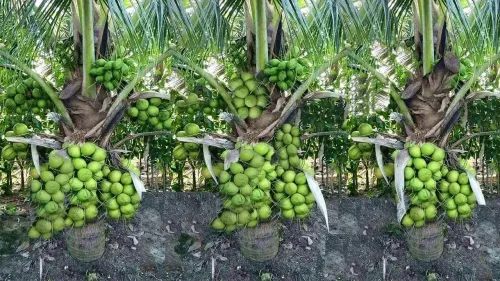
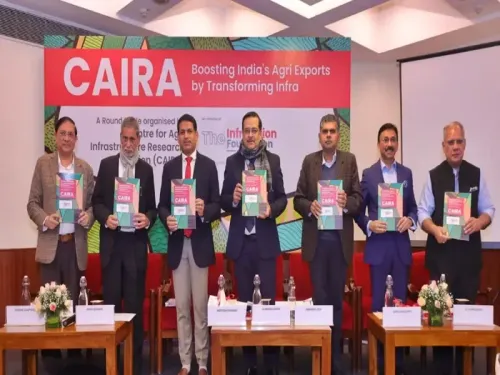
New Delhi, April 15 (NationPress) Industry leaders propose the initiation of a National Mission on Cocoa in India to reduce reliance on imports. During a recent roundtable discussion on "Future of Cocoa in India: Self-Sufficiency and Integration into Global Value Chains", experts advocated for a cohesive policy framework and the expansion of polyclonal seed gardens to 250 hectares by 2028, particularly in tribal and rainfed regions, according to a report by Grant Thornton Bharat.
They also emphasized the need for developing high-yielding, climate-resilient cocoa varieties, establishing a Centre of Excellence for Cocoa, increasing subsidies, launching a single-window digital platform, and empowering Farmer Producer Organizations (FPOs).
Critical action points included the reformation of tax and tariff structures to alleviate inverted duties, encouraging domestic processing, and attracting foreign direct investment (FDI).
Additionally, the need for promoting regional value-creation models was highlighted to position India as a viable global cocoa processing hub, alongside strengthening primary processing infrastructure for fermentation, drying, and quality stabilization.
"Cocoa, primarily an import-dependent crop, confronts significant challenges in production and post-harvest management within India," remarked Naveen Kumar Patle, Additional Commissioner (Horticulture), Ministry of Agriculture & Farmers Welfare.
Syed Junaid Altaf, Chairperson of the FICCI Task Force on Horticulture & Group Executive Director at FIL, stressed that cocoa possesses vast untapped potential to enhance farmer incomes, fortify agri-industry relations, and promote value-added, export-oriented growth in the coming years.
The knowledge paper presented at the roundtable indicated that India currently only satisfies about 25–30 percent of its cocoa demand domestically, with annual imports surpassing $866 million.
Cocoa is identified as a crop with high diversification potential, offering climate resilience, benefits of intercropping, and stable long-term income for farmers.
However, challenges remain, such as limited access to quality planting material, fragmented policy support, and underutilized processing capacity.
Point of View
The roundtable discussions on India's cocoa industry reveal a critical opportunity for self-sufficiency. Emphasizing a structured approach to policy and production can not only address import challenges but also enhance farmer livelihoods and strengthen the agricultural economy.
NationPress
19 Sept 2026
Frequently Asked Questions
What is the proposed National Mission on Cocoa?
The National Mission on Cocoa aims to enhance domestic cocoa production, reduce import dependency, and establish India as a competitive player in the global cocoa market.
Why is cocoa considered a high-potential crop?
Cocoa offers climate resilience, intercropping benefits, and the potential for stable income for farmers, making it an attractive option for diversification.
What are the main challenges facing India's cocoa production?
Challenges include limited access to quality planting material, fragmented policy support, and underutilized processing capacity.
How much of India's cocoa demand is currently met domestically?
Currently, India meets only about 25–30 percent of its cocoa demand domestically.
What strategies were discussed to improve cocoa production?
Strategies include expanding polyclonal seed gardens, developing high-yield varieties, enhancing subsidies, and establishing a Centre of Excellence for Cocoa.