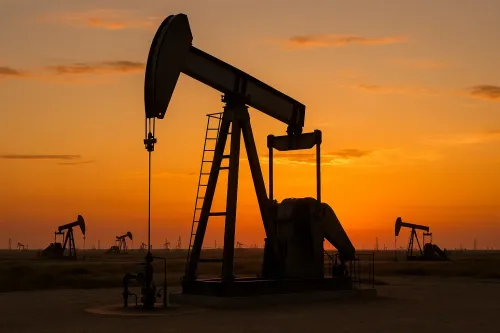
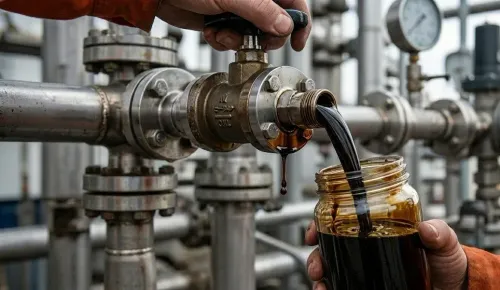
Crude oil rises 0.73% as US-Iran talks stall, Hormuz blockade holds
Synopsis
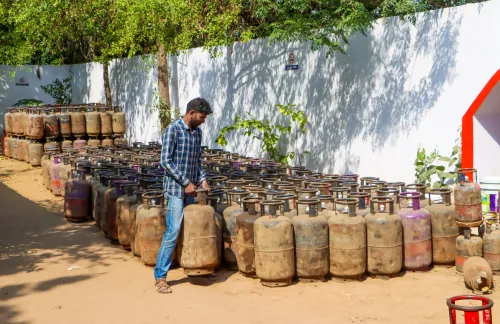
US-Iran diplomatic talks have collapsed into a stalemate, with Tehran blocking the Strait of Hormuz and Brent crude surging to $111.21 a barrel — its fourth consecutive monthly gain. Back home, India's commercial LPG cylinder price has jumped ₹993 to ₹3,071.50 in Delhi, marking the third hike since the conflict began in late February.
Key Takeaways
Brent crude rose 0.73% to $111.21 a barrel on 1 May ; WTI gained 0.30% to $105.37 .
Both benchmarks have posted gains for four consecutive months .
Brent's June contract hit $126.41 a barrel before expiry — highest since March 2022 .
Iranian spokesperson Esmaeil Baghaei said quick outcomes from US-Iran talks are "unrealistic".
Fed Chair Jerome Powell warned oil-driven inflation is complicating US monetary policy and poses greater risks for Asia .
India's 19-kg commercial LPG cylinder price hiked by ₹993 to ₹3,071.50 in Delhi — the third hike since 28 February .
Global crude oil prices edged higher on Friday, 1 May as diplomatic efforts to resolve the US-Iran standoff hit a wall, with Tehran continuing to block the Strait of Hormuz and Washington maintaining restrictions on Iranian crude exports. The stalemate has kept energy markets on edge, pushing both major benchmarks to multi-year highs.
Benchmark Prices and Market Movement
Brent crude futures for July delivery on the Intercontinental Exchange gained $0.81, or 0.73%, to settle at $111.21 a barrel. West Texas Intermediate (WTI) rose 31 cents, or 0.30%, to $105.37 a barrel. Both benchmarks have now posted gains for four consecutive months, according to analysts.
Market participants flagged fresh supply concerns after Brent's June contract, which expired on Thursday, hit $126.41 a barrel — its highest level since March 2022. Notably, Brent crude had earlier crossed $120 per barrel for the first time in four years, intensifying inflation concerns and rattling global markets.
Diplomatic Deadlock and Hormuz Tensions
A ceasefire, reportedly in effect since 8 April, has appeared increasingly fragile. On Thursday evening, Iranian Foreign Ministry spokesperson Esmaeil Baghaei said it was
Point of View
And markets are pricing accordingly. What is underappreciated is the asymmetry: a diplomatic breakthrough could quickly unwind the $20-plus risk premium baked into Brent, but any further escalation has no clear ceiling. For India, the pain is compounding — a weakening rupee amplifies every dollar move in crude, and the third commercial LPG hike since February signals that the government's capacity to absorb the shock through subsidies is wearing thin. The real question is whether New Delhi can accelerate its energy diversification fast enough to blunt the next spike.
NationPress
16 Sept 2026
Frequently Asked Questions
Why did crude oil prices rise on 1 May 2025?
Crude oil prices rose on 1 May as US-Iran diplomatic talks stalled, with Tehran continuing to block the Strait of Hormuz and Washington maintaining restrictions on Iranian crude exports. Brent futures gained 0.73% to $111.21 a barrel, while WTI rose 0.30% to $105.37.
What is the Strait of Hormuz and why does it matter for oil prices?
The Strait of Hormuz is a critical maritime chokepoint through which a significant share of global oil supply passes. Iran's blockade of the strait has disrupted supply flows, pushing crude prices sharply higher and raising inflation concerns worldwide.
How have commercial LPG prices changed in India due to the oil price surge?
The price of a 19-kg commercial LPG cylinder was hiked by ₹993, effective 1 May, bringing the cost to ₹3,071.50 in Delhi. This is the third such hike since 28 February, when the US-Israel and Iran conflict began, according to Indian Oil Corporation.
Are domestic LPG cylinder prices also affected for household users in India?
No. Indian Oil Corporation (IOC) stated that there has been no change in domestic LPG cylinder prices for 33 crore household users. Only commercial 19-kg cylinder prices have been revised.
What has the US Federal Reserve said about rising oil prices?
Fed Chair Jerome Powell has warned that rising oil prices driven by the Middle East conflict are boosting inflation and complicating US monetary policy. He also noted that Asia faces greater economic risks from the energy shock than other regions.