DFS Secretary Sanjay Lohiya urges banks to boost digital loan processing, financial inclusion
Synopsis
DFS Secretary Sanjay Lohiya has put both public and private sector banks on notice: end-to-end digital loan processing is no longer optional. From integrating Jan Suraksha enrolments to boosting claim awareness under Jansuraksha schemes, the meeting signals a shift from counting beneficiaries to delivering seamless, accountable financial services to India's underserved.
Key Takeaways
DFS Secretary Sanjay Lohiya chaired a review meeting with heads of all public sector banks and executive directors of major private sector banks on 6 October 2026 in New Delhi .
Banks were directed to enhance digital outreach and ensure end-to-end digital processing of loans .
New beneficiaries of PMJJBY and PMSBY must now be enrolled exclusively through the Jan Suraksha portal , which is being integrated with all banks and insurers.
Private sector banks were specifically urged to increase participation in government financial inclusion schemes .
Banks were told to improve claim awareness under Jansuraksha schemes to ensure nominees receive payouts after a policyholder's death.
Progress under PMJDY, APY, PMMY, KCC, PM SVANidhi, PM Vishwakarma , and PM Surya Ghar was reviewed, along with BC deployments in unbanked villages.
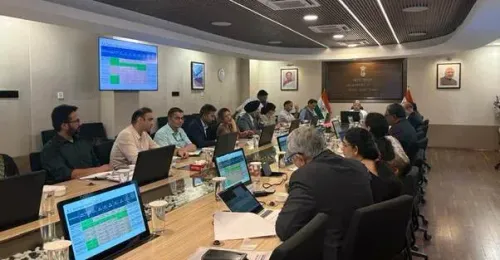
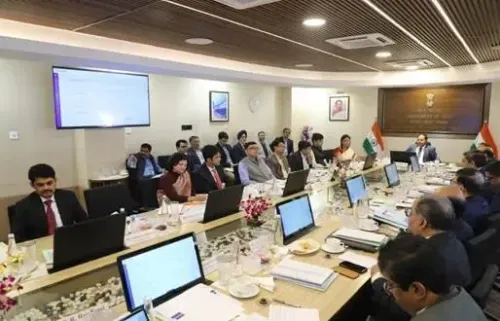
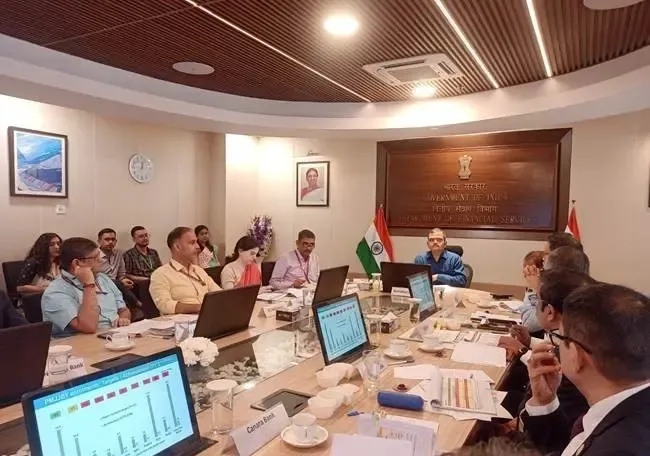
Sanjay Lohiya, Secretary of the Department of Financial Services (DFS), on Tuesday, 6 October 2026, directed public and private sector banks to strengthen their digital outreach and shift to end-to-end digital processing of loans. The directive came during a high-level review meeting chaired by Lohiya at New Delhi, attended by heads of all public sector banks (PSBs) and executive directors of major private sector banks (PVBs), along with senior DFS officials.
Key Directives Issued
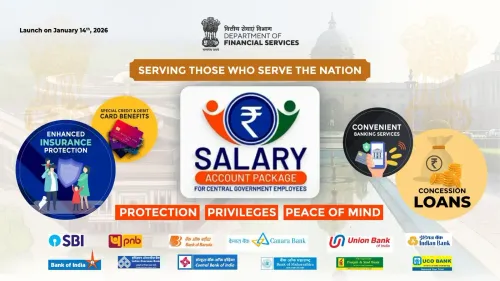
Lohiya called on banks to expand the delivery of working capital loans through emerging digital channels, including credit lines on UPI and credit cards for micro-enterprises (CCME). He specifically urged private sector banks to raise their participation in government-led financial inclusion schemes, noting that public sector institutions have historically carried a disproportionate share of the outreach burden.
The DFS Secretary also directed banks to enhance awareness among beneficiaries about claim eligibility under the Jansuraksha insurance schemes — particularly ensuring that nominees receive dues promptly after the death of a policyholder. Banks were asked to handle grievances related to such claims with greater care and sensitivity.
Jan Suraksha Portal Integration
A notable operational instruction was the directive to enrol all new beneficiaries of Pradhan Mantri Jeevan Jyoti Bima Yojana (PMJJBY) and Pradhan Mantri Suraksha Bima Yojana (PMSBY) exclusively through the Jan Suraksha portal. The portal is being integrated with all participating banks and insurers, a move aimed at improving data quality and simplifying operations for both institutions and end-users.
Schemes Under Review
The meeting involved a detailed progress review of a wide range of flagship financial inclusion programmes, including Pradhan Mantri Jan Dhan Yojana (PMJDY), Atal Pension Yojana (APY), Pradhan Mantri Mudra Yojana (PMMY), Stand Up India, PM Street Vendor's Atma Nirbhar Nidhi (PM SVANidhi), PM Vishwakarma, PM Surya Ghar, and Kisan Credit Card (KCC). Strategies to improve the persistency ratio of APY — a measure of how many subscribers maintain continuous contributions — were also discussed at length.
Branch Expansion and Business Correspondents
The review also covered the progress of opening brick-and-mortar bank branches and the deployment of business correspondents (BCs) in previously unbanked villages. This physical infrastructure push runs alongside the digital thrust, reflecting the government's dual-track strategy of combining last-mile physical access with scalable digital delivery for financial services.
This comes amid a broader national push to deepen financial penetration in rural and semi-urban India, where access to formal credit and insurance remains uneven despite significant gains since the launch of PMJDY over a decade ago. The DFS meeting signals that the government is now focused not just on enrolment numbers, but on the quality and completeness of the digital financial ecosystem for underserved populations.
Point of View
Insurance claim completion, and pension persistency. The instruction to route all new PMJJBY and PMSBY enrolments through a single integrated portal is a meaningful operational fix, but the deeper challenge is private sector banks, which have consistently lagged PSBs on inclusion mandates. Without binding targets and public accountability, the nudge to 'increase participation' risks remaining advisory. The persistency ratio concern on APY also points to a structural gap: enrolment alone does not equal financial security if subscribers drop out before vesting age.
NationPress
6 Oct 2026
Frequently Asked Questions
What did DFS Secretary Sanjay Lohiya direct banks to do?
Lohiya directed all public and private sector banks to strengthen digital outreach and move to end-to-end digital processing of loans. He also urged private sector banks specifically to increase their participation in government financial inclusion schemes such as PMJDY, PMJJBY, PMSBY, and APY.
What is the Jan Suraksha portal and why does it matter?
The Jan Suraksha portal is a centralised government platform being integrated with all banks and insurers to manage enrolments under PMJJBY and PMSBY. Lohiya directed banks to enrol all new beneficiaries through this portal to improve data quality and streamline operations.
Which financial inclusion schemes were reviewed at the meeting?
The meeting reviewed progress under PMJDY, PMJJBY, PMSBY, Atal Pension Yojana, PM Mudra Yojana, Stand Up India, PM SVANidhi, PM Vishwakarma, PM Surya Ghar, and Kisan Credit Card, among others.
Why are claim awareness and grievance handling important under Jansuraksha schemes?
Many eligible nominees reportedly do not receive insurance payouts because of insufficient awareness about claim eligibility. The DFS Secretary asked banks to actively raise awareness and handle related grievances with greater care to ensure beneficiary families receive dues after a policyholder's death.
What is the persistency ratio for Atal Pension Yojana and why is it a concern?
The persistency ratio measures how many APY subscribers continue making regular contributions without lapsing. A low persistency ratio means subscribers drop out before they qualify for the pension benefit, undermining the scheme's long-term social security objective — a concern raised explicitly at the DFS review meeting.