Ganga Expressway: ₹36,000 crore corridor to reshape UP's logistics, realty across 12 districts
Synopsis
At ₹36,000 crore and 594 km, the Ganga Expressway is not just a road — it is a corridor-scale economic bet on Uttar Pradesh. Knight Frank India's District Readiness Index maps out which 12 districts stand to gain first, and a 3.5-km airstrip in Shahjahanpur adds a national security dimension that most infrastructure projects lack.
Key Takeaways
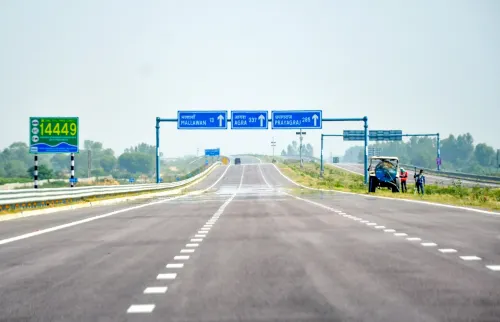
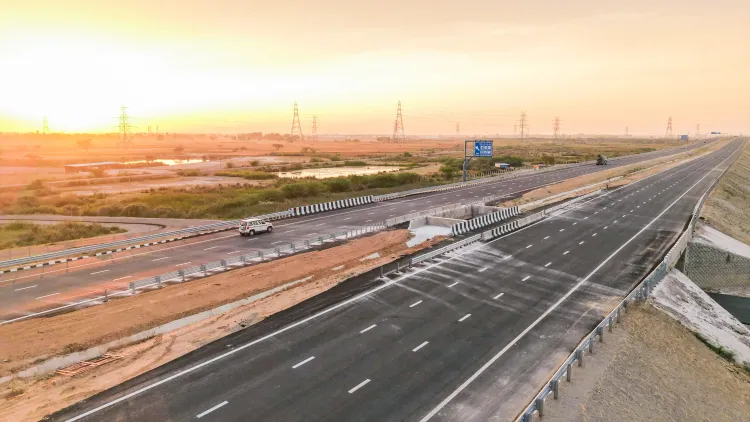
The Ganga Expressway spans 594 km between Meerut and Prayagraj , built at a cost of approximately ₹36,000 crore .
Travel time between Meerut and Prayagraj is expected to fall from 10–12 hours to around six hours .
Knight Frank India identifies 18 interchange nodes as development catalysts across three phases spanning up to 10 years .
Meerut and Prayagraj are high-readiness hubs; Hardoi , Unnao , and Hapur are key emerging growth centres.
A 3.5-km emergency airstrip in Shahjahanpur adds strategic and national security value to the corridor.
Uttar Pradesh accounts for nearly 60% of India's operational expressway network.
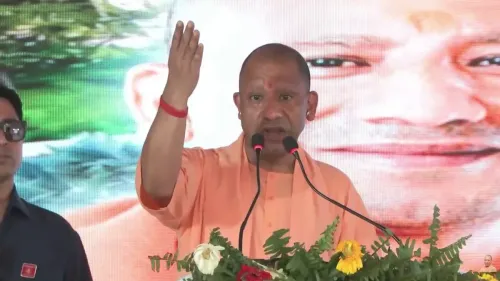
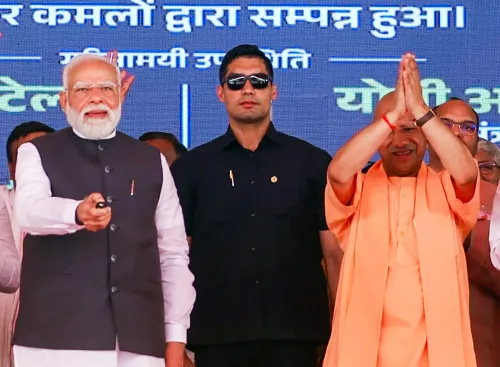
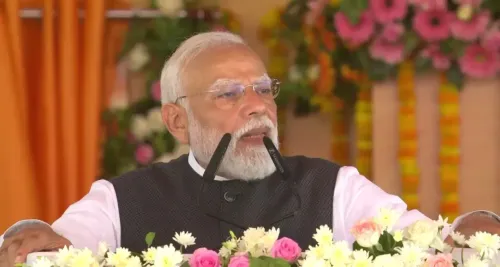
Uttar Pradesh's 594-km Ganga Expressway, built at a cost of approximately ₹36,000 crore and inaugurated by Prime Minister Narendra Modi, is set to unlock significant economic opportunities across 12 districts of the state, driving logistics, industrial, and real estate development along the corridor, according to a report released on Wednesday, 29 April 2025. The analysis, published by Knight Frank India, projects that the expressway will fundamentally reshape Uttar Pradesh's growth model from a city-centric approach to a corridor-based development framework.
Corridor Overview and Connectivity Gains
Spanning between Meerut and Prayagraj, the expressway is expected to significantly reduce travel time between the two cities from 10–12 hours to approximately six hours, according to the government. The corridor strengthens connectivity with the Delhi-NCR region and supports broader regional integration across north India. Notably, Uttar Pradesh already accounts for nearly 60 per cent of India's operational expressway network, reinforcing its position as a major infrastructure-led growth driver.
Three-Phase Development Model
Knight Frank India's report identifies 18 interchange nodes along the corridor as catalysts for development, with growth expected to unfold in three distinct phases. In the first phase — within three years of operations — Grade A warehousing and logistics assets are likely to emerge within a 5-km radius of interchange nodes, driven by improved connectivity and faster price discovery. The second phase, spanning two to five years, is expected to bring increased industrial activity, residential demand in district towns, and expansion of retail, education, and healthcare infrastructure within a 5–20 km belt. In the longer term — between five and ten years — large-scale residential and industrial development is anticipated, particularly in areas currently dominated by agricultural land.
District Readiness Index: Who Benefits First
According to Knight Frank India's District Readiness Index, which assesses ecosystem preparedness across the corridor, Meerut and Prayagraj have been identified as high-readiness anchors well placed to capture early gains. Hardoi, Unnao, Hapur, Rae Bareli, Shahjahanpur, Amroha, and Bulandshahr fall under the moderate readiness category, emerging as key growth centres with strong near-term industrial and economic potential. Pratapgarh, Badaun, and Sambhal are classified as early-stage districts, offering long-term opportunities in agri-processing, land aggregation, and niche manufacturing.
Strategic Infrastructure Feature
A notable feature of the expressway is a 3.5-km emergency landing facility in Shahjahanpur, designed to serve as an airstrip. This facility enhances both strategic and national security capabilities alongside the corridor's economic benefits — a design element that sets the Ganga Expressway apart from most comparable infrastructure projects in the country.
Industry Perspective
Knight Frank India's Executive Director, Government and Infrastructure Advisory, Rajeev Vijay, said the expressway is expected to open a new frontier of real estate development across the 12 districts.
Point of View
But investors should note that similar corridor-development forecasts for the Purvanchal and Bundelkhand expressways have had mixed outcomes on the ground. The real differentiator here is the District Readiness Index, which at least attempts to sequence opportunity rather than paint all 12 districts with the same brush. The 3.5-km airstrip at Shahjahanpur is the detail mainstream coverage has largely buried — dual-use infrastructure of that scale signals that the Centre sees the Ganga Expressway as a strategic asset, not merely a mobility project. Whether the warehousing and industrial clusters materialise on schedule will depend on land acquisition pace and state-level single-window clearances, both of which have historically lagged in UP's hinterland districts.
NationPress
19 Sept 2026
Frequently Asked Questions
What is the Ganga Expressway and where does it run?
The Ganga Expressway is a 594-km, six-lane highway in Uttar Pradesh connecting Meerut in the west to Prayagraj in the east, built at a cost of approximately ₹36,000 crore. It was inaugurated by Prime Minister Narendra Modi and passes through 12 districts of the state.
How much will the Ganga Expressway reduce travel time?
According to the government, travel time between Meerut and Prayagraj is expected to drop from 10–12 hours to around six hours. Attendees at the inauguration event reportedly said journeys that earlier took 12–13 hours will now be completed in just a few hours.
Which districts will benefit most from the Ganga Expressway?
According to Knight Frank India's District Readiness Index, Meerut and Prayagraj are high-readiness anchors set to benefit earliest. Hardoi, Unnao, Hapur, Rae Bareli, Shahjahanpur, Amroha, and Bulandshahr are moderate-readiness growth centres, while Pratapgarh, Badaun, and Sambhal are early-stage districts with longer-term potential.
What is the emergency airstrip on the Ganga Expressway?
A 3.5-km emergency landing facility has been built in Shahjahanpur along the expressway, designed to function as an airstrip for defence and emergency use. It is intended to enhance strategic and national security capabilities alongside the corridor's economic benefits.
How does the Ganga Expressway fit into UP's broader infrastructure story?
Uttar Pradesh already accounts for nearly 60 per cent of India's operational expressway network, according to the Knight Frank India report. The Ganga Expressway is expected to shift the state's growth model from a city-centric approach to a corridor-based development framework anchored around logistics and industry.