GCC growth next phase: GIFT City CEO flags AI, ecosystem as key drivers

Synopsis
GIFT City CEO Sanjay Kaul's message at the CII GCC Business Summit cuts through the usual incentives debate: the next wave of global capability centres will be won or lost on ecosystem quality and AI readiness. India, he argues, is entering an era of 'control arbitrage' — where multinationals hand Indian GCCs real strategic power, not just back-office tasks.
Key Takeaways
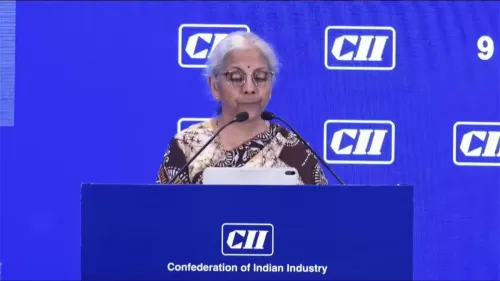
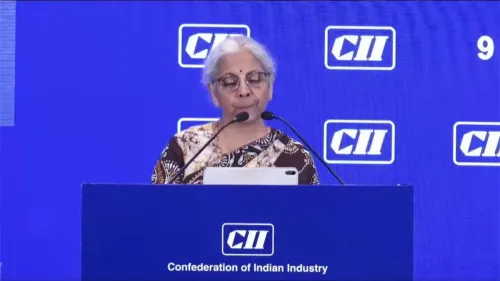
Sanjay Kaul , Group CEO of GIFT City , spoke at the National CII GCC Business Summit in New Delhi on 9 July .
Next-generation GCCs will prioritise ecosystem strength — digital infrastructure, regulatory predictability, innovation culture — over standalone fiscal incentives.
Rapid AI adoption is making robust digital infrastructure and innovation-friendly regulation more critical than ever for GCC location decisions.
India has progressed from cost arbitrage to capability arbitrage and is now entering an era of 'control arbitrage' , with Indian GCCs taking on strategic decision-making roles.
GIFT City was cited as a model integrated ecosystem combining connectivity, regulation, and innovation support.
Sanjay Kaul, Group CEO and Managing Director of GIFT City, on Thursday, 9 July said the next generation of global capability centres (GCCs) in India will be shaped by the strength of the ecosystems they operate within — not merely by location advantages or fiscal incentives. Kaul was speaking at the National CII GCC Business Summit in New Delhi, organised by the Confederation of Indian Industry (CII) during its second edition.
Ecosystem Over Incentives
Addressing the session titled 'The Evolving GCC Ecosystem: Key Insights', Kaul argued that future GCCs will gravitate toward destinations offering integrated, interconnected capabilities rather than standalone tax breaks or cost advantages. 'The next generation of GCCs would not be driven purely by locational factors or by incentives but by an ecosystem. They will look for a strong ecosystem where one system feeds another; it is a whole continuum,' he said.
Kaul cited GIFT City as a working model of this integrated approach, pointing to its regulatory framework, digital infrastructure, and innovation-enabling environment as the kind of ecosystem GCCs increasingly require.
AI Reshaping Infrastructure Priorities
The rapid adoption of artificial intelligence (AI) across industries, Kaul noted, has elevated the importance of robust digital connectivity and innovation-friendly regulation. 'With AI entering all spheres of industry, we need a robust ecosystem supported by strong connectivity and digital infrastructure. We also need an ecosystem where innovation can thrive, backed by a regulatory framework that facilitates it. We have it in GIFT City,' he said.
This positions AI not merely as a tool GCCs deploy, but as a structural force reshaping which geographies and infrastructure environments are viable for next-generation global operations.
India's Shift from Cost to Capability to Control
The broader session examined India's evolution as the world's leading GCC destination. Speakers observed that India has moved well beyond cost arbitrage — the original draw for most multinationals — into what they described as 'capability arbitrage', and is now entering an era of 'control arbitrage', where global enterprises are entrusting Indian GCCs with strategic decision-making and enterprise-wide transformation mandates.
Kaul reinforced this trajectory, noting that while GCCs initially came to India for its large talent pool, they are now attracted by the country's expanding capabilities and the broader innovation ecosystem, making India an increasingly compelling destination for global enterprises seeking more than back-office efficiency.
What GCCs Are Prioritising Now
According to Kaul, companies are increasingly evaluating locations on a composite scorecard: quality infrastructure, digital connectivity, predictable regulations, high standards of living, and genuine opportunities for innovation — rather than isolated incentives. This shift has significant implications for how Indian states and special economic zones position themselves in the global competition for GCC investment.
As India's GCC count continues to grow, the contest between ecosystems — not just cities — is expected to intensify, with integrated hubs like GIFT City potentially setting the benchmark for what the next generation of centres will demand.
Point of View
And the next wave of global mandates will go to locations that can demonstrate integrated infrastructure, regulatory reliability, and AI-readiness — not just cheaper square footage. The 'control arbitrage' framing is particularly significant: it suggests multinationals are no longer treating Indian GCCs as cost centres but as strategic nerve centres. Whether India's regulatory environment — outside GIFT City's controlled perimeter — can match that ambition at scale remains the unanswered question that mainstream coverage of this summit largely skipped.
NationPress
8 Oct 2026
Frequently Asked Questions
What did GIFT City CEO Sanjay Kaul say at the CII GCC Business Summit?
Sanjay Kaul said the next generation of GCCs will be driven by ecosystem strength — covering digital infrastructure, regulatory frameworks, and innovation culture — rather than location or incentives alone. He cited GIFT City as a working model of this integrated approach.
How is AI influencing GCC location decisions in India?
According to Kaul, the rapid adoption of AI across industries has made robust digital connectivity and innovation-enabling regulatory frameworks essential criteria for GCC site selection. Locations that cannot support AI-driven operations at scale risk being bypassed in the next investment cycle.
What is 'control arbitrage' in the context of Indian GCCs?
'Control arbitrage' refers to the emerging trend where global companies are entrusting Indian GCCs with strategic decision-making and enterprise-wide transformation — moving well beyond the earlier model of cost-driven back-office outsourcing. Speakers at the CII summit described it as India's next evolution as a GCC destination.
Why is GIFT City seen as a model for future GCCs?
GIFT City offers an integrated ecosystem combining strong digital infrastructure, a predictable regulatory framework, and an environment designed to support innovation — the combination that Kaul argues next-generation GCCs will prioritise over standalone fiscal incentives.
What factors are GCCs now prioritising when choosing India locations?
GCCs are increasingly evaluating destinations on quality infrastructure, digital connectivity, predictable regulations, high standards of living, and innovation opportunities, according to Kaul. Standalone tax incentives are no longer sufficient to attract the next wave of global capability investment.