Piyush Goyal, Qatar Discuss Boosting Trade & Supply Chains
Synopsis
Commerce Minister Piyush Goyal met Qatar's trade minister virtually to strengthen India-Qatar bilateral trade and supply chain resilience amid global geopolitical tensions. Simultaneously, India is close to finalising the first tranche of an India-US trade deal, while also pursuing CEPA opportunities with Oman — signalling a sweeping Gulf and Western trade diplomacy push.
Key Takeaways
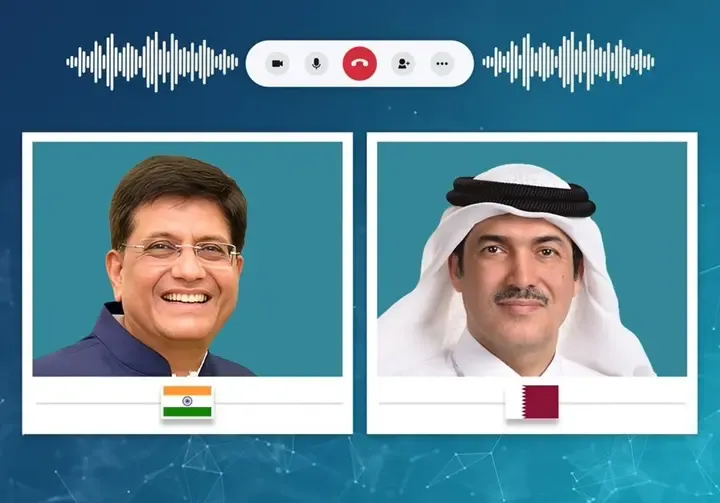
Commerce Minister Piyush Goyal held a virtual meeting with Qatar's Dr Ahmed bin Mohammed Al Sayed on April 23, 2025 to strengthen India-Qatar bilateral trade and investment ties .
Both nations focused on building supply chain resilience amid escalating global geopolitical tensions and trade disruptions.
Earlier in April 2025 , India also held trade discussions with Oman regarding opportunities under the proposed Comprehensive Economic Partnership Agreement (CEPA) .
The first tranche of the India-US bilateral trade deal is close to finalisation, with Indian officials currently in Washington D.C. for negotiations.
India is seeking preferential market access in the United States relative to its global competitors as part of the trade deal framework.
The India-US chief negotiator meeting was rescheduled after the US Supreme Court struck down President Trump's reciprocal tariff hikes .
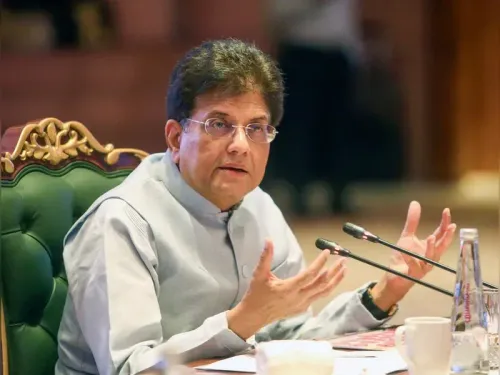
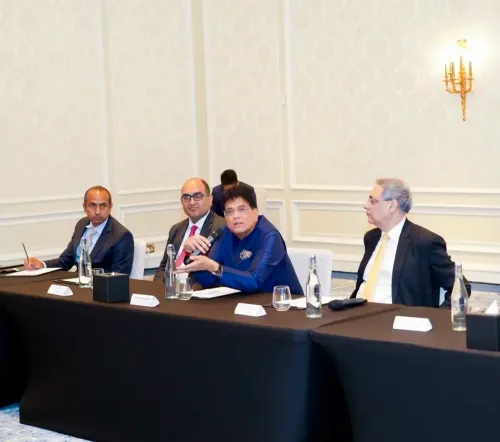
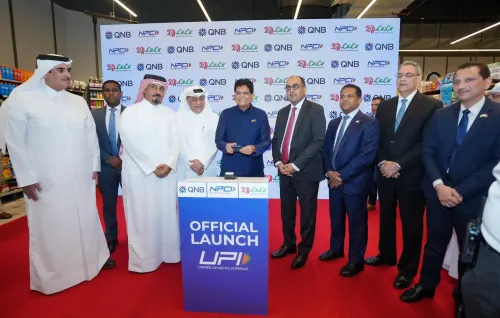
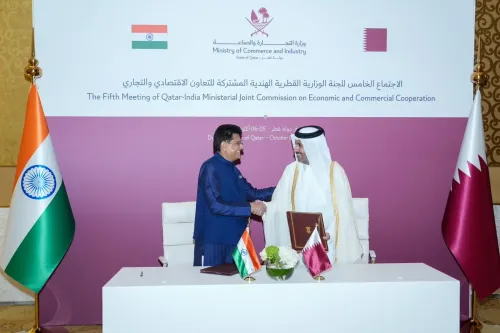
New Delhi, April 23: Union Commerce and Industry Minister Piyush Goyal held a high-level virtual meeting with Qatar's Minister of State for Foreign Trade Affairs, Dr Ahmed bin Mohammed Al Sayed, on Thursday, April 24, to explore avenues for strengthening India-Qatar bilateral trade, investment cooperation, and supply chain resilience amid rising geopolitical uncertainties across the globe.
Key Highlights of the India-Qatar Trade Talks
The virtual bilateral discussion centred on deepening economic engagement between the two nations at a time when global trade routes and supply chains face significant disruption. Both sides acknowledged the rapidly evolving international trade environment and agreed on the need for greater economic cooperation.
Minister Goyal confirmed the meeting on social media platform X, stating: "We discussed ways to further enhance our bilateral trade and investment ties while strengthening supply chain resilience." He further added that he was "looking forward to deepening our strategic partnership in the times ahead."
Why This India-Qatar Engagement Matters
Qatar is one of India's most critical energy partners, supplying a significant portion of India's liquefied natural gas (LNG) requirements. Beyond energy, the two countries share deep ties through a large Indian diaspora of over 700,000 workers employed across Qatar's infrastructure and services sectors.
This meeting assumes strategic importance as both nations seek to diversify economic partnerships beyond energy trade. Expanding into areas such as technology, logistics, food security, and financial services could create a more balanced and resilient bilateral economic relationship.
Notably, this engagement comes at a time when global tariff wars — particularly driven by US President Donald Trump's sweeping reciprocal tariff measures — are compelling nations worldwide to re-evaluate and reinforce their trade alliances and supply chain networks.
India's Broader Trade Diplomacy Push
The India-Qatar dialogue is part of a broader, accelerated trade diplomacy effort by New Delhi. Earlier this month, Minister Goyal also held a telephonic conversation with Oman's Minister of Commerce, Industry and Investment Promotion, Anwar bin Hilal bin Hamdoun Al Jabri, to unlock opportunities under the proposed Comprehensive Economic Partnership Agreement (CEPA) between India and Oman.
These Gulf outreach efforts reflect India's strategic intent to cement its position as a preferred trade and investment partner across the Middle East and West Asia — a region that collectively accounts for a substantial share of India's total trade volume and remittance inflows.
India-US Trade Deal: First Tranche Near Finalisation
On the India-US trade front, Goyal disclosed that the first tranche of the proposed India-US bilateral trade agreement is on the verge of being finalised, with a team of Indian officials currently present in Washington D.C. for ongoing negotiations.
"We have almost finalised the first tranche of the bilateral trade agreement," he told the media. He further noted: "We are working on mechanisms through which India can secure preferential market access in the US compared to its competitors."
It is worth noting that the India-US chief trade negotiator-level meeting was rescheduled after the US Supreme Court struck down President Trump's broad reciprocal tariff hikes — a development that added complexity to the bilateral trade negotiation timeline.
Geopolitical Context and India's Strategic Trade Calculus
India's simultaneous engagement with Qatar, Oman, and the United States underscores a deliberate multi-directional trade strategy. As the world's fifth-largest economy, India is leveraging the current global trade realignment — triggered by US-China tensions, the Russia-Ukraine conflict, and shifting supply chains — to negotiate more favourable bilateral terms with key partners.
Critics and trade analysts argue that India must move beyond symbolic meetings and push for binding agreements with concrete timelines. While CEPA deals with UAE and Australia have shown early promise in boosting trade volumes, similar frameworks with Gulf Cooperation Council (GCC) nations remain works in progress.
As global economic headwinds intensify, the outcomes of these engagements — particularly the India-US first tranche deal and a potential India-Qatar trade framework — will be closely watched by industry, investors, and policymakers alike in the months ahead.
Point of View
Oman, the United States — within a single month reveals a calculated diplomatic sprint, not coincidence. As Trump's tariff disruptions redraw global supply chains, New Delhi is astutely positioning itself as the indispensable alternative partner for both Western and Gulf economies. However, the real test lies in converting these high-profile virtual handshakes into binding, time-bound trade frameworks — India has a well-documented history of prolonged negotiations that rarely match the urgency of the press releases. The India-US first tranche deal, if genuinely close to completion, could be a landmark — but until ink meets paper, strategic optimism must be tempered with accountability.
NationPress
19 Sept 2026
Frequently Asked Questions
What did Piyush Goyal discuss with Qatar's trade minister?
Commerce Minister Piyush Goyal held a virtual meeting with Qatar's Minister of State for Foreign Trade Affairs, Dr Ahmed bin Mohammed Al Sayed, to discuss strengthening bilateral trade, investment ties, and supply chain resilience. Both sides explored opportunities for deeper economic cooperation amid evolving global trade conditions.
What is the current status of the India-US bilateral trade deal?
India's Commerce Minister Piyush Goyal stated that the first tranche of the India-US bilateral trade agreement is close to being finalised, with Indian officials currently in Washington D.C. for negotiations. India is also seeking preferential market access in the US compared to its trade competitors.
Why is India engaging Gulf nations like Qatar and Oman on trade?
India is pursuing trade engagement with Gulf nations to diversify economic partnerships beyond energy, strengthen supply chains, and leverage Comprehensive Economic Partnership Agreements (CEPAs). The Gulf region is a major trade and remittance hub for India, making these ties strategically vital.
What is India's CEPA with Oman about?
India and Oman are exploring opportunities under a proposed Comprehensive Economic Partnership Agreement (CEPA) to boost bilateral trade and investment. Commerce Minister Goyal held a telephonic discussion with Oman's trade minister earlier in April 2025 to deepen economic engagement under this framework.
How does global geopolitical tension affect India-Qatar trade talks?
Rising geopolitical tensions — including US-China trade conflicts and Trump's reciprocal tariff measures — are disrupting global supply chains, prompting India and Qatar to seek more resilient bilateral trade structures. Strengthening direct trade partnerships reduces dependence on volatile global supply routes.