GRAM-2026: Jaipur to Host Major Agritech Summit May 23–25
Synopsis
Rajasthan CM Bhajan Lal Sharma announced GRAM-2026 will be held in Jaipur from May 23–25 at a Delhi investor meet. With Rs 44,000 crore in agri MoUs and 65,000 solar pumps already deployed, the summit aims to transform Rajasthan into India's agri-investment capital — but will promises translate to farmer income?
Key Takeaways
GRAM-2026 will be held in Jaipur from May 23–25 , announced by CM Bhajan Lal Sharma at a Delhi investor meet on April 23 .
Rajasthan ranks first nationally in production of 7 crops including bajra, mustard, cumin, and isabgol, offering wide agri-investment potential.
MoUs worth Rs 44,000 crore were signed in agriculture at the Rising Rajasthan Summit; over Rs 9,000 crore has already been realised.
The state has installed over 65,000 solar pump systems with grants exceeding Rs 1,000 crore in the past two years to reduce farm power costs.
A record 21.9 million crop insurance policies have been issued under PM Fasal Bima Yojana , with claims of over Rs 6,500 crore disbursed.
GRAM outreach events will also be held in Ahmedabad, Hyderabad, and Pune , as announced by Agriculture Minister Kirodi Lal Meena .
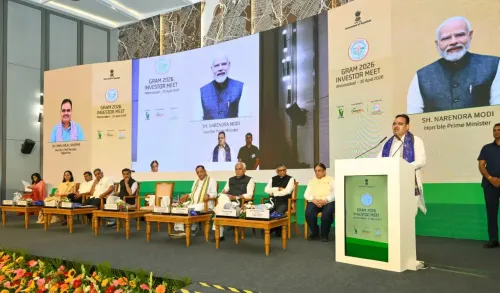
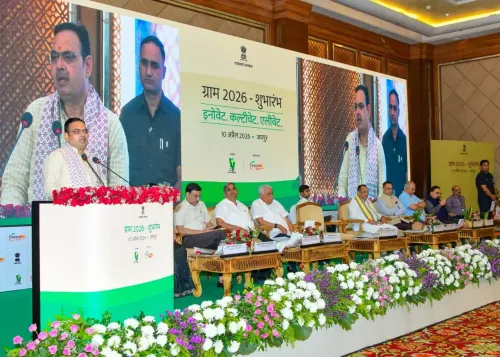
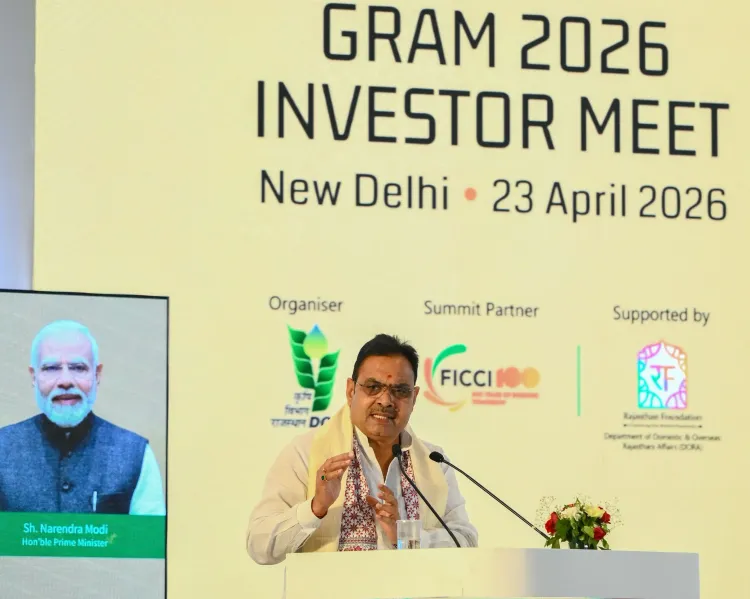
Jaipur, April 23 (NationPress) — The Global Rajasthan Agritech Meet (GRAM)-2026 is set to take place in Jaipur from May 23 to 25, bringing together farmers, agricultural experts, policymakers, and investors on a unified platform to advance technology-driven farming across the state. Rajasthan Chief Minister Bhajan Lal Sharma made the announcement while addressing the GRAM-2026 Investor Meet in New Delhi on Thursday, underscoring the summit's alignment with Prime Minister Narendra Modi's vision of an 'Empowered Farmer, Prosperous India'.
Rajasthan's Agricultural Powerhouse Status
Chief Minister Sharma highlighted that Rajasthan is among India's foremost agricultural states, holding the top national ranking in the production of bajra, mustard, oilseeds, barley, guar, isabgol, and cumin. This crop diversity, he argued, positions the state as a prime destination for investment in food processing, spice parks, and agri-exports.
The Chief Minister noted that GRAM-related preparatory activities are already underway at multiple administrative levels — from Girdawar circles to districts — to ensure the broadest possible farmer participation in the three-day summit.
Investment Momentum and Key MoUs
Addressing investors and entrepreneurs directly, CM Sharma recalled that MoUs worth Rs 44,000 crore were signed in the agriculture sector during the Rising Rajasthan Global Investment Summit, of which more than Rs 9,000 crore has already been converted into on-ground investment. GRAM-2026, he said, will serve as the next catalyst to accelerate this trajectory.
The state is also developing Jhalawar and Tonk as model districts for pulse production, while the Central government will extend subsidies for the distribution of over 3 lakh quintals of seeds to farmers across Rajasthan.
Solar Energy, Agri-Infrastructure and Farmer Welfare
Rajasthan's push into solar energy for agriculture was another highlight. The state government has disbursed grants exceeding Rs 1,000 crore over the past two years to install more than 65,000 solar pump systems, significantly cutting power costs and improving farm productivity.
On agri-infrastructure, the Chief Minister stated that over 1,500 agro-processing units have already been established, with land earmarked for new food parks. He also spotlighted the 'Spices Cell', the Rajasthan Spice Conclave, and the 'RajSpice' mobile application as key tools to boost the state's spice economy.
Farmer welfare schemes received significant attention. The state has enhanced assistance under the Kisan Samman Nidhi scheme to Rs 9,000. Under the Pradhan Mantri Fasal Bima Yojana, Rajasthan has issued a record 2.19 crore (21.9 million) policies and disbursed insurance claims exceeding Rs 6,500 crore.
Additional farmer-centric measures include a Rs 150 per quintal bonus on wheat procurement, daytime electricity supply across 24 districts, interest-free loans up to Rs 1 lakh for livestock owners, and insurance coverage for more than 20 lakh animals under state-run schemes.
Union Minister and State Agriculture Minister Weigh In
Union Minister of State for Agriculture Bhagirath Choudhary praised Rajasthan's proactive adoption of advanced agricultural technologies, stating that farm-sector growth is central to India's broader national development agenda.
Rajasthan Agriculture Minister Kirodi Lal Meena announced that GRAM outreach events will also be conducted in cities including Ahmedabad, Hyderabad, and Pune, expanding the summit's investor and stakeholder network beyond the state's borders.
A short promotional film on GRAM-2026 was screened at the Delhi event, which was attended by senior government officials, industry leaders, and key stakeholders from across India's agricultural sector.
Why GRAM-2026 Matters Beyond the Headlines
Rajasthan's agricultural economy faces a structural paradox: it is a production giant — leading nationally in seven major crops — yet farmer incomes remain under pressure due to inadequate processing capacity, supply chain gaps, and erratic water access. GRAM-2026 is designed, at least in intent, to bridge this gap by attracting private capital into agri-processing and cold-chain infrastructure.
Notably, the Rs 9,000-crore investment materialisation from Rising Rajasthan MoUs represents roughly 20% conversion of the Rs 44,000-crore target — a figure that critics may scrutinise even as the government uses it as a success benchmark. The summit's real test will be whether it translates investor interest into tangible income gains for Rajasthan's millions of small and marginal farmers.
With GRAM-2026 scheduled for May 23–25 in Jaipur, all eyes will be on the quality and quantum of investment commitments made — and more critically, how quickly they materialise on the ground.
Point of View
The 20% materialisation rate of Rising Rajasthan's agriculture MoUs is a sobering data point that the government conveniently frames as progress rather than a gap. The deeper question GRAM-2026 must answer is not how many MoUs get signed in Jaipur in May, but how many small farmers in Barmer or Bikaner actually see their incomes rise. Agritech summits that serve investors without serving cultivators are political theatre dressed as policy.
NationPress
16 Sept 2026
Frequently Asked Questions
When and where will GRAM-2026 be held?
GRAM-2026, the Global Rajasthan Agritech Meet, will be held in Jaipur from May 23 to 25, 2026. The three-day summit aims to connect farmers, investors, policymakers, and agri-technology experts on a single platform.
What is the purpose of the GRAM-2026 summit?
GRAM-2026 is designed to promote technology-driven farming and attract investment into Rajasthan's agricultural sector. It aligns with PM Modi's vision of an 'Empowered Farmer, Prosperous India' and seeks to accelerate agri-infrastructure development.
How much investment has Rajasthan attracted in agriculture so far?
MoUs worth Rs 44,000 crore were signed in the agriculture sector during the Rising Rajasthan Global Investment Summit. Of this, more than Rs 9,000 crore has already been materialised on the ground.
Which crops make Rajasthan a leading agricultural state?
Rajasthan ranks first nationally in the production of bajra, mustard, oilseeds, barley, guar, isabgol, and cumin. This crop diversity creates vast opportunities in food processing, spice parks, and agri-exports.
What farmer welfare schemes were highlighted at the GRAM-2026 Investor Meet?
Key initiatives include enhanced Kisan Samman Nidhi assistance of Rs 9,000, a record 21.9 million crop insurance policies under PM Fasal Bima Yojana, Rs 6,500 crore in insurance claims, and interest-free loans up to Rs 1 lakh for livestock owners.