Income Tax Act 2025: A New Era for Small Businesses, Says FM Sitharaman

Synopsis
The new Income-tax Act, 2025, heralded by FM Nirmala Sitharaman, is poised to transform compliance for small businesses, significantly easing regulations and minimizing disputes. This legislation aims to support the backbone of India's economy.
Key Takeaways
New Income-tax Act 2025 simplifies compliance for small businesses.
Businesses with turnover below Rs 10 crore are exempt from audits.
Reduction in tax-related disputes is a key objective.
Introduction of Income Tax Website 2.0 for easier taxpayer communication.
Significant restructuring of the law to enhance clarity.
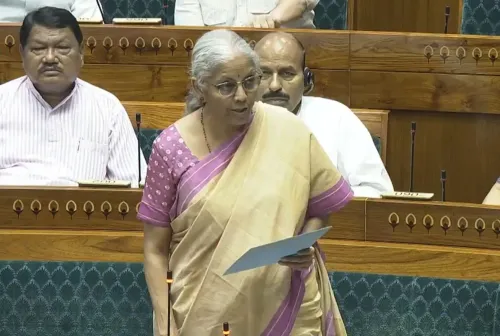
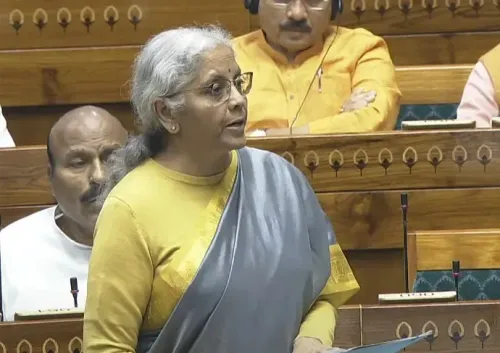
New Delhi, March 20 (NationPress) Finance Minister Nirmala Sitharaman announced on Friday that the forthcoming Income-tax Act, 2025 will provide substantial aid to small business proprietors and professionals. The new legislation aims to streamline regulations, thereby alleviating compliance challenges and reducing tax disputes.
During the inauguration of the nationwide awareness initiative ‘PRARAMBH 2026’, FM Sitharaman emphasized that small enterprises and professionals form the foundation of India’s economy, and the new law has been crafted with their requirements in focus.
“Under this revised framework, businesses with a turnover of up to Rs 10 crore, contingent upon specific conditions, will not need to keep exhaustive records or undergo audits,” the Finance Minister indicated.
“This will notably lessen the compliance load and offer significant relief to smaller businesses,” FM Sitharaman added.
The Finance Minister also mentioned that various contentious topics, such as pre-construction interest on housing loans, have been explicitly resolved in the new legislation, thereby minimizing confusion and the potential for disputes.
Stressing the need to decrease litigation, FM Sitharaman remarked that every case escalating to a tribunal signifies a flaw within the system.
The Finance Minister underscored that the new Act seeks to reduce mistakes, disputes, and compliance expenditures, fostering a transition towards more efficient and transparent tax compliance.
The government has also introduced a fresh digital platform, Income Tax Website 2.0, alongside the new legislation.
“This platform will empower taxpayers to easily pose inquiries, interact with officials, and file tax returns,” the minister noted.
Officials have been instructed to broaden outreach efforts beyond metropolitan areas and connect with various groups, including students.
The new Income-tax Act supersedes the outdated Income-tax Act of 1961, which had become convoluted due to numerous amendments over time.
FM Sitharaman stated that the new legislation significantly simplifies the structure, decreasing the number of sections from roughly 819 to 536 and chapters from 47 to 23.
Moreover, the total length of the law has been nearly halved. A significant alteration is the elimination of the distinction between “previous year” and “assessment year,” introducing a singular, streamlined tax year.
The minister asserted that this simplification will facilitate better understanding and compliance among taxpayers.
Point of View
I view the introduction of the Income-tax Act 2025 as a significant step towards modernizing India's tax framework. This legislation aims to ease the compliance burden for small businesses, which are crucial to our economy. By addressing long-standing issues and streamlining processes, the government is making a strong commitment to fostering a healthier business environment.
NationPress
27 Sept 2026
Frequently Asked Questions
What is the main goal of the Income-tax Act 2025?
The primary aim of the Income-tax Act 2025 is to simplify compliance for small business owners and professionals, reducing the regulatory burden and minimizing tax disputes.
How does the new Act benefit small businesses?
Businesses with a turnover up to Rs 10 crore will not need to maintain detailed records or undergo audits, significantly easing their compliance requirements.
What changes have been made regarding tax years?
The new Act removes the distinction between 'previous year' and 'assessment year', introducing a single, simplified tax year system.
What digital resources are available under the new Act?
The government has launched Income Tax Website 2.0, which allows taxpayers to ask questions, interact with authorities, and file returns easily.
When will the Income-tax Act 2025 come into effect?
The Income-tax Act 2025 will come into effect following its formal enactment and announcement by the government.