India's Economic Outlook: Risks from Global Conflicts and Energy Fluctuations
Synopsis
India’s Chief Economic Advisor warns of increasing risks from global conflicts and energy price instability while emphasizing the country's strong macroeconomic position as it enters the new financial year.
Key Takeaways
India faces significant risks from global conflicts and energy price fluctuations.
The projected GDP growth of 7.6% reflects India's resilience.
Trade agreements with the UK, EU, and US enhance global engagement.
Public investment has surged to improve infrastructure and connectivity.
Strategic buffers are essential to mitigate supply shocks.
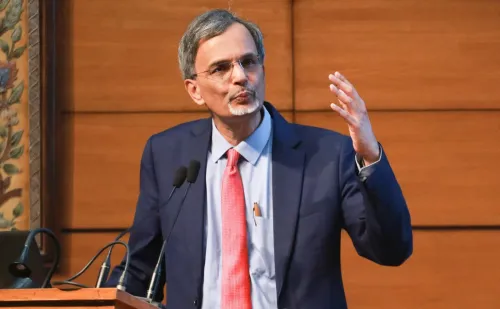
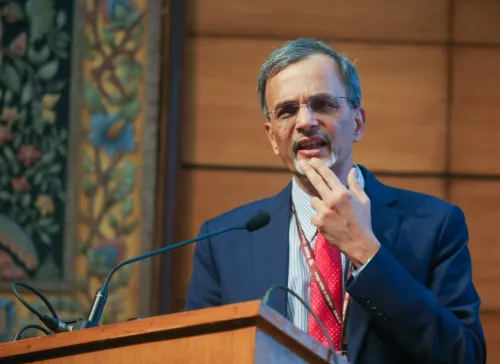
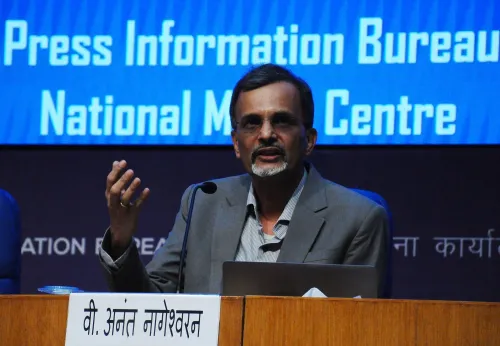
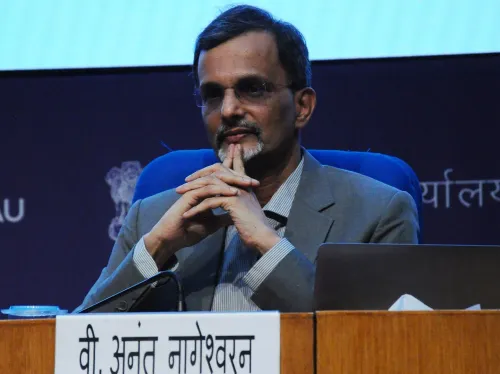
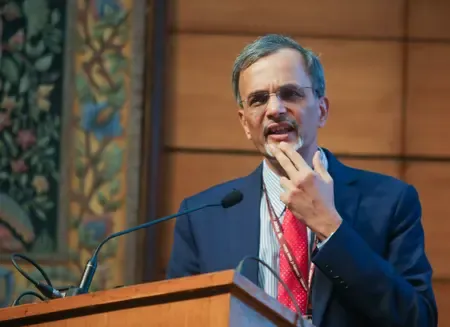
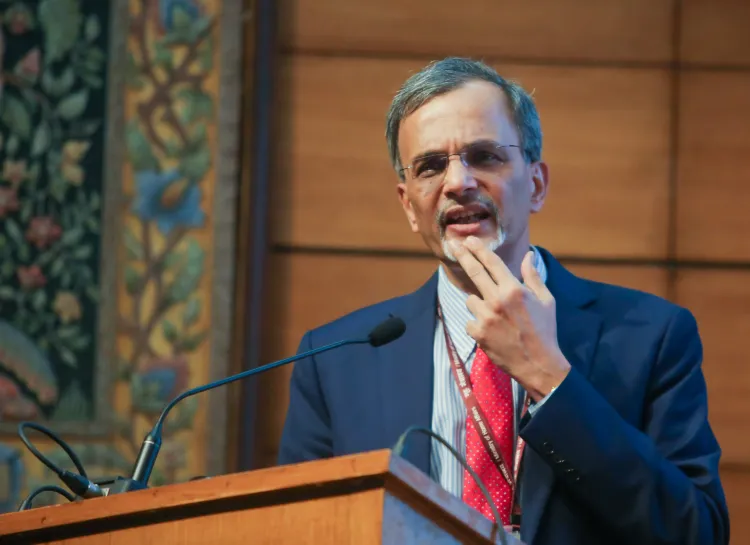
On April 15, during the US-India Economic Forum 2026 in Washington, Chief Economic Advisor V. Anantha Nageswaran expressed that India is encountering escalating risks from international conflicts and fluctuations in energy prices. Nevertheless, he emphasized that the nation is stepping into the new fiscal year with a robust macroeconomic foundation.
Nageswaran indicated that the government’s projection of a 6.5% GDP growth might be on the cautious side but highlighted the significant uncertainties that surround the economic landscape. He pointed out that global unrest impacts India through four primary avenues: increased energy costs, trade disruptions, heightened logistics and insurance expenses, and declining remittance flows.
“It’s not solely about oil prices; it encompasses the critical commodities,” he explained, noting that India’s crude oil landed cost surged to approximately $113 per barrel in March. He cautioned that while a decrease in conflict may occur, returning to normalcy in energy markets could take time. “The resolution of conflict is one aspect, but the restoration of stability in energy markets is another,” he remarked.
Nageswaran also raised concerns about the potential decline in remittances, projecting that disruptions in the Gulf could diminish inflows by $5 to $10 billion. Despite these challenges, he affirmed the strength of India's fundamentals, stating, “We are tackling these issues from a position of macroeconomic resilience.”
He highlighted continued growth, manageable inflation rates, and improving fiscal conditions. For the fiscal year ending March 2026, India’s GDP growth is projected at 7.6%, with positive momentum across agriculture, manufacturing, and services.
On the trade front, he noted that India is enhancing its global interactions through new trade agreements, asserting, “The Indian marketplace is receptive to foreign goods and services,” referencing partnerships with the UK, European Union, and the United States.
These agreements are expected to provide a buffer against external shocks and bolster India’s position within global value chains. Nageswaran also pointed out the significant rise in public investment, with capital expenditure increasing more than threefold in recent years, thereby enhancing infrastructure, logistics, and connectivity.
He acknowledged structural challenges, particularly the implications of artificial intelligence on employment. “The solution lies in generating employment opportunities in sectors insulated from AI,” he stated, emphasizing the importance of expanding vocational training and job creation in areas like healthcare, hospitality, and elder care.
Looking to the future, he urged India to develop “strategic buffers” for essential commodities to lessen vulnerability to supply shocks. The US-India Economic Forum, organized by the US-India Strategic Partnership Forum, convened policymakers and industry leaders to discuss the bilateral relationship and economic hurdles.
As the fourth-largest economy globally, India is aiming for a $5 trillion economy in the years ahead. Despite increasing global risks stemming from geopolitical tensions and energy market instability, India has sustained stability through solid reserves, consistent reforms, and resilient domestic demand.
Point of View
It is evident that while India is grappling with external uncertainties due to global conflicts and energy price volatility, the nation possesses a strong economic foundation. This resilience is crucial for maintaining stability and growth in a challenging international environment.
NationPress
19 Sept 2026
Frequently Asked Questions
What are the main risks facing India's economy?
India's economy faces risks from global conflicts, energy price volatility, trade disruptions, and declining remittance flows.
What is India's projected GDP growth?
India's GDP growth is estimated at 7.6% for the year ending March 2026.
How is India addressing the impact of artificial intelligence on jobs?
India is focusing on creating jobs in sectors insulated from AI and expanding vocational training.
What role do trade agreements play in India's economy?
New trade agreements are expected to cushion external shocks and enhance India's position in global value chains.
What is India's goal for its economy in the coming years?
India aims to achieve a $5 trillion economy in the near future.