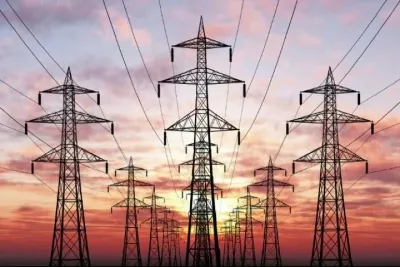
Historic 252 GW Peak Power Demand Hits India Amid Brutal Heatwave
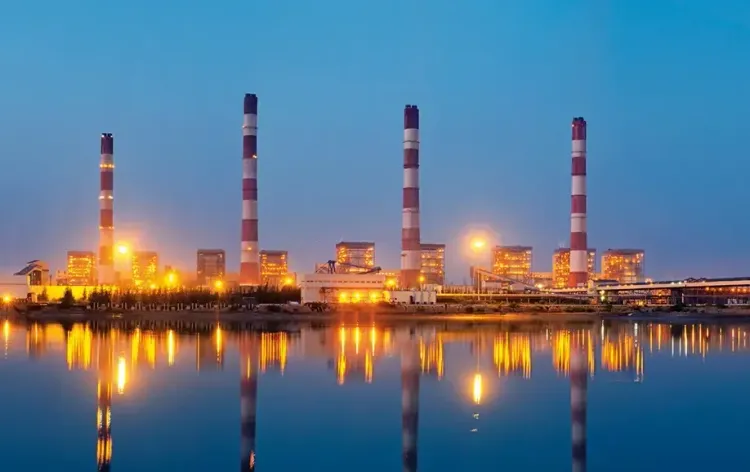
Synopsis
India shattered its all-time electricity demand record on April 24, 2025, hitting 252.07 GW as a fierce heatwave gripped the nation — surpassing the previous May 2024 record of 250 GW. With May and June still ahead and a government projection of 270 GW looming, India's power grid faces its most intense stress test yet.
Key Takeaways
India recorded an all-time peak electricity demand of 252.07 GW on April 24, 2025 , breaking the previous record of 250 GW set in May 2024.
Demand surged from 239.70 GW on April 22 to 240.12 GW on April 23 and then to 252.07 GW on April 24 , driven by an intense heatwave.
The IMD has forecast heatwave conditions across northwest, central, and eastern India continuing through the weekend, with harsher conditions expected in May and June.
The Power Ministry projects peak demand could reach 270 GW this summer ; India plans to add over 22 GW of new capacity between April and June 2025.
Bureau of Energy Efficiency DG Krushna Chandra Panigrahy warned that the LPG-to-induction cooking shift could add 13–27 GW of additional demand at the distribution level.
India's power sector is seen as a Rs 65–70 lakh crore capex opportunity , with EVs and data centers adding long-term structural demand growth.
India recorded its highest-ever peak electricity demand of 252.07 GW on April 24, 2025, as a brutal heatwave swept across large parts of the country, triggering a massive surge in the use of air conditioners, coolers, and other cooling appliances. The Union Ministry of Power confirmed the new all-time high, which surpassed the previous record of 250 GW set in May 2024. The spike underscores the growing stress on India's power infrastructure as climate extremes intensify every summer.
Record Demand Trajectory in April 2025
Power ministry data shows a sharp escalation over just three days. Peak demand stood at 239.70 GW on April 22, climbed to 240.12 GW on April 23, and then surged dramatically to 252.07 GW on April 24. This progression reflects how quickly temperatures can overwhelm grid capacity when a heatwave intensifies.
For context, last year's peak demand was recorded at 242.77 GW in June 2024, while April 2024 had seen a high of 235.32 GW. The 2025 April figure already exceeds last year's June peak — a telling indicator of how much faster summer is arriving and intensifying year over year.
The government had projected that peak demand could touch 270 GW this summer, a threshold that, while not yet breached, experts warn could be approached if the heatwave persists into May and June.
IMD Heatwave Forecast and What Comes Next
The India Meteorological Department (IMD) has forecast continued heatwave conditions across northwest, central, and eastern India through the weekend and beyond. The IMD has specifically warned that May and June 2025 are likely to be harsher than usual, meaning electricity demand could climb significantly further in the coming weeks.
Energy experts caution that if temperatures remain elevated, the combination of household cooling loads and industrial consumption could push demand closer to — or potentially beyond — the government's 270 GW projection. Every degree rise in temperature during peak summer adds thousands of megawatts to national grid demand.
Structural Demand Drivers Beyond the Heatwave
The record demand is not just a weather story — it reflects deep structural shifts in India's energy consumption. A recent sector report projected a Rs 65–70 lakh crore capital expenditure opportunity in India's power sector, driven by strong policy support and rising consumption.
New-age demand drivers — including electric vehicles (EVs) and data centers — are adding durable, long-term load growth to the grid. Analysts note that India's electricity consumption could potentially triple over the next two decades, making grid resilience and capacity addition a national priority.
Krushna Chandra Panigrahy, Director General of the Bureau of Energy Efficiency, recently flagged another emerging demand vector: the shift from LPG to induction-based cooking among Indian households, accelerated by supply disruptions linked to the West Asia conflict. He estimated this transition alone could add 13 to 27 GW of additional power demand at the distribution level, with the wide range reflecting regional diversity in cooking habits, climate conditions, and socio-economic profiles.
Government's Capacity Addition Plan for Summer 2025
Piyush Singh, Additional Secretary at the Power Ministry, stated that India plans to add over 22 GW of new generation capacity between April and June 2025. The addition includes 3.5 GW of thermal power, 10 GW of solar, 2.5 GW of wind, 1.9 GW of battery energy storage systems (BESS), and 750 MW of hydropower.
This aggressive capacity push signals government awareness of the looming supply-demand gap. However, critics note that thermal and hydro additions take time to commission, while solar generation — though rapidly scalable — is intermittent and peaks only during daylight hours, not during the evening demand surge that typically drives record highs.
What This Means for Citizens and the Economy
For ordinary Indians, the record demand translates into real risks: power outages, voltage fluctuations, and load shedding in states where distribution infrastructure is under strain. Low-income households that cannot afford inverters or backup power are disproportionately affected by supply disruptions during peak demand periods.
On the economic side, industries dependent on uninterrupted power — from steel and cement to pharmaceuticals and cold-chain logistics — face higher operational costs when grid stress forces them to rely on expensive diesel generation. The broader macroeconomic implication is that India's energy security is increasingly a growth-limiting variable, not just a welfare issue.
As May and June 2025 approach — historically India's most demanding months — all eyes will be on whether the 270 GW threshold is breached and whether the government's capacity addition plan can keep pace with a climate that is clearly not waiting for infrastructure to catch up.
Point of View
The real test lies in last-mile distribution — the crumbling wires and overloaded transformers that serve India's hundreds of millions of low-income households. The shift to EVs, data centers, and induction cooking will only accelerate this demand curve. India cannot afford to treat record power demand as a seasonal novelty — it is the defining infrastructure challenge of the next decade.
NationPress
16 Sept 2026
Frequently Asked Questions
What is India's all-time peak power demand record in 2025?
India's all-time peak power demand record stands at 252.07 GW, recorded on April 24, 2025 , driven by a severe heatwave across multiple regions. This surpassed the previous record of 250 GW set in May 2024.
Why did India's electricity demand surge in April 2025?
A severe heatwave across northwest, central, and eastern India caused a massive spike in the use of air conditioners, coolers, and other cooling appliances. The IMD has forecast continued heatwave conditions through May and June, suggesting demand could rise further.
What is the government's peak power demand forecast for summer 2025?
The Union Power Ministry projected peak demand could reach 270 GW during summer 2025. As of April 24, actual demand reached 252.07 GW, leaving a gap of roughly 18 GW before the forecast ceiling is hit.
How much new power capacity is India adding in summer 2025?
India plans to add over 22 GW of generation capacity between April and June 2025 , including 10 GW of solar, 3.5 GW of thermal, 2.5 GW of wind, 1.9 GW of battery storage, and 750 MW of hydro. The addition is aimed at managing the summer demand surge.
How does the LPG-to-induction cooking shift affect India's power demand?
According to Krushna Chandra Panigrahy, Director General of the Bureau of Energy Efficiency , the transition from LPG to induction cooking — accelerated by supply disruptions from the West Asia conflict — could add 13 to 27 GW of additional power demand at the distribution level across India.