India and Japan Forge MSME Partnerships for Future Growth
Synopsis
As global supply chains shift, India becomes a key investment destination for Japanese mid-sized firms. This partnership is set to unlock new growth avenues for both countries, particularly in the MSME sector.
Key Takeaways
India is becoming a strategic hub for Japanese mid-sized companies.
Collaboration in semiconductors and electronics is particularly promising.
India’s large domestic market provides stability against global economic shifts.
Free trade agreements are opening new markets for Indian MSMEs.
Japan's FDI in India has reached $44.40 billion.
New Delhi, April 7 (NationPress) As global supply chains undergo realignment and businesses seek to establish operations beyond China, India has positioned itself as a strategic long-term investment hub, showcasing competitive export opportunities for Japan's mid-sized enterprises to collaborate with Indian MSMEs (micro, small, and medium enterprises) to stimulate growth.
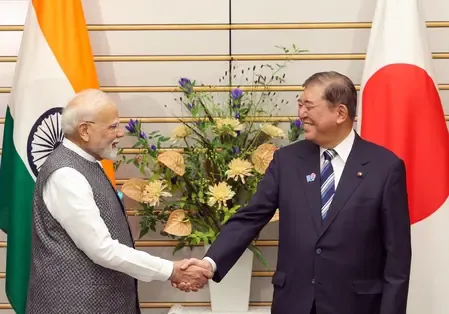
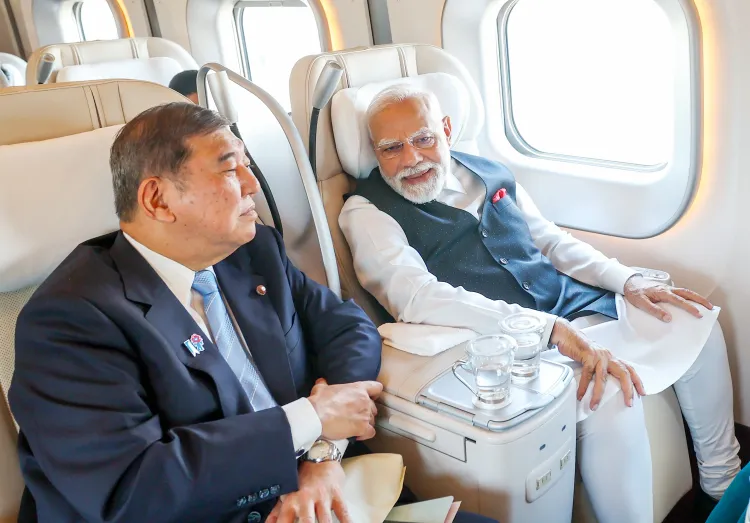
The 'Joint Vision for the Next Decade' between India and Japan, formulated during Prime Minister Narendra Modi's visit to Tokyo in August 2025, promotes synergy among SMEs (small and medium enterprises) through initiatives like facilitating visits of Japanese SMEs to India and bolstering downstream industries.
Japan's objective is to encourage its companies to perceive India as a viable production center, given its export-oriented policies and extensive network of trade agreements, as highlighted in an article on the Japan Forward news portal.
Numerous emerging sectors have been pinpointed for potential collaboration between the two nations, with semiconductors and electronics standing out as particularly promising. Japan's expertise in upstream semiconductor technologies aligns seamlessly with India's rapidly growing electronics sector and robust government backing, the article notes.
This could pave the way for the joint establishment of OSAT (outsourced semiconductor assembly and test) and ATMP (assembly, testing, marking, and packaging) facilities for semiconductors, alongside deeper integration of electronics supply chains.
India's expansive domestic market serves as a cushion against global market fluctuations, providing a solid foundation for enduring business expansion. Moreover, its strategic geopolitical location boosts its attractiveness for targeting markets in the Middle East and Africa. Japanese companies that set up manufacturing facilities in India can leverage these international connections to broaden their global reach.
Additionally, India's existing and forthcoming free trade agreements and bilateral collaborations with major global economies have unlocked new markets amid global uncertainties, as noted in the article.
MSMEs represent a crucial yet largely untapped sector, encompassing areas like packaging materials, cold chain logistics, warehousing, dairy, aerospace, and defense.
The article also underscores a significant achievement in the MSME collaboration between India and Japan, marked by Mitsui & Co, Ltd's investment in Sneha Farms Pvt Ltd, a leading broiler producer in India based in Hyderabad, boasting an annual revenue exceeding Rs 1400 crore. The firm has integrated operations that include feed production, broiler farming, meat processing and packing, transportation, and retail.
India's food processing industry is emerging as a promising sector for Japanese investments, particularly in the domains of fruits, vegetables, and spices, positioning India as a potential base and export center.
Furthermore, Japan has been actively engaging with the Northeastern states of India since 2022, with initiatives aimed at enhancing the bamboo value chain in the region, focusing on value addition, processing, and establishing the area as a hub for bamboo product innovation and design. Other targeted sectors include organic farming, horticulture, and tea production.
Japan currently ranks as India's fifth-largest investor, accounting for FDI inflows totaling $44.40 billion over the last two decades. There are more than 1,500 Japanese enterprises operating in India. The anticipated MSME boom is expected to further increase this investment flow, driving the next wave of growth, the article concludes.
Point of View
The growing collaboration between India and Japan in the MSME sector reflects a strategic alignment that not only enhances economic ties but also positions India as a pivotal player in global supply chains. This partnership promises mutual benefits and sustained growth in various sectors.
NationPress
19 Sept 2026
Frequently Asked Questions
Why are India and Japan focusing on MSME partnerships?
India presents a strategic investment opportunity for Japan's mid-sized companies, especially as global supply chains shift away from China.
What sectors are highlighted for collaboration?
Key sectors include semiconductors, electronics, food processing, and bamboo product innovation in India's Northeastern states.
What is the significance of the 'Joint Vision for the Next Decade'?
This initiative aims to boost cooperation between SMEs from both countries, enhancing trade and investment opportunities.
How does India’s domestic market benefit Japanese investors?
India's large market acts as a buffer against global volatility, offering a stable environment for business growth.
How much FDI has Japan invested in India?
$44.40 billion over the past two decades, making Japan the fifth-largest investor in India.