India Launches NMBA 2.0 & SMILE Apps to Combat Drugs, Beggary

Synopsis
India's Ministry of Social Justice launched NMBA 2.0 and the SMILE Beggary Survey App at Chandigarh's Chintan Shivir on April 25 — a digital overhaul targeting real-time drug monitoring and beggar rehabilitation data, addressing chronic data gaps that have long weakened two of India's most critical social welfare programmes.
Key Takeaways
The Ministry of Social Justice and Empowerment launched two mobile apps on April 25, 2025 , at the Chintan Shivir in Chandigarh .
The NMBA 2.0 App offers a real-time consolidated dashboard for states, districts, and stakeholders under the Nasha Mukt Bharat Abhiyaan .
The app provides access to the de-addiction helpline and MANAS mental health helpline , along with IEC materials for Nasha Mukti Mitras.
The SMILE–Beggary Survey Mobile Application digitises field-level data collection to improve accuracy and real-time reporting under the SMILE scheme .
India's drug crisis context: approximately 3.1 crore Indians are opioid-dependent, and the Nasha Mukt Bharat Abhiyaan targets 272 high-risk districts nationwide.
Both apps aim to eliminate chronic issues of delayed and inconsistent data reporting that have long weakened welfare programme delivery.
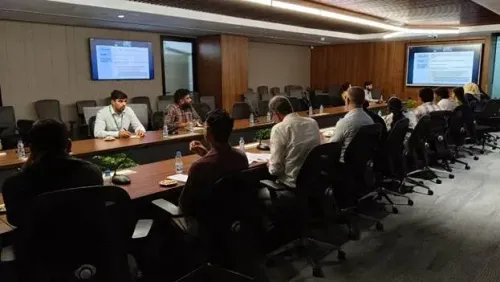
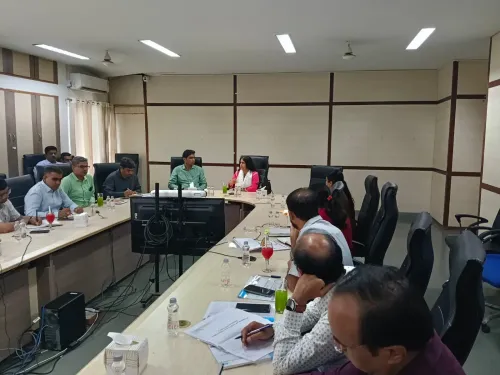
The Ministry of Social Justice and Empowerment on Saturday, April 25, launched two upgraded mobile applications — NMBA 2.0 and the SMILE–Beggary Survey Mobile Application — at the Chintan Shivir in Chandigarh, marking a significant digital push to strengthen India's drug de-addiction and beggary rehabilitation frameworks. The move is aimed at enabling real-time data collection, improved accountability, and technology-driven governance across national, state, district, and institutional levels.
What Are the Two New Apps
The Nasha Mukt Bharat Abhiyaan (NMBA) 2.0 App is a revamped, centralised digital platform designed for states, districts, spiritual organisations, and other stakeholders involved in India's flagship anti-drug campaign. It builds upon the earlier version with enhanced features targeting transparency, real-time monitoring, and data-driven policy execution.
The SMILE–Beggary Survey Mobile Application is engineered to empower field-level implementing agencies and district authorities to capture survey data digitally, replacing delayed and inconsistent paper-based reporting with a streamlined, accurate, and timely digital system.
Key Features of NMBA 2.0 App
The upgraded NMBA 2.0 app provides authorised users — including states, districts, and spiritual organisations — with a consolidated dashboard offering near real-time visibility into activities under the Nasha Mukt Bharat Abhiyaan. This ensures that programme implementation is tracked seamlessly across all administrative tiers.
The app also functions as a resource hub, offering Information, Education and Communication (IEC) materials and communication support for Nasha Mukti Mitras — volunteer educators who drive grassroots awareness. Institutions can organise pledge-taking activities through the platform as part of community outreach efforts.
Critically, the app integrates access to key helpline numbers, including the de-addiction helpline and the MANAS helpline, which provides mental health support services. Basic technical assistance contacts are also embedded within the platform for ease of access.
How the SMILE App Strengthens Beggary Rehabilitation
The SMILE–Beggary Survey Mobile Application addresses a long-standing challenge in India's rehabilitation ecosystem — inconsistent and delayed field data. By enabling digital data capture at the ground level, the app ensures that district authorities and implementing agencies can report survey findings accurately and in real time.
This digital transition is expected to significantly bolster the Ministry's capacity for data analytics and performance tracking across cities, enabling more targeted and effective deployment of rehabilitation resources under the SMILE (Support for Marginalized Individuals for Livelihood and Enterprise) scheme.
Why This Matters: Bigger Picture and Policy Impact
India's drug abuse crisis has reached alarming proportions. According to the National Survey on Extent and Pattern of Substance Use in India, approximately 16 crore Indians consume alcohol, and nearly 3.1 crore people are dependent on opioids. The Nasha Mukt Bharat Abhiyaan, launched in 2020, targets the 272 most drug-affected districts across the country. The NMBA 2.0 upgrade reflects an acknowledgment that data gaps and poor coordination have historically hampered the programme's effectiveness.
Similarly, the SMILE scheme, launched in February 2022, aims to rehabilitate individuals engaged in begging through shelter, education, skilling, and livelihood support. However, critics have long pointed out that without robust ground-level data, identifying and tracking beneficiaries remains a major bottleneck. The new survey app directly addresses this systemic weakness.
This comes amid the government's broader push toward Digital India-aligned governance, where technology is increasingly being deployed to plug leakages and improve last-mile delivery of welfare schemes. The Chintan Shivir platform itself signals a deliberate effort by the Ministry to align state and central stakeholders on implementation priorities.
What Comes Next
With both applications now officially launched, the immediate focus will be on onboarding authorised users across states and districts and training field-level workers. The Ministry is expected to monitor adoption rates and data quality metrics in the coming months as a measure of programme health. Wider rollout, performance reviews, and potential integration with other welfare databases could follow as the ecosystem matures.
Point of View
Where India's welfare machinery has historically stalled. The NMBA 2.0 upgrade is overdue; the original programme launched in 2020 was always data-blind at the ground level, and that invisibility allowed poor implementation to go unchallenged. What's missing from today's announcement is a clear enforcement mechanism — what happens when states fail to upload data or when districts show zero activity on the dashboard? Without teeth, even the best-designed app becomes a digital showpiece.
NationPress
16 Sept 2026
Frequently Asked Questions
What is the NMBA 2.0 App launched by the Indian government?
The NMBA 2.0 App is an upgraded digital platform launched by the Ministry of Social Justice and Empowerment on April 25, 2025, to support the Nasha Mukt Bharat Abhiyaan. It enables real-time reporting, monitoring, and coordination among anti-drug stakeholders at national, state, district, and institutional levels.
What is the SMILE Beggary Survey Mobile Application?
The SMILE–Beggary Survey Mobile Application is a field-level digital tool launched to help implementing agencies and district authorities collect beggary survey data accurately and in real time. It replaces delayed paper-based reporting under India's SMILE rehabilitation scheme.
Where were the two new government apps launched?
Both apps were launched at the Chintan Shivir held in Chandigarh on April 25, 2025, by the Ministry of Social Justice and Empowerment.
How does the NMBA 2.0 App help in drug de-addiction?
The NMBA 2.0 App provides a consolidated dashboard for tracking anti-drug activities, IEC resource materials for Nasha Mukti Mitras, and direct access to de-addiction and MANAS mental health helplines. It also supports pledge-taking activities and volunteer management.
What is the SMILE scheme in India?
The SMILE (Support for Marginalized Individuals for Livelihood and Enterprise) scheme was launched in February 2022 to rehabilitate individuals engaged in begging through shelter, education, skill development, and livelihood support. The new survey app strengthens its ground-level implementation.