India-Netherlands Strategic Ties Deepen via Water, Agri & Tech
Synopsis
At the Netherlands' King's Day 2025 celebrations in New Delhi, Union Minister Dr. Jitendra Singh declared that India-Netherlands ties are evolving into a full strategic partnership — powered by water management, agri-tech, and high technology. With Dutch giant Philips having a bigger consumer base in India than the Netherlands itself, the depth of this alliance is greater than most realize.
Key Takeaways
Jitendra Singh attended Netherlands' King's Day 2025 at the Dutch Embassy, New Delhi as chief guest on April 25, 2025 .
India-Netherlands collaboration spans water management , agriculture , and high technology , driven by strong complementarities between the two nations.
Dutch multinational Philips has a larger consumer base in India than in its home country, the Netherlands , highlighting deep economic integration.
Ambassador Marisa Gerards confirmed the two nations are advancing toward a stronger strategic partnership covering climate resilience , sustainable agriculture , and global supply chains .
The Netherlands is the world's second-largest agricultural exporter and controls critical semiconductor manufacturing technology via ASML , making it a high-value strategic partner for India.
Bilateral ties are expected to expand further in 2025 into areas including green hydrogen , circular economy , and digital infrastructure .
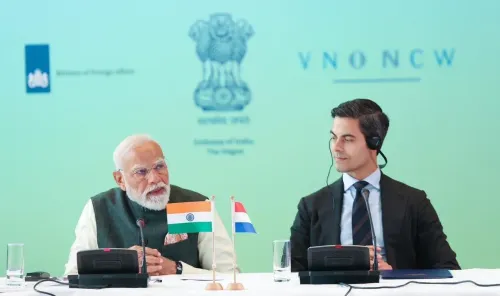
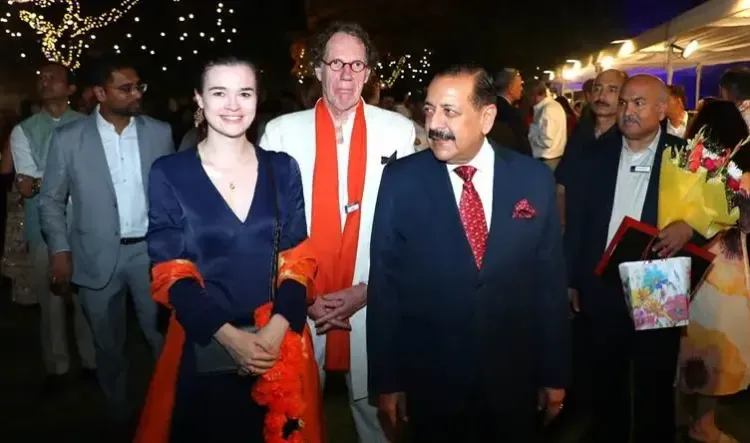
New Delhi, April 25, 2025: India and the Netherlands are deepening their bilateral partnership through robust collaboration in water management, agriculture, and high technology, Union Minister of State Dr. Jitendra Singh declared on Friday, April 25. The minister made these remarks while attending the Netherlands' King's Day celebrations hosted at the Dutch Embassy in New Delhi, where he served as the chief guest. The event underscored how the two nations are forging a resilient strategic alliance despite shifting global geopolitical currents.
Key Sectors Driving the India-Netherlands Partnership
Dr. Jitendra Singh emphasized that the bilateral relationship between India and the Netherlands is evolving well beyond traditional diplomatic courtesy into a substantive, sector-specific alliance. He noted that the partnership is anchored in areas where both countries offer complementary strengths.
"The bilateral partnership spans key sectors including water management, agriculture, and high technology, reflecting the strong complementarities between the two countries," the minister stated. This is particularly significant given that the Netherlands is globally recognized as a world leader in water engineering, precision agriculture, and greenhouse technology — all areas where India has pressing developmental needs.
For India, a nation grappling with water scarcity affecting over 600 million people and an agricultural sector that employs nearly 45% of the workforce, Dutch expertise in these domains carries enormous practical value.
Economic Engagement and Bilateral Investments
On the economic front, Dr. Singh pointed to growing bilateral investments and a high degree of mutual institutional trust as key enablers of commercial collaboration. He specifically highlighted the presence of Dutch multinational Philips in India, noting that the company commands a larger consumer base in India than in its home country — a striking indicator of the depth of economic integration.
"India and the Netherlands enjoy a high degree of mutual trust and ease of collaboration, which has contributed to expanding economic engagement, including significant bilateral investments," he said. The Netherlands has historically been among India's top foreign direct investment (FDI) sources, with Dutch firms operating across sectors ranging from electronics and energy to logistics and food processing.
This comes amid India's broader push under its Make in India and Atmanirbhar Bharat initiatives to attract high-quality European investment, particularly in advanced manufacturing and sustainable technologies.
Climate Resilience and Sustainable Agriculture at the Core
Dutch Ambassador Marisa Gerards also addressed the gathering, reinforcing that both nations are steadily advancing toward a stronger strategic partnership. She highlighted cooperation across climate resilience, sustainable agriculture, and global supply chains as the pillars of this evolving relationship.
"The partnership brings together innovation, technology and shared values to address global challenges," Gerards said. Her remarks signal that the Netherlands views India not merely as a large market but as a co-creator in addressing pressing global issues such as food security, climate adaptation, and supply chain diversification — themes that have gained urgency in the post-pandemic global order.
Notably, the Netherlands is the world's second-largest agricultural exporter by value despite its small land area, making its agri-tech knowledge base particularly valuable for a country like India that seeks to modernize farming while feeding 1.4 billion people.
Indian Diaspora and People-to-People Ties
Dr. Singh also acknowledged the role of the Indian diaspora in the Netherlands in nurturing bilateral relations. While relatively modest in size compared to Indian communities in the UK or USA, the diaspora serves as a vital cultural and economic bridge between the two nations.
People-to-people connections remain a soft-power asset that often outlasts formal diplomatic agreements, facilitating smoother business collaborations, academic exchanges, and cultural understanding over the long term.
Strategic Significance and What Comes Next
The strengthening of India-Netherlands ties fits into a broader pattern of India deepening strategic partnerships with key European Union member states as it navigates a complex multipolar world. With the India-EU Free Trade Agreement (FTA) negotiations gaining momentum in 2025, bilateral relationships with influential EU members like the Netherlands carry added geopolitical weight.
The Netherlands, home to critical global institutions including ASML — the world's sole manufacturer of extreme ultraviolet (EUV) lithography machines essential for semiconductor production — is also a key partner as India pursues its ambitious semiconductor manufacturing mission.
As both nations look ahead, the trajectory of India-Netherlands collaboration in 2025 and beyond is expected to expand into emerging areas such as green hydrogen, circular economy frameworks, and digital infrastructure, building on the strong foundation laid across decades of diplomatic engagement.
Point of View
Agri-tech, and semiconductor supply chains. What the mainstream narrative misses is the ASML angle: the Netherlands controls the world's most critical chip-making technology, and as India races to build a domestic semiconductor industry, this partnership is far more strategically loaded than a routine King's Day speech suggests. The Philips data point — more Indian consumers than Dutch — is not just a feel-good statistic; it reflects decades of Dutch investment confidence in India that many Western peers are only now beginning to match. India should leverage this trust capital aggressively as EU-India FTA talks intensify in 2025.
NationPress
16 Sept 2026
Frequently Asked Questions
What sectors define the India-Netherlands bilateral partnership in 2025?
The India-Netherlands partnership in 2025 is anchored in water management, agriculture, and high technology sectors. Both nations are also expanding cooperation into climate resilience, sustainable agriculture, and global supply chains, according to statements made at the King's Day event in New Delhi.
What did Dr. Jitendra Singh say at the Netherlands King's Day 2025 event?
Dr. Jitendra Singh, attending as chief guest at the Dutch Embassy in New Delhi, said India and the Netherlands enjoy a high degree of mutual trust and are expanding economic engagement including significant bilateral investments. He also noted that Dutch company Philips has a larger consumer base in India than in the Netherlands.
Why is the Netherlands an important strategic partner for India?
The Netherlands is the world's second-largest agricultural exporter and a global leader in water management technology — both critical needs for India. Additionally, the Netherlands is home to ASML, the sole manufacturer of advanced chip-making equipment, making it a vital partner for India's semiconductor ambitions.
What is the role of the Indian diaspora in India-Netherlands relations?
The Indian diaspora in the Netherlands, though relatively small, acts as a cultural and economic bridge between the two nations. Minister Dr. Jitendra Singh acknowledged its importance in strengthening bilateral ties at the King's Day 2025 celebrations.
How does India-Netherlands cooperation connect to the India-EU Free Trade Agreement?
As India-EU FTA negotiations gain momentum in 2025, strong bilateral ties with influential EU members like the Netherlands enhance India's overall negotiating position and investment attractiveness. The Netherlands has historically been one of India's top FDI sources within the European Union.